
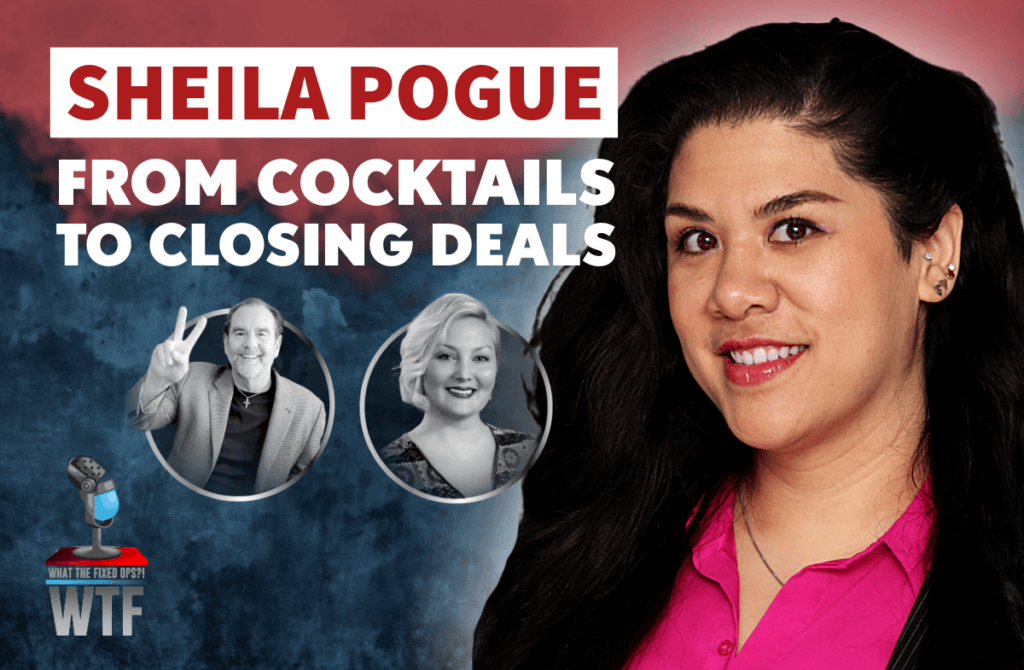
In today’s automotive industry, many leaders are searching for the next breakthrough—whether it’s a new AI platform, a fresh dealership marketing strategy, or the latest tool promising more leads and better results. But while technology continues to reshape the business, the fundamentals that truly drive long-term dealership success haven’t changed. Sustainable growth in fixed operations still comes down to leadership, retention, accountability, and the ability to create an exceptional customer experience at every stage of the ownership journey. That reality sits at the heart of this conversation with Sheila Pogue, whose story and perspective offer a grounded, practical view of what it really takes to win in today’s automotive landscape.
We’re joined by Sheila Pogue, Dealer Marketing Consultant at Dealer OMG, who brings a uniquely valuable perspective to the industry. Unlike many marketing professionals who only know dealerships from the outside, Sheila built her career from the ground up inside the business—starting at the parts counter, moving into service and warranty operations, eventually becoming a service director and director of operations before transitioning to the vendor side. That hands-on dealership experience gives her unusual credibility in conversations around dealership advertising, fixed ops growth, customer retention, and dealership culture. She understands not just how to market a store, but how dealerships actually function when the pressure is on.
One of the most powerful themes throughout this episode is the importance of mentorship and leadership development in automotive. Sheila shares how one manager saw her potential early, pushed her into new responsibilities, and helped shape the trajectory of her career. That kind of intentional leadership remains one of the most overlooked competitive advantages in dealerships today. Too often, people are promoted into roles without training, support, or development, then expected to “figure it out” in one of the most demanding industries in retail. Sheila makes a strong case that dealerships that invest in people—not just processes—will always outperform those that treat talent as disposable. In an industry facing ongoing employee turnover, technician shortages, and shifting consumer expectations, strong leadership is no longer optional. It’s operational strategy.
This conversation also shines a spotlight on a topic the industry still needs to confront more honestly: the experience of women in automotive, especially in fixed operations leadership. Sheila speaks candidly about navigating environments where she had to earn credibility quickly, command respect, and lead teams that initially resisted her authority. Her perspective is both honest and practical. She doesn’t frame success as something handed to her—she frames it as something earned through consistency, resilience, and an unwavering commitment to getting the work done. At the same time, her story highlights the importance of culture, mentorship, and creating space for more women to thrive in dealership leadership roles without having to fight uphill for basic respect. For an industry that talks often about talent shortages, this remains a major area of opportunity.
One of the strongest takeaways from this episode is Sheila’s emphasis on customer retention and how closely it ties into fixed operations performance. She makes the case that dealerships often spend enormous amounts of money acquiring customers on the sales side, only to lose them after the sale because of poor service experiences, inconsistent communication, or a lack of long-term relationship strategy. That disconnect is one of the biggest missed opportunities in automotive retail today. Fixed operations is not just a support department—it is the engine of customer retention, recurring revenue, and long-term dealership profitability. If a store fails to connect variable and fixed operations into one cohesive customer journey, it leaves both money and loyalty on the table.
That’s why this episode offers such an important reminder for dealers focused on improving fixed operations marketing and dealership retention strategies. The customer lifecycle doesn’t end when the vehicle is delivered. In many ways, that’s where the real relationship begins. Sheila explains that dealerships need to think beyond single transactions and focus more intentionally on the full ownership cycle—service visits, maintenance reminders, customer follow-up, trade appraisals in the service lane, and consistent communication that keeps customers engaged with the dealership over time. Dealers who master that process will not only improve service absorption and fixed ops revenue, but also create stronger re-purchase pipelines and higher long-term customer value.
The conversation also explores what’s changing in dealership marketing right now and why many stores need to rethink how they define success. Sheila points out that while some dealers are seeing lower lead volume or changing traffic patterns, that doesn’t necessarily mean opportunity is shrinking. Instead, it may be a sign that the industry is being forced to become sharper, more disciplined, and more strategic. Rather than chasing volume for volume’s sake, today’s dealerships need to focus on lead quality, conversion rates, margins, customer experience, and operational efficiency. In other words, the future of dealership marketing may not be about doing more—it may be about doing better. That mindset shift is especially important as dealership advertising costs rise and the market becomes more competitive across both variable and fixed operations.
Of course, no conversation about the future of automotive would be complete without discussing AI, EVs, and emerging industry disruption. Sheila brings a refreshingly balanced perspective here. She doesn’t treat artificial intelligence or electric vehicles as threats to fear, but as realities to prepare for. Her message is simple: dealerships that adapt will win, and dealerships that resist change will fall behind. That applies not only to marketing and technology adoption, but also to technician training, service capabilities, and customer education. As hybrid and electric vehicles become more common, fixed operations teams will need new skill sets, new service strategies, and stronger alignment with OEM training opportunities. The stores that proactively prepare their service departments for that future will be far better positioned than those waiting until disruption is already at the door.
Another valuable thread in this episode is the role of dealer-vendor relationships and why the best partnerships are built on trust, education, and shared outcomes—not just transactions. Sheila’s perspective from both the dealership side and the agency side reinforces a truth many successful operators already know: the right vendor can be a true extension of your team. Whether it’s marketing, process improvement, technology, or training, dealership partners should do more than sell a product—they should help solve problems, improve performance, and make life easier for the people inside the store. Dealers who know how to build strategic vendor relationships often move faster, adapt better, and avoid costly mistakes that come from trying to figure everything out alone.
At its core, this episode is about what really drives long-term success in automotive: people, relationships, adaptability, and leadership. Sheila Pogue’s story is a reminder that some of the strongest voices in the industry are the ones who came up through the real work—parts counters, service lanes, warranty claims, difficult customers, and the daily pressure of dealership life. Her perspective is especially valuable because it bridges the gap between fixed operations, dealership culture, and modern marketing in a way that few people can. As fixed ops continues to become a bigger strategic focus for dealerships across the country, leaders who understand how to connect service, retention, culture, and customer trust will be the ones best positioned for the future.
If your dealership is looking to improve fixed operations growth, strengthen retention, build a better service culture, or rethink how your marketing connects to long-term customer value, this is a conversation worth paying attention to. The future of automotive won’t belong to the loudest stores or the ones chasing every trend. It will belong to the dealerships that build strong teams, create memorable customer experiences, invest in training, and stay committed to the fundamentals that still matter most.
Read the Transcript
Hello everybody. I’m Russell Hill, your host of WTF and that is what the fix ups to all of you out there. And I’m joined today by. Hello everyone. I’m Charity Dunning your co host today and we’re really excited. We have Sheila Pogue with us. She is the dealer marketing consultant at dealer. OMG welcome to the show Sheila. Thank you for having me. I’m excited to be here. Oh and wtf, I love it man. It’s great. Yeah. Well Sheila, for those who don’t know you yet, tell us a little bit about what you’re doing with dealer. OMG, I help dealers across the nation kind of Improve their bottom line, increase their revenue and advise on anything to help a dealer. I started my dealership career in twenty fourteen and I get a genuine satisfaction every day, helping from my side of the desk to assist dealers in ways that I wish I had been helped when I was at the dealership level. Tell us what is dealer OMG and what kind of impact on are you making on dealerships right now? Dealer OMG is a marketing agency. We specialize in meta products, so specifically Facebook, Instagram and WhatsApp. And it’s an inch wide and a mile deep in that platform to help kind of maximize your return on your ad spend. This is really, um, a way, a simple way to communicate that differentiator to dealers is we are custom targeting your own data. We want to talk to your own customers and get your WiFi message in front of them. And we’re touching every aspect of the dealership, including highlighting fixed operations. We want to highlight finance messaging. We do some parts and then of course variable operations. It’s amazing traffic and leads. Yeah, it’s uh, the owners are amazing. I know them and they’re just they’re phenomenal guys. They know what the heck they’re doing. They were from meadow originally, weren’t they? Mhm. So you do paid ads mainly for Facebook, and you’re doing it for every aspect of the dealership? Yep. Paid ads. Um, we we can help advise on organic, but we don’t really touch that side. Our expertise is, as Russell said, the founders are from meta. So we are really optimizing that algorithm and the back end of ads manager and Facebook and tweaking it to make really special ads that are kind of outside of what other people might be doing on the platform. Okay. Well, we talked a little bit about dealer OMG, but let’s talk a little bit about you. Your journey is really interesting. You didn’t start in automotive. Can you walk us through your path from restaurants to RV to the service drive now to marketing? Yeah. How in the hell did you get here? I think I stumbled in just like you did Russell. Um, as a lot of kids did in my twenties. I tried to make a career out of my favorite hobby, which was drinking at the time. So I went into managing bars and restaurants. I did that for about twelve years. Fine for you? Yeah. Right, right. It was an adventure. I ended up, unfortunately. You know, when you become a GM of of entities like that, it makes it really hard to translate into other fields. So I was stuck in hospitality for quite a while, trying to get out. Um, I had a, uh, a regular take a chance on me and put me into kind of an office type of environment. And that actually led me to my first opportunity at a parts counter at an RV dealership in twenty fourteen, and turns out dealing with some belligerent drunks and slinging food and cocktails translates really well to dealership life. I joke that I went to dealership university to get my master’s. It’s one of those industries where, yes, it’s retail and yes, there’s some standardized practices, but the best dealers are going to learn from the ground up, just kind of, you know, the skin of their teeth. And as I said, I started at the parts counter. I ended up taking quickly taking over some warranty and service writing responsibilities. I became a parts manager. I worked my way up to a service director. I ended up switching to the marine industry, which is another, you know, luxury recreation dealership, which is a whole nother beast and ended up as a director of operations of a Marina, where I had the opportunity to go to a remote role on the vendor side with my current company in twenty twenty one. And I really jumped at the opportunity to be able to help dealers at scale. I was getting a lot of satisfaction from helping my customers every, you know, day in, day out, the grind of the dealership, but being able to help my, you know, NPC in the dealership level was so satisfying. And I don’t know that I’ll ever go to another job I love. I love helping dealers. It’s my favorite. Yeah, a lot of interaction with a lot of different every day. It’s something new, isn’t it? And when you were talking about this, uh, this drinking thing and you thought, well, the best place to go is to a bar, etc., were there any hard lessons learned from that or, uh, moments where you went, uh, well, yeah, this isn’t really working out for me. Anything that you feel comfortable in sharing or being vulnerable? Absolutely. I was a day bartender for a while and managing the business from eleven a m till seven p m when I got off of work, and then I would walk out from behind the bar and sit down and open my first beer, that that became kind of difficult to maintain. I would stay there and then close the bar down at two and help them clean up and get to bed about three thirty in the morning. That got a little old. There was one day where I was like, I, this is not for me anymore. It was a night shift. It was a Saturday, I was bartending and we actually had a fight break out. It was between it was a packed house. We had probably two hundred people in there. And there was a small group of about five people that we believe had some gang activity. And they’re a full fledged fight with all two hundred people, not just the five people ended up breaking out. And my my response in situations like that is I duck behind the, the well. And I was like, what are you doing? What are you. You know, I’m a, I’m a smart person. I was doing really well managing. I was like, this is not my cup of tea. So I wanted to go to something much more safe and stable. So I sought out dealership’s good, right? Yeah. Very calm, low stress. Next thing, it’s either that or selling drugs or whatever, right? Yeah, yeah, yeah. Me and you were talking about how it kind of attracts a certain type of personality that can kind of survive inside the walls of a dealership. And I found that to be true. Absolutely. I agree. We talk a lot about that and all the different venues that you’re in and I am in. And you know, Terry’s in a lot of them too. And it’s like it started out as, yeah, I really didn’t know what else to do. So I thought, well, I’m gonna try selling cars and it wasn’t going to be a permanent thing? Although I didn’t realize it back then, but my record would have kept me from working at a lot of places, and I just I gravitated to it, but I was still kind of on the fence until I met a mentor. His name is Mike Biggers. He probably watches these shows. We still stay in touch. And he actually took me on. I mean, it became a career. It was it was phenomenal. I mean, anybody, all of you out there listening, if you’re on the fence, get off the fence, find somebody, find some reason why. But I mean, you could write your own ticket and go wherever you want to go. Do you agree with that, Sheila? I absolutely do. I don’t know if you’ve had this experience, but several of the dealerships I’ve worked for give you a personality like aptitude exam. When they take you in to see which department you would be best at. And that first manager that I had, he was a fixed operations director for multi points. He, he saw me at the parts counter and he looked at that aptitude tests. And he was like, I’m gonna, I’m gonna teach her some stuff. He ended up he was the one that pushed me to service right to. He taught me how to do warranty. I was doing flagging for the technicians. I was a foreman for the shop. He taught me, you know, and took me under his wing in a very rapid fire manner because he was like, I’m gonna throw it at you. And if you can pick it up, great. If you can’t, that’s okay too. And if it wasn’t for that, I wouldn’t have flourished the way I did. I soaked everything up that he had to give me, and I’ve had several mentors in my career similar to that. Mentors are important, aren’t they? Yeah. Very important. Well, we’re kind of on this same line of questioning, but what lessons from those early roles still show up in how you work today? There’s a lot, I’ll say that one of the most important that I learned from the dealer level is self-education. Uh, this is an industry where you, you know, I joked about the dealership university. You can’t really go get your master’s in. How this works. Yes. Again, it’s a retail operation. You can understand how to balance a P and L and everything, but when you’re dropped in, it’s usually the hand, the keys to the guy that’s been there the longest. And when you find yourself in that role and suddenly you’re managing the marketing for all of these departments, you have to understand how to balance a P and L and control financing. You have to make sure that your margins look good on your inventory. You have to have HR experience and keep your culture good and retain your employees. It’s so overwhelming to be that point with nearly no support. A lot of times you’re just kind of thrown to the wolves. If you’re at a big corporation, maybe they throw you a manual. You might have some sort of module to like go off of, but you got to, you got to think on your feet and learn by any resource possible that that original manager, one of the best pieces of advice he gave me from a dealership perspective is to lean on your vendors. He was like, you’re going to have a lot of people coming in here trying to sell you stuff. And if you’re nice to them, they’ll try to help you. He was like, yes, they at the end of the day, they’re all trying to make a buck. But your vendors will go to bat for you. They’re the ones that will make stuff happen. They’ll find parts that are obsolete. They’ll help you, you know, close a deal or get a delivery out the door. Like you have to be nice to your vendors because they’re the only ones they’re helping you at the end of the day. And that was I took that with me. And I really, I learned that lesson many times over in management. And the ones, you know, the people dealing with the vendors, I’ve met them all. You have to some of them are belligerent, you know, pricks. They really are. And and that’s okay too. You, you’re prepared, you learn how to deal with them and absorb it. And some of those ones that started out that way are, are lifelong friends today. Yeah, yeah. When you show them like, hey, I’m here to help you. I’m here to help you. When they, they kind of their guard comes down and they’re like, oh, okay. I didn’t know it could be like this because they, some, some vendors aren’t that way. Some of them aren’t looking for to help you win. They just want to take advantage. Here’s another thing though, Sheila. You have the experience. You’ve been in the trenches. You understand the lingo. You understand the day to day and the grind and the bumps and things that happen. That adds a tremendous amount of credibility to you. You’re right. You know, earlier you you, um, went like this when I was talking about marketing. I forget sometimes when I was making my own TikTok page as a service manager, trying to manage that myself. I didn’t know what a KPI was. I didn’t know what reach or impressions was. I was walking down the dock, putting my business card in cup holders in people’s boats, trying to get them to come in and get a two hundred hour. Like it’s you have to, you know, it gets lost when you’ve been doing it for a long time. You forget the day to day of just moving metal, and it’s a difficult job. Yeah, it’s, uh, extremely stressful. Extremely rewarding as well. Well, automotive isn’t always the easiest industry to break into. What were some of the biggest challenges that you faced coming up? We touched on this a little bit in our conversation yesterday. I think being a woman, especially in fixed operations, can be challenging. I’m around twenty sweating technicians all day long that are barking at me. You know, attractive, isn’t it? No. Find a way. Hey, let me tell you, technicians are my besties to this day. You find a way. I would bring them kolaches and I would go out to instead of, you know, if they’re trying to help me find a part or I’m trying to help them find a part, I would go out to the unit and actually get in there with them. That that really spoke volumes. I wasn’t afraid to go out to the shop and get sweaty and move batteries around with them or whatever. There was a specific story I’ll share where I came into a leadership role in the service department, and it was a crew of guys that had been at this location for years, and they they were the best in town. They knew what they were doing. I had been introduced to them briefly the week before, like, hey, this is going to be your new leadership team, blah, blah, blah. I go out there and I have my work orders and I’m like, we’re going to take care of this unit and this unit and this unit because I have these customers calling today. All of them put their tools down and went to their benches and just threw up their hands. I later found out I was talking to the foreman about it later, and he was like, they don’t want to listen to you. They don’t want a woman that they don’t know coming in, telling them what to do, blah, blah, blah. So I sat in my office for a second and I was looking out into the shop and I got up and I went back out there and I told them all to go home. And I was I was like, if y’all aren’t going to if y’all aren’t going to do this work, I don’t have any work for you. Um, got on the horn, hired some sublets, got my work done, got my units out, closed my work orders. And the next week they all showed up and apologized to me. And from then on, we had a great working relationship. They understood, like business is business. It doesn’t matter the face of who is guiding you. I’m going to get this done. If you would also like to get work done and get paid for it, you can, you know, let’s row in the same direction. And there’s been a couple of instances like that where I kind of had to put the hammer down, which I’m good at that now. So it’s I call it a win in the long run. Absolutely. Yeah, absolutely. I mean, that’s pretty great. I don’t know if everybody would have handled it that well. But you handled it very well. No, you had panicking. Don’t get me wrong, I was very upset. And I was like, why won’t they listen to me? But you got to get the work done. That was a great move. Tremendous resolve. And when when Charity asked you that question about automated isn’t always the easiest. I don’t know if it’s that way. Now, more and more women, which I’m a proponent of, are in the business technicians. I mean, you name it, some of them are even better than the guys, particularly on the advisor side. But in my day, it was really easy. If you could fog a mirror, you could get a job. But you selling cars, I mean, because back then they played all the tricks. And when you hear about throwing the keys up on top of the building, that stuff really happened back in the eighties. It really, really did. And you know, if you went from selling drugs to selling cars, they would give you an opportunity, even if they knew that just to see if you could do it, they didn’t care back then. They didn’t have all the HR stuff. Maybe it is more difficult to get into today. I haven’t thought about that. That’s a great question. I haven’t thought about that in a long time. Did you find it not at all difficult to get in or no. It’s been difficult since day one. For whatever reason, that one manager I credit him with a lot, I we worked together for several years. He just took a shine to me. There was no sexism about it. He didn’t care if I could fog a mirror. If I was a warm body. I knew how to make a, you know, maximize an R0, get my three CS on there correctly, get my warranty claim filed. I was getting I was bringing in revenue. That’s all he cared about. And that was the lesson. At the end of the day, if you’re going to help the business, I’m going to pay you like, let’s go. I don’t care who you are. I don’t care how you do it. Well, has there ever been a moment where you questioned if you belonged in the space? Absolutely, yes. There’s. I have another story for you. I can I can tell about that meeting you were talking yesterday about your experience with that dealership? And it got me thinking about. So during Covid, I got I was an essential worker, so I did not miss a single day. In the year of twenty twenty of working. I was a park manager at the time and corporate had come in and furloughed like twelve employees, including my team. So immediately after losing all support, we had record breaking sales that beat out the past twenty three years of business. Wow. So I was like, you know, it was very difficult and needless to say. So while I was doing that, I had sales breathing down my neck trying to get internal units out. I’m trying to prioritize. We call them full timers in the luxury recreation industry, people that live on their units. And I’m trying to get all of this work done, all of this stuff out. And I had this guy come in and he was looking for something that I would have considered a cosmetic. It doesn’t matter what the part was. But he was looking for this, and I really did not have the bandwidth to help this gentleman. But he was he was insistent. And he was an older guy, and I kind of felt for him. You know, we’re all going through it and no one knows what’s happening with this pandemic thing. I was like, okay, let me, let me do what I can do. So I did, I did the research. I got his, um, his number and marine Vin number effectively found we did some research for him on the part. And I was like, look, I called him up and I said, I can get this for you, but my margin is going to be like three grand. Like, I’m going to order this for you. It’s going to take this much time to get here and I’m going to charge you this much. And I was like, because of where I’m at and what you need and where you’re at and your story that you’ve told me, I’m going to let you know that they do sell direct to customers, and I’m going to do something that is not I’m not supposed to do. But here is the manufacturer’s part number. You can go here and you can order it yourself. And I sent him on his way. Six years later. This was about three weeks ago. I was talking to my brother, who manages a hotel which is about fifteen miles away from that dealership, and he had a customer come in that was talking to him. It’s a long stay hotel. So they were they’d been there for a while and they had been built a rapport and they were talking and the guy starts telling him his story and he’s a boat owner. He’s like, oh, my sister, you know, she worked in Marine for a long time, blah, blah, blah. And he’s like, there, there was this one girl at the dealership that I worked at and he was like, probably must have been six years ago now. And she changed my life. She gave me the best customer service experience I have ever received anywhere of any business, bar none. You know, she saved me this much money. She did this. She went above and beyond and did that and that. And my brother was like, that was my sister. And they ended up, he showed him a picture of me and the guy was like, that’s her. And I was like, man, when when you were telling me that story yesterday, Charity. And I was like, you should write a review. I was like, this really does change people’s lives. If you do, you know. And I didn’t think anything of it. I was just moving about my day and doing things the way that I do them. And to remember that six years later and be so impassioned that you’re telling a stranger about your experience is I think that’s life changing, honestly. Yeah, yeah, there’s that’s pretty impactful. A lot of defining, defining moments like that. I think more than most of us ever realized, there’s those like what you just mentioned. I can’t think of any off the top of my head at the moment. Were years later something happened from something that I said or I did for somebody, uh, not even thinking twice about it. It was just, you do it this way or this way. I’m just letting you know right up front. Those I mean, those are defining moments sometimes in people’s lives and sends them on a different trajectory. That’s great. That’s a phenomenal six years later. You should feel proud of that. Yeah, I’m sure Russell has twenty thousand of those in his pocket as well. No, the older I get, the less I remember. But Charity is helping me remember some of them in this book, right? So yeah, we do have a book forthcoming. Let me tell you about a partner that’s actually helping dealers get ahead. Global dealer solutions. If you’ve been wondering how to use AI the right way in your dealership, especially on the fixed side, these are the people to call. Their team gets it. Not just the tech, but the real challenges that dealerships face every day. We’re talking about conversational AI that doesn’t just respond, it converts it, books appointments, follows up with service leads, even answers customer questions with actual relevance. It’s not replacing your team. It’s making sure your team can focus on what matters most. Closing rows and building relationships. But GDS isn’t just about AI. They train your staff, drive traffic, and tighten up processes so your results stick long after the tool is turned on. And everything they do is built around one goal growth that is real. If you want more service traffic, better follow up and a partner that’s always a step ahead. Check them out. Visit dealer.com. Follow them on LinkedIn at GDS dealers, or just shoot them a message and ask, what would you do with my store and see what they come back with? Global dealer solutions. Process driven people first. Always on it. I do want to ask you a real talk question. Do you think women in automotive sometimes treat other women in ways they didn’t like being treated when they were coming up? Wow. So I can speak to this personally. I did not share this with you yesterday, charity. But one of the things that we were talking about when we were thinking about discussing this is I was that way when I started at the dealership level. There’s a there’s a specific girl. We’ve since become very close friends, but she came in and she was an event coordinator and I was I didn’t know at the time, I didn’t understand what was happening, but I was so threatened. She was a little bit younger than me. She was bubbly and bright and all the techs loved her immediately. She was engaging because she was doing like the social end. I was really interested in marketing, and I was jealous that she got to go to all the events and, you know, she got funding from corporate to do stuff and I treated her horribly. I was awful to her. And I got trolled by some salesmen that understood that there was that dynamic and they would mess with me. They would message me as her, like in our in our work chat to try to stoke the fire. Yeah, I ended up, you know, one of our mutual coworkers came to me and was like, what are you doing? Like, why, why do you do that? And I actually, I hadn’t even thought about it before. I just thought I didn’t like her. And when they posed that to me, I was like, you know, because she’s a badass. I’m afraid of her. That’s why I’m doing that. And I have since since I learned that lesson, I have been very, very aware whenever I feel that like that feeling when it’s another woman in the space, it’s because there’s something there that I respect and I should try to be her friend instead of being creeped out by it. And there’s a lot of women that have done that to me. It’s I think it’s a learned behavior, unfortunately. Sure. Coming up, you know, I won’t name any names, but there’s been a lot of older women in the industry that I have tried to go to for support or mentorship or even just a working relationship that have been absolutely cruel to me in comparison to male counterparts. Like I know I have evidence that it was definitely intentionally because I am a young woman and they, I think that they’re stuck in. I take that as a compliment now because I learned that lesson. I’m like, oh, she’s afraid of me and you should be. I’m a frightening person. Like, I am a threat to you. Do you think I love that attitude? Yeah. Older women or women that are older that have been in the industry a long time. Older women, in my experience, it’s been more experienced women in the industry, but it could be the same age. Maybe they’re younger than me. Just any there’s a Cattiness Russell. I, I, you know, we can talk offline and I’ll explain women to you later, but there’s a cattiness that is kind of an undercurrent, especially in a Industry that’s fueled by men. You know, one of the things I talked about earlier was having to strong arm that crew and get them to respect me. Another angle that I’ve also used successfully is buying them breakfast. Being like, can you help me get this battery out to this man’s car? Like there’s you have to find a way to work in that space. And some women are more successful working in that space by being chosen and kind of holding down the women around them. That’s how they have found success. Unfortunately it doesn’t. There’s a way to do it where you can lift each other up. It’s just a little bit harder. You have to be a little bit more self-aware. There is my wife retired after thirty three years of the car business as a controller. And it’s like, I mean, she’s heard it, seen it all. And many times she told me with what our oldest granddaughter, she’s fifteen years old, fixing to be sixteen years old and. And man, I’ll tell you what, the stuff that comes out of her mouth sometimes is like she said, I’m telling Russell, teenage girls are horrible. They are ruthless. They know they’re cunning. They know exactly what they need to do to get what they want to get. And they carry that into adult, you know, women. And it’s a shame she preferred to deal with men than women in the automotive industry, is how essentially how it all turned out because they’re just, they’re, they’re backstabbing and you got to always be on guard. But you know what? As long as you running your own race and stay in your lane, you figure out what works for you. I can see some of those lessons that you just shared with us. They can be really profound and you get a lot of instant respect. And if somebody’s trying to hold you down, that’s not your deal. That’s their deal. Exactly. You’re absolutely right. I can only control my own situation and that’s what I’m paying attention to. Yeah, yeah. Well, and and you know, you’re a woman of color as well. Has that affected your experience navigating the industry? I want to say no. I grew up in Texas, so there was a lot of faces that looked like me. I had in the South. Russell knows it’s the most diverse. Houston, Texas is the most diverse city in the nation. I also my mom had blonde hair and blue eyes and my grandfather was an astronaut and my last name is Pogue, so I. I confused a lot of people, but I didn’t necessarily. I don’t feel like I was held back necessarily because of it, not any more than I was because I was a woman. It’s one of those situations where like, we all have our lot in life. Maybe I would have been more privileged or had more opportunities if I looked different or was a man or, you know, younger or smarter or whatever. But I worked with what I had and I was willing to put in that extra effort to get to where I wanted to go. And I did every time. Good for you. Yeah, good for you. know. Well, what do you think needs to change and improve about the industry? My God, that’s four hours long right there. I know. Making sure it’s a loaded question. Four hours. That is a loaded question. Um, one of the things I think is we’ve already touched on, I’ll say two things. The thing that’s the most important to me, I think, is understanding how different and unique dealerships are. It’s a different beast. And if you succeed in it, it’s because you’re scrappy. It’s because you figured out how to make it work. You figured out how to educate yourself. You figured out how to network with the right people. I think that that’s really it’s an underserved industry, in my opinion. Because of that, they, they definitely need a master’s program of, you know, being a general manager, in my opinion. Absolutely. I’d sign up for it. And then the other thing I, you know, I always touch on this is I can’t harp enough about retention. All of these experiences that I’ve talked about, the culture of each dealership I worked at, was pivotal to that, pivotal to my education. Pivotal to lifting me up and feeling supported as a person, guiding me, teaching me to success financially, taking care of me, sending me to school, giving me opportunities like that. And that has continued with my current company. I cannot speak highly enough about the culture of retaining those people. It’s, you know, we were taught, I think it was I was on Larry’s they were talking about, uh, having someone that was paying two and a quarter, getting paid two and a quarter, making two and a quarter with their commission. And he fired them to bring in someone at above twenty five. But this person that he brought in doesn’t sell as well. So like, what are you doing? Why did you do that? It doesn’t make sense if you invest in people just like you would in any other industry. Give them the opportunities, give them the tools to improve themselves and educate themselves. You’re going to take off. Yeah, I know there’s a lot of turnover. And I remember back in two thousand when the, uh, the tech boom crashed, you know, and up here in Plano in the Dallas area, big tech, a lot of tech up here, a lot of people without jobs. And a lot of those sales people ended up coming into car business, okay. And most of them really didn’t make it at all. Uh, it was too fast, too different. The personality types, whatever it was, sales job they had at IBM or whatever sales is not sales in the car business because you have to really adapt and you got to pivot and be able to shift really quickly. However, I’ve seen people that have done really well in the car business decide to take a career change and excel in a way that most people probably wouldn’t excel, because it’s really all about people, right? Relationships, people, and being able to think fast on your feet and pivot and find out what people want. That’s all. They find out what they want. Show them how to get it just like you did. Not the part. The cosmetic part. You showed him he wanted it and you showed him away to get it in a way that wasn’t condescending or I’m going to take advantage of you. You let him know right up front. This is what it was going to cost. Or guess my better judgment, I’m going to give you the part number. You can go directly and buy it yourself. Boom. That was it. Well, what are you seeing that works when it comes to keeping and retaining good people in the dealership or in the industry? I think that there, you know, I keep mentioning this one manager, but he literally changed the trajectory of my entire life. When you have leadership in place that can see your potential and will put forth effort into leading you and pouring into you, you know that my current agency invests in my education. For example, they give me an education stipend to help me continue to upskill. When you care about me enough as a person to want to invest in me, aside from the ROI. The ROI is going to follow. I mean, I’m going to be loyal to you. I’m going to say that it builds a culture where I feel not just like I’m getting a check, clocking in and clocking out, but I am part of a bigger picture. It is very, very fulfilling to be in an environment like that. And I cannot stress enough the culture. Like people don’t want pizza parties. Your texts want to go to school like they they want a new certification. I think that that’s kind of underplayed. G s sometimes might cheap out in situations like that when it comes maybe not so much in variable, but especially with fixed operations. Pay attention to those people. They’re working really hard, sometimes harder than salesmen. I’m probably going to be controversial saying that, but it may be controversial, but it’s true because I was a salesperson, okay, those, those texts and those advisors had way more opportunities. And I mean, it was working in hotshot. It goes on and on and on. The leadership, some culture, things that were inexpensive as small as me going out there with freezy pops when it was one hundred and ten degrees in the shop that day. They loved that. They knew for the rest of my life if you did that, they were like, she actually cares if we die of dehydration in the shop. Like, wow, what a concept. Yeah, yeah. In the end, isn’t that really what it boils down to though? And we people just want to know. They count, they matter, they make a difference. And you just show them a little love from time to time. Uh, patience and understanding. Uh, they’ll bend over backwards. Not all of them, of course. We always, we could, we could go. You could have gone a totally different direction with these questions and these talking points, but you chose not to. You chose to talk about the opportunity, the mentors, the education, the opportunities, etc.. Even whatever it is, it’s all a matter of where you focus your attention. And kudos to you. I mean, on that same note, you got to prune the ones that aren’t aren’t there to play. If you’ve got a bad apple, like, figure it out quickly and get them to go away because that’s going to hurt your A players. Yeah, I’ve learned some valuable lessons with hanging on too long. Well I’m going to switch directions on you. Let’s talk marketing. That’s what you’re doing for dealers. What are the biggest marketing challenges that you’re seeing dealers face today? Good question. A lot of people are talking about how twenty twenty six looks a little bit different. The market has changed. A lot of people are looking at year over leads and seeing some, you know, decline in some areas, decline in traffic interest. Msp’s are high. I’m sure you all talk about this all day long. I’m not going to beat a dead horse about that. I would like to challenge that narrative. And as Russell pointed out, I like to. I’m an optimistic person. I see this as a disruption to our industry, that people can either take this opportunity to scoop up and make hay while the sun is shining, or you can go out there and and be mad and sad that this is happening. And oh, what was me? What’s going to happen? All these stores are closing. And again, I know you talk about this a lot. I’m not going to try to harp on it, but with what’s happening with EVs and artificial intelligence, this is an opportunity to have new players absolutely overtake the space and you can clean up. You just got to be smart and we’re all smart. We’re all dealers like you. You figured it out before you’ll figure this out. I think that it is an opportunity to with marketing specifically, I was talking about like a lower quantity of leads or traffic get get better leads. How about you increase your closing rate? How about you pay attention to your margins? You know, Russell, I’m not going to I’m not going to date us. But we went back before Covid. And any veteran that was before twenty twenty is going to have a different outlook in sales and dealership life than anyone that started after twenty twenty, no doubt. Right? Yep. You got some bucks in that have never sold anything. And they were just like one ticket, one taco. He wants he wants this unit. Okay, cool, I sold it. Okay, cool. It’s flying out the door. People are remembering now, the ones that have been there before. I actually have to sell this. I actually have to. I yeah, I thought it was just. I make all this money and they just come in and get whatever they want and pay extra. Yeah, yeah. No, you got it. You got to figure it out. You gotta, you gotta mail them a mug with a picture of their family on it. You got to send them a Christmas card and you got to, you got to hit the phones, you got to work a lead. You have to price correctly. You have to make a deal. You have to have a good finance office. Like they don’t understand. And I think that that’s a it’s, it’s not a missed opportunity because some people are going to grab it. Yeah. And then the other stuff you’re talking about with AI inventory challenges the market. I, uh, I remember there was this company called Autobytel back in the late nineties. We just got our first website in nineteen ninety seven. This company called Autobytel would sell us leads. We had a protected territory first ever to hit the market. And it was like, you should have listened to the salespeople. Oh, that’s it, it’s over. The whole car business is it won’t work anymore. This is going to no, no, no. And it was it was, uh, it’s just another thing. It’s just another thing. AI is things are moving fast. Hopefully you would agree they are moving fast. And the whiners and complainers, I’ll try to move them in a different direction. But ultimately I got to gotta say, time’s up, I gotta go. Sorry. It’s like I can’t listen to it because it’s like, dude, you’re gonna get left in the dust. You are going to get left in the dust unless you learn how to adapt. This could be the best thing that ever happened in your life. And you’re resisting it. Yeah. Speaking of trends, speaking of trends, Sheila, what trends should dealers be paying attention to right now if they want to stay competitive? I think you know my answer to that. I feel like fixed operations is going to be the thing again. No fixed operations. It’s so, so critical. One of the things me and Russell were talking about, and I talk about all day long to people in the space is sales has a pipeline, right? Usually variable talks about this funnel shape. They get the leads, they put them in the top, they work them down, they convert them to a sale and they poop them out at the bottom. That bottom feeds into your service drive. That’s where they go. And if you are not closing that into a shape that is feeding that funnel. Why are you wasting all of those? You spent so much money to fill up that funnel and get them at the bottom. Like grab them, grab them again, put them back at the top. They every, every single dealer talks about how the lifetime, the life cycle of your customer is ideally going to buy five vehicles from your dealership, right? Then their family members, they’re going to refer to their kids, their grandkids, etc., etc.. Keep them there. Keep talking to them the whole time. You already worked so hard to build this relationship with them. Make sure they have an excellent service experience. Make sure you’re still talking to them. Get a salesman parked at your service drive to do trade appraisals on that jalopy that they keep fixing up. It feeds the beast and the people that figure that out are going to optimize their marketing spend their sales. Spend their overhead fixed. Operations. Spend their absorption. Like everything will optimize. If you just think that way and it’s for so long, variable hasn’t needed to. They have carried the dealership. They have been the. You know, we’re all under their umbrella. No man parts and service is is generating a higher margin than you. How about that? I’ll put it that way. They’re the ones paying all the bills, making sure everybody. And yet I think the statistics are. In general, seven out of ten people have defected because of a piss poor experience over the warranty period. And you lose them and you’re going to pay an enormous amount of money to try to get them back when you had them all along. Hello. I think more dealers today. Now, it could be just because I’m in the space, because I was in the other space for a long time too, and I never heard it like I heard it recently, like in the last. People are focusing on fixed operations because they know that’s the bread. Sales are, you know, do a better, get better quality leads, work. Your leads better learn. Practice your skills. All the things you can do more with less if you know how to do it. You talked about defectors. One of the biggest campaigns that we’re doing right now is targeting brand owners and suppressing your client list. So we’re only talking to people that have never been in your service drive. Man, if you bought Billy Joe, Bob Otto down the street, but I get you to come in and I’ve got donuts and an awesome coffee maker in my lobby and a little dog park in my service drive. And I got you in and out same day and you had a coupon for your oil change. You’re going to probably buy your next vehicle from me. Yep, yep. You’re going to spend that money getting them. You better. You better treat them right. Make that indelible first impression. Because if not, they’re going to think, yeah, I gave him a shot. I’m going back to whatever Pep Boys turn around and spend it again next year. Marketing for a new for new blood. It doesn’t make sense. I get it. I mean, I just wish everybody else got it. But you know what? It takes a long time sometimes. This is a big ship. Small industry. You know, it really is small. But, boy, I’ll tell you what. Dealers are reluctant for change. They they I think everybody is human nature. But yeah, I, I, I realized in my life that wherever I resisted the most is probably right where I need to change ultimately. And that’s what’s going on right now. Yeah. When me and you connected, you know, we talked about nothing changes if you don’t change anything. But you got to lean into that. If you’re going to win, it’s going to change whether you like it or not. You can keep playing the same game. You’re going to shut your doors, right? It’s as simple as that. Yeah. Somebody’s going to gobble you up because you’re, you’re you can’t make money. Look at Carvana. They just bought their fifth Chrysler store car because they’re picking them up for a song and dance and look at the job they’ve done on the selling side on pre-owned. Now they’re going to be into the new side, but mostly on the pre-owned side. Look at the service opportunity. And yeah, I mean, it’s just hello, if you’re not listening, listen out there, why don’t they listen to us? Russell? Well, we need to continue doing more podcasts and speaking out and people understanding who Sheila is and what you’re doing and why you’re doing it because you care. Yeah. Speaking of events and whatnot, Sheila, let’s hear about the summit that you guys have going on in April. Yeah, absolutely. So we have we’re going to be in Austin, Texas on the sixteenth of April through the eighteenth. The first two days are going to be sessions that are hosted. We designed this specifically to help dealers. I talked earlier, you know, I keep talking about dealership university. I know when you are in that seat and you’re trying to wear all of those hats. There’s not a whole lot of resources that you can trust. So we are affiliated with a group. Um, it’s called V twenty online. They have a cohort of twenty. There’s several different ones, but it’s twenty vendors that have all been vetted in the industry. They’re all established and we’re friends. A lot of our partners are in our group with us, and we got together with an expert speaker from Pinterest. There’s going to be a speaker from TikTok and, uh, the automotive arm of meta as well. And they’re going to be presenting specifically in a very intimate space to teach dealers best practices and what’s, what’s the hottest tech that’s going to be hitting the ground this year? That’s awesome. There is no better opportunity to educate from a marketing or just a leadership standpoint from a dealer. A lot of GM’s are doing this themselves and wearing that hat themselves. Let us help you. You get it’s there’s going to be a panel one on one question opportunities. Just a really intimate setting to educate and lots of amazing takeaways. That’s awesome. Yeah. We’re excited. I’m going to be there. Come see me. You hear that out there everybody? The summit is called the when is it again? Say it one more time. It’s the dealer profitability summit. So you can go to dealer profitability summit dot com. It’s going to be at the hotel in Austin, Texas the sixteenth through the eighteenth. The eighteenth is a special day. You don’t have to join that one, but I hope you do. We’re going to be touring a brewery and getting some good old Texas barbecue downtown that day. That one’s less learning and more about social, but great. No doubt. Yep. And you know what? Austin is beautiful at that time of year. Beautiful. It’s going to be warm and tropical. The the it’s the hotel’s off. One eighty three. I don’t know if you’ve been to Austin lately, Russell, but it overlooks all of these cedar trees and hill Hilltops and there’s a little balcony in your room. It’s really, really nice. I’m excited. There’s a spa. Oh, I’m supposed to be working, though, so we’ll see how that works out. Well, it sounds it sounds like a great event and and in a great location, which is important. So we’ll make sure we share that for you. So more people. I won’t, I won’t yell at dealers about fixed ops too much, I promise. Just a little bit. Just a little, just a little d20 is a good deal. I’ve had a couple opportunities. Just wasn’t the right timing to be vetted by them and invited in, because you have to be invited in to even even begin. So Wendy Reeves invited me in. It was a it was a good just the wrong timing. Maybe the time is right now. Maybe this is a charity conversation offline. There are so many things that are right right now. Uh, that. Yeah. Another story. Yeah. There’s a lot of opportunities out there. You have to pick and choose because boy, some of them get really expensive fast. Mhm. Yeah. Well, you know, we’re about to wrap up, so I wanted to ask you, what kind of advice would you have for anyone coming into the industry today? Man or woman? But let’s say a woman. But what kind of advice do you have for anyone? Just brand new. Good question. The one thing I would tell them is probably the same advice that that manager gave me when I started, which was look for your helpers. Find people like myself and Russell in the industry that are going to actually care about what you’re trying to do and align themselves with your business, and they’re going to help you. They’re a resource of tools. They’re going to give you education. They’re going to help you in ways that you can’t even imagine. It’s, you know, you always say it’s all about people dealerships. It’s all about the people that you know. Be nice, be nice. You never know which one is going to help you. Which one is going to make a difference in a pinch and take care of your customers. Right on. When the student is ready, the teacher will appear. Or vice versa. I ignored them for most of my life. And then I realized there’s so many phenomenal people out there that want to help people without an ulterior motive or agenda. And yeah, there’s those out there too, unfortunately. But man, you can pick up on who those people are quick. Okay. And what’s in it for me if I do this for you? That favor shit does not work with me. It doesn’t work. Well, I’ll do this if you’ll do that for me. Well, no no no no no, you owe me. I don’t owe you anything, man. We’re done. Yeah, that’s that’s another topic all in itself. And the last question I was telling charity this yesterday, one of our first interactions was on Service Drive Live a few years ago with Joe, me and you, we were on there and we were talking. They tapped us in about marketing. They had some question they, you know, kicked it over to us. It was a while back. Yeah. But I it made such an impression on me because Joe, when you took the mic, Joe was like, I don’t let anyone pitch on this show. I wouldn’t, I wouldn’t tee up anyone to plug their services except for Russell Hill. And you were like, you are here. You are here, you know, rowing in that direction, trying to help dealers. And I was like, man, that’s that’s a lot. That’s a that’s a great reputation. And I aim to have an introduction like that at some point. Well, thank you very much, I appreciate that. Yeah, I’m glad we could connect. Yeah. Yeah. I mean that was that was that had to be that was right after SDL first started or shortly thereafter. It’s been a minute I think. And time flies like right now with Sheila. All right. My last question for you, Sheila. Are there any questions we didn’t ask you today that you really wanted to be asked. I can’t think of any. I you know, I got on my fixed operations soapbox. I talked about my retention soapbox. I think, um, one of the things that I could touch on that I did very briefly talk about was an opportunity for fixed operations. I think people aren’t paying attention to. Is that education piece for your technicians moving to a hybrid or electric model? It’s, you know, depending on what brand you’re with, it can be very difficult to get technicians that are well versed in that. And they need different maintenance. They need less maintenance. There’s going to be different types of upsells. You’re not going to be changing their battery as frequently or their oil or what have you flushing their fuel system. So I think that that’s something that dealers should pay attention to. If you have any capacity to tap into your OEM to train your technicians, at least one in-house that knows how to do that, that’s going to be a really big difference this year. And whether you sink or swim, in my opinion. Well said. I’m glad you said that hybrids, EVs and all the other. They’re not going away. They’re. They’re part of our market. And let me tell you who who’s paying close attention to these sixteen independents that surround your franchise dealer. They’re paying attention to it. And they’re going to they’re going to start offering those types of services that right now, it’s just you men and women out there get those people trained up. I’m sure there’s texts that are hungry and starving to want to go to the next level to add to their, you know, repertoire of services and the things that they can do because they want to make more money too. But it’s not going anywhere. Don’t make it make no mistakes. It’s here to stay. And there’s a phenomenal opportunity, I think, uh, well said. So listen, all of you out there, uh, this is Sheila. Okay? So you connect with her. You like her, you love her. You make comments, you reach out, tap into her, become part of the network with her. She’s a up and coming already there but moving and shaking down the road. And don’t miss out on it because I appreciate you and the little. Of course, we’ve had much more recently, but the interaction and what people are saying about you, Sheila, and what you’re doing out there and what you bring to the industry is unparalleled. So buckle up, people, and get to know Sheila and this part of the industry that you may not know, and she’s consulted for dealer. OMG, oh my god, no, that’s not what that stands for though, is it? Online marketing group, online marketing group. And don’t forget about the summit in April and all that stuff. Sheila. Thank you. We love you. We honor you and all that you do. And this is another successful WTF. And that’s what the fixed ops and thank you charity. Yes. Thank you Sheila. It’s been great talking to you and getting to know you. Thank you Russell and Nathan. I will see you all next time.
Watch or Listen