
The answers you’re looking for in the automotive business aren’t hiding in the latest AI platform, a flashy dealership marketing strategy, or a new vendor pitch. They’re rooted in standards, accountability, and a long-term commitment to excellence in fixed operations. In an era dominated by evolving fixed ops industry trends, aggressive fixed operations marketing, and rapid advances in AI, this episode brings the focus back to what truly drives sustainable growth: discipline, leadership, and measurable standards like ASE and Automotive Service Excellence.
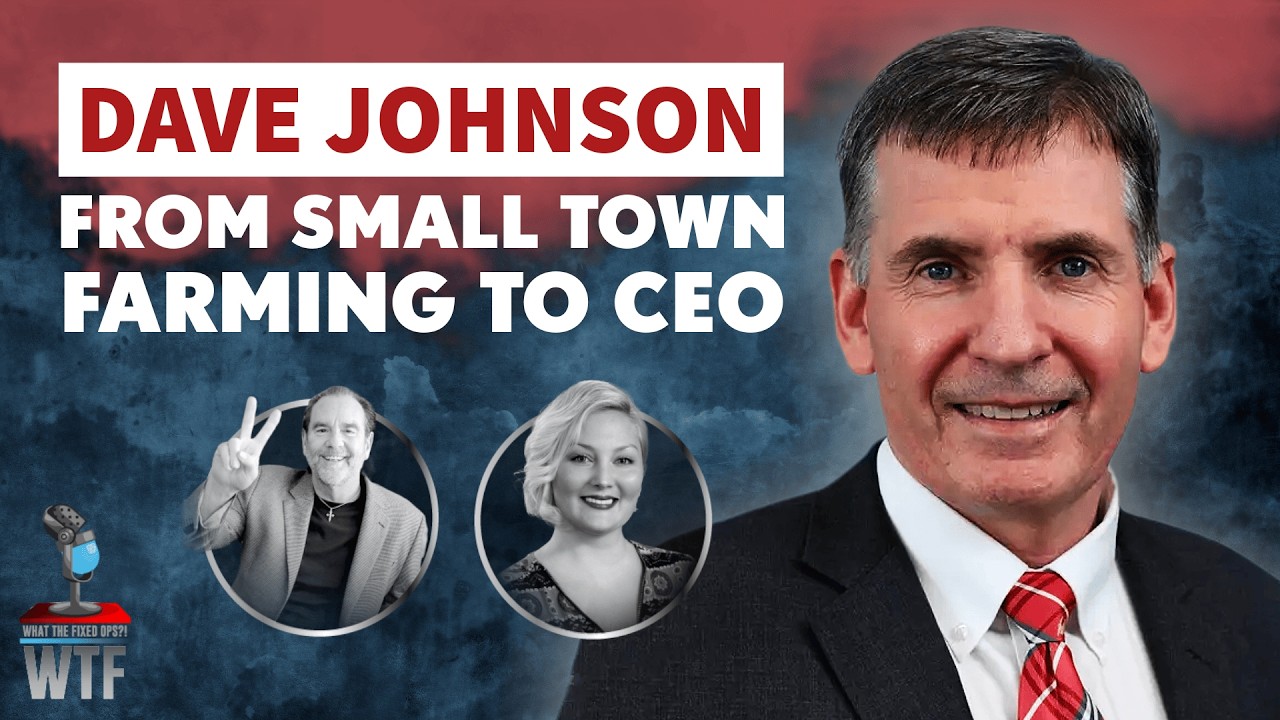
We’re joined by Dave Johnson, a passionate advocate for technician development and professional standards in the automotive space. Dave delivers a candid perspective on the current state—and future—of the fixed ops industry, challenging leaders to rethink how compensation plans, training models, and automotive vendor partners influence performance. His message is clear: culture follows structure. If incentives reward shortcuts, shortcuts will define your service department. But when pay plans, leadership expectations, and dealer vendor relationships align around quality and accountability, results follow.
This conversation goes deep into automotive service retention—both customer and technician retention—and how trust is built or broken inside the service lane. You can’t promise excellence in your automotive marketing if your internal systems don’t reinforce it. Real trust in automotive marketing starts with certified professionals, consistent processes, and leadership that refuses to lower the bar. The data continues to support the value of ASE (Automotive Service Excellence) certification, proving that technicians who commit to higher standards consistently outperform in productivity, earnings, and long-term career growth.
We also tackle the role of AI in the future of fixed operations. While artificial intelligence is reshaping diagnostics, communication tools, and service workflows, it will never replace the need for skilled hands, sharp critical thinking, and disciplined leadership. Technology should enhance professional standards—not compensate for their absence. The same holds true for automotive vendor partners: the right partnerships strengthen operations and customer experience, while misaligned ones create noise without delivering ROI.
At its core, this episode is a blueprint for building resilient, high-performing service departments in a rapidly changing automotive landscape. As AI advances and fixed ops industry trends evolve, dealerships that prioritize Automotive Service Excellence, smart vendor alignment, and leadership humility will define the next chapter of the industry.
Read the Transcript
Hello everybody. I’m Russell Hill, I’m your host of WTF and that is what the fixed ops to everybody out there and I’m joined today by. Hello everyone. I’m Charity, your co-host today and we have Dave Johnson the president and CEO of A.S. Dave. Welcome to the show. Thanks for joining us. Yeah. Thank you Charity and Russ I’m looking forward to this. And it’s going to be a fun conversation. Yes. It’s already starting out that way I love it. Well introduce yourself to us Dave. Let us know what you do and who you are. Yeah. So, um, I like to start from the beginning, and I think it’s because it’s reflective of our industry and what, what can happen with anyone in our industry. I grew up farming and ranching up in northern Wyoming. Middle of nowhere. Nearest place that anyone would probably recognize is a little place called Cody, Wyoming. And, um, grew up under the tutelage of my dad and my oldest brother, who, uh, had vast experience in, uh, fixing, repairing and maintaining anything from cars, trucks to tractors and heavy equipment. And, uh, I grew up basically with a wrench in my hand. And from those humble beginnings, because there wasn’t much cash, we had to fix things. We didn’t get to buy things, and from there ultimately ended up going to Weber State University in Utah. After thinking all I wanted to do was turn a wrench, and my dad convinced me I should maybe get some go to college. And and that was okay for me. But, you know, it wasn’t necessary. But I did it. And I had dreams of working in the mining industry because I loved heavy equipment. God had other plans. Uh, when I graduated, I ended up, um, being recruited by Ford Motor Company to go to Michigan and work for them. I’d never been that Far East before. I had no intention of doing it. doing it, didn’t want to do it. Everything else fell through that I was working on in terms of opportunity, and I had all these five year plans to leave for it as well. And it only took six plus five year plans for that to succeed. So I ended up retiring from Ford after thirty two years as their executive over the global fixed ops support operations, called the service engineering operations there. And uh, after retiring, the ASC came calling. And, uh, I just thought this is a great opportunity and the opportunity to to hopefully give back, but also to contribute. And and I’ve been blessed by it. And so here I am. I’m now, um, CEO at ASC, and we’re trying to blow the dust off the brand and put our best foot forward to support the industry. So is ASC a company that you built or that you joined? No. I’m glad. I’m glad you asked that. It’s a great question because a lot of people in our industry, they know what ASC is, but they don’t necessarily know the history. And so I’m going to take you on a little trip back to nineteen seventy two. So here we are in nineteen seventy two. The big three at the time, you know, had been, um, you know, Ford, GM, Chrysler, um, as it was known at the time. And nada the National Automobile Dealers Association got together because what had happened was, the politicians will say, in D.C. had gotten Ahold of some issues around automotive care and repair practices. They’re concerned was fraud. But as they looked at it more closely, they discovered a lot of it was had more to do with competence than fraud. But government was threatening to set up establish federal licensure. Well, nobody wanted that. And so again, you had the big three, had nada. And you had a couple of the big chains, aftermarket chains at the time, um, that got together and said, hey, we can do this ourselves. We can regulate ourselves. And so we’re going to establish ASE as the entity that will be doing credentialing for the industry for third party certifications. So that’s how it all started. And so since nineteen seventy two. So now we’re over fifty plus years as he has been there in that key role, providing true third party certification for technicians. You’ll hear a lot of people say, you know, CR certified techs, well, you want to ask who certified them because some people will say, well, we self certified them. That’s not real certification, but that’s okay. We’re here to fill that role. And as we’ve grown into that and recognizing we sit in this unique place in the industry, we also have what’s known as the ASC Education Foundation, which grew out of a couple of organizations that were out there trying to serve the industry by ensuring that students were receiving the kind of education that they needed so they could come out of an automotive program or heavy truck program or whatever the case may be, and be able to go into a shop and be productive. and that may seem self-evident that everyone would do that. It hasn’t always worked that way. And so ASC Foundation accredits, so it’s a little different. Think about any college program or university program type school program. They have accreditations that they can obtain. And what that means is, is certification of your program is what it means, right. So that, you know, we know that you’ve got the right tools, the equipment, the instructor who knows what they’re doing, the facilities, that everything is right so that that student can come through that program, come out of it, and they’re ready to go produce. And there’s around two thousand accredited programs out there today. There need to be more. And we’re working on that. So those are the kind of the two sides of ASC I got. I got to tell you, this is my forty first year in the automotive industry, and it is a badge of honor, the logo that everybody sees behind Dave. Everybody’s familiar with that logo. Now you’re going to understand, uh, the story and that he just explained how it all started and how he came about being there. But I mean, you can drive by independence franchise dealers and everybody’s looking for that, that that blue ASC certification that it’s like it is it’s like a badge of honor. Do you agree? I absolutely agree. It’s an interesting thing, especially in the day of social media. You’ll see the the the folks out there that are um, we’ll say they aren’t exactly the most positive about ASC, right. So, so those in the industry that are kind of throwing rocks, it’s not the consumers. The consumers don’t have an issue with it. It’s only if you get down to the fundamentals of this. As a consumer, I’d ask people, would you want to go to your dentist that hadn’t been certified by, you know, the state? Or would you go to a lawyer that didn’t pass the bar exam? Would you go to a CPA that wasn’t a CPA, as in Certified Public accountant? Why would you treat your car any differently, especially in this day and age? Right. So it’s a no brainer from the consumer standpoint. There’s people out there that have criticisms of ASC. Within our industry. I get it, and especially again with social media. You know, um, look, rage sells and and so you see some of that and it’s okay because there are fair criticisms of ASC and things we do or what we’ve done in the past. And, and, you know, I think I said earlier, we’re working to blow the dust off the brand here. And what I mean by that, it’s much deeper than that is where we’re trying to see how how do we serve and enable the industry. That’s what we’re here really to do. I’m not sure that always came through in the way that ASC is operated, and we’re changing that. And so I’m really excited about it. Again, doesn’t mean you’re perfect or just because you’re a certified technician that you know all and can be all and do all, um, no more than it does with your doctor, CPA, or dentist. But it means that you, um, have shown the dedication that you are trying to be a master in your craft. That’s really what it means. Yeah, again, not perfect, but it is a badge of honor in that sense. And I say, Russ, it’s not a badge of honor because, hey, ace is so awesome and cool and you’re part of the Ace club now. No, it’s because ace is actually reflecting who you are and the club that you’re already part of. As as one of those. It stands for something significant. Yeah it does. Well, let us let us get started with a few questions. You’ve compared lowering standards in technician certification to dropping SAT requirements. Are we at risk of weakening the profession to solve a staffing shortage? Good question. Oh, that is good. That’s a loaded question, charity. Um, but it’s a good one, and I’ll look. My short answer is yes. And again, there’ll be there’ll be some they’ll say, well, but you don’t have to you can be a good technician without being certified or, you know, you could lower the standards when you get more people in. And yes, and frankly, that happens today because it’s a free market. And again, required licensure is not there. But I would argue that if you dumb it down, if you if you don’t ask for this, if we don’t expect this of those who take care of us, what is the standard? Who sets the standard? You could argue that, oh, you know, OEMs, um, you know, the dealers. Well, they’ve got their OEM standards that they need to meet. Well, yeah, they do. But even at that, I’ll pick on Toyota as a as a great positive example of this. Toyota still requires ASC certification because they want that third party validation. Yeah. Yes. Thank you thank you Russ I’m my words I’m having a hard time with them today. But but but having that third party validation that says no this is real. It’s worth it. And and as you think about that example that I gave, I thought it was very interesting. This was in California, right, where this was a professor that had done a lot of I think it was economics professor had done a lot of study on this since, since Covid. And and what he could see was that when they dropped the SATs, everything kind of started to degrade. And he said, what you started to see in the classroom, what was happening there and that the performance levels were not there that they had before. And and you could argue that the SATs were imperfect, and they are for anyone that’s taking the SATs or the Act or whatever college entrance exam you want to pick, we would all I would argue they’re not perfect. I thought I was much smarter than what it reflected of me, but but it was probably pretty accurate in my case. But but but by but when you don’t have that now, how do you know where you’re at? And to me, it’s you can say, well, it’s about the institution or about, in our case, about the industry with Aces that you know, well, it doesn’t matter. Well, no, it it does. It matters to you as the individual. Because think about that S.A.T. example. The big problem in there was not so much about how smart are you? It’s about where are you at in your journey? In your learning journey. That was the big problem. So having, uh, having these benchmark tests is what tells you where you’re at. And this is what I, when I said, talked about enabling. And I think this is where we’ve gotten it confused as an industry that like, well, if you can’t pass an ASE test, you’re an idiot or you know, or that that you know that it doesn’t. And then and then that’s that becomes a negative connotation. If you can’t do it and then you’ll have those that are maybe they did fail a test, or maybe they’re afraid to take the test, which I don’t blame any of them, I get it. Um, and you create this stigma around it that that it’s, it’s actually cheating you. Because if you look at this as this is part of my journey of becoming the kind of service professional I want to be, I’m taking the test. I don’t care if I fail, guess what I get? I get a gap analysis. I now get to see where is it that I’m weak. So that I can go work on that I can come back and take the test again. I can pass it. I now know I with confidence for myself and for everybody in the industry. They know what level I’m at. And again, it doesn’t mean I’m perfect, but I here’s where I’m at and you know it. You can declare it. And guess what happened? The key thing was on that journey, Russ and Charity, you learned something. And that’s what I mean by ASC enabling. And back to that S.A.T. comparison. That’s what that professor was really pointing out was how you don’t want him failing classes. Well, we don’t want people screwing up on fixing cars, right? That’s part of it. That’s the analogy to me. What you want them to understand is here’s where your strengths are. Here’s where your weaknesses are. Let’s go address the weaknesses and let’s help you succeed. So I don’t care how many times you failed ASC test. We don’t keep track of that. We just want to know. We want to help you succeed. You know it’s different for everybody, but I think there’s a lot of things that a bar, obviously, of where you’d like to be level of competency. Also, it has to do with the instructor and the level and how somebody is, you know, moved through that process as well. I think that’s important as well. The bottom line is if if that’s part of your dream and where you want to go, so many people, I call it fail that you want to call it that, but all that is is my acronym is the first attempt in learning. Okay. Now you know. Now you know where the competency and the proficiency is. And if you’re not getting it from the instructor or instructors, etc., there’s a lot of things happening there, I think. Don’t you think, Dave? I do, I’m in fact, I’m writing that down. I, I’m first attempt in learning. I love that Russ. Um, and I’ll send you a bill. Okay. Very good. I’ll buy you lunch next time I see you. Um, but yes, I think you’re. You’re absolutely right. You nailed it. I couldn’t say it any better. That’s that’s what this is about. And and when you think about here’s the great thing about our industry, I think, is the fact that, guess what, you don’t need a bachelor’s degree. You don’t need an associate’s degree. You can you can take whatever path you want to take. My path was very different, right? I like I say, I grew up at the tutelage of my my dad and my older brother. And then, yes, I took courses at school as well. I took a very interesting path in that sense. And this enables you to do with with the aces is doesn’t matter what path you took, doesn’t matter what school you came from, what the name on the building was. Right. Because as opposed to, we’ll say more formal education where that seems to be a big deal, which means you pay more money. In our case, everybody’s equal. And that Ace certification that that just erases where you came from, who you took your classes from. Because again, it sets that that sets that baseline for you to say, I know where I’m at. Everybody recognizes it. And guess what? Everybody can do it, I believe that everybody can do it. Whether you went through a short program, you had a great instructor. Maybe you didn’t have a great instructor. Maybe there are certain things you learned and other things you didn’t. Guess what? This is a way for you to level up and be able to say it and declare it, regardless of what your path was. I love automotive, it is the great equalizer. It doesn’t matter your past, it doesn’t matter your background for the most part, okay. If you focus on the prize, most people are willing to pay the price, but people that focus on the price almost never get the price. So it’s all a matter of what you want out there. But automotive, I don’t care. From sales to fashion to service to technicians to riders, whatever it is that you want to do, you can do it in this industry. Do you agree with that, Dave? I do. That is the great thing about this industry overall. My adult um, life, if you will, has been focused more on the fixed up side. I think about dealers. You know, part of my job was I was coming up through the ranks at Ford was I was out there calling on dealers and helping them on the business side and looking at fixed ops and sales and f and I and, and and you see all of these unique paths. You know I swear, you know. Yes. One, one person may have had their MBA. Good for you. That’s great. Other people didn’t have a degree at all. And the other? The GM of a store. And they were killing it. Hell, I didn’t even have a high school diploma. And I was right. Perfect example, Russ. And I think of a friend of mine, Ed Roberts. Um, the, you know, he’s, uh, buzzard Ford and Ed and I got to know each other, uh, and our when I was still. We love ed to death, man. Isn’t he great? Isn’t that. His story is amazing. And coming up through fixed ops. And I know I’m biased, you know, so I’ll admit that. So I don’t want to offend the. I don’t want to offend the fat guys or the sales guys, but I’m just telling you, in my humble personal opinion, what I observed generally was the best run stores that I saw were those guys that had come up through fixed ops because they understood that that was the foundation of your store. It’s the foundation of your entire success. And it starts with that consumer experience. And if you got that right, the selling the car side is going to be so much easier. And you have a relationship of trust or your faith is easier. It’s just easier. Dave, isn’t it amazing what it is? A personal friend of ours of the show as well. More than once a big promoter of his book. Look at what he’s done at him and Jeremy in in mobile service. Oh my gosh, they’re the unicorn of it’s I know we’re getting off on a tangent. Jerry’s going I have a question I have a question. So we’re going to ask this question Dave. Go ahead. Yeah yeah. Let’s go. Well let me ask you this, Dave. Dealers are desperate for technicians. Is making certification easier the right or the wrong answer? It’s the wrong answer. Look, and I and I get it. Thank you. Sorry. Sorry to keep going back to, you know, four days, but, you know, that was part of my responsibility as well. I, I had recall and warranty and and technician recruiting responsibilities to support the dealers. And in the short term, you know, you can either and this is this is a trouble with our business. Let’s be honest about it in my in my humble opinion, the problem with our business in general with I think about the dealer side and the OEMs, it was hard for us to look past the next thirty days. We always talk about long term and needing to be strategic and all of these things, but it was so hard to look past the next thirty days because guess what? As a dealer, as a guy running fixed ops or the front end of the store, your bonus, your pay was tied directly to what happened over the next thirty days. And so it was very tempting to just pull levers to get some short term gratification. But I’m telling you, it never pans out. And so this this ties right into sending your guys to training on the fixed ops side. Right here you have you already have capacity problems in your store. And yet here I’m being expected. And your technicians want it too, because they want to be professionals, to be able to go to more training. And and you don’t want to let them go because you know you’re going to lose the next few days. Think about what’s going to happen over the next six months, the next year, the next three years. You’re going to you’re going to retain the guy. You’re going to have a better a more capable person. That’s going to be more productive. You just got to keep looking at this. As I’m investing, I’m investing. And sometimes you got to shut out that thirty day window. So to your question charity, if you’re like, hey, certification shouldn’t matter. Guess what? Uh, you could do that, but you’re gonna have a bunch of oil rack guys is what it amounts to. That can’t grow into the store and do more. And I’m not diminishing what we do on the lube rack. It’s really important and is a fantastic place to start. It’s foundational, for sure. Yeah, it is. And that’s where you that’s where you get exposed to the business. But if you want them to progress beyond that, and you look at what what happens with attrition numbers, what we see. And this is just general across the industry, whether it’s aftermarket, dealer or whatever the case may be roughly fifty percent attrition in the first year on the job, and then the second year, another fifty percent of what’s left. If I’m doing my math, that’s so that’s about yeah, you’ve lost about seventy five percent on average. And that’s your pool that needs to feed the rest of your shop and your business. And it’s demoralizing to everybody. It just doesn’t work. So and that’s where it may be a little counterintuitive having standards and expectations. Number one, you know who’s serious and who’s not because you that attrition costs you money. And so as you as you look for that and then as you encourage it you’re now developing them. You’re creating a culture of success in your own facility that breeds success. So anyway, that was a great question, a long answer, but you got me going there. No, let me tell you about a partner that’s actually helping dealers get ahead. Global dealer solutions. If you’ve been wondering how to use AI the right way in your dealership, especially on the fixed side, these are the people to call their team gets it. Not just the tech, but the real challenges that dealerships face every day. We’re talking about conversational AI that doesn’t just respond, it converts it. Books, appointments, follows up with service leads, even answers customer questions with actual relevance. It’s not replacing your team. It’s making sure your team can focus on what matters most. Closing rows and building relationships. But GDS isn’t just about AI. They train your staff, drive traffic, and tighten up processes so your results stick long after the tool is turned on. And everything they do is built around one goal. Growth that is real. If you want more service traffic, better follow up and a partner that’s always a step ahead. Check them out. Visit dealer.com. Follow them on LinkedIn at GDS dealers. Or just shoot them a message and ask, what would you do with my store and see what they come back with? Global dealer solutions. Process driven people first. Always on it. There’s there’s more to come. Which leads to the next one. Charity. Yeah. No, that was a great answer and I appreciate you being thorough. But let me ask you, does certification directly impact retention and customer trust? Yeah. Um, let me give you some numbers. And these this is from some aftermarket stuff that was done a few years ago, but it was nationwide and it has application across the board. So I’m not saying your exact numbers will be the same, but here’s here’s what we we saw was looking they did a study of ASE certified technicians versus non-certified. And this was nationwide. And as they looked at that study they looked at productivity, productivity, forty percent higher productivity, ASC certified versus non-certified, looking at comebacks. And now you’re talking to the customer, right? Nothing worse. As a customer that I go in and get a repair and it was more expensive than I thought it should be. And then I got to bring it back again. Are you kidding me? Right. That is a terrible experience. So sixty percent fewer comebacks, certified versus non-certified. Substantial, yes. And now now, now attrition was another interesting one. It ties into what we were talking about earlier thirty percent less attrition. And so you think about well and you’re like well what’s the connection. Well there is you think about it’s like, well guess what? They’re more productive. They’re making more money, they’re a better technician. It’s just a better experience for them. They’re going to be less likely to leave your shop. That’s that’s the reality of it. And then what we found was this was separately, just last year, we did a huge survey, over thirty six thousand responses from practicing technicians looking at ASC certified and non-certified. So had the mix of both. And what we saw consistently was twenty percent higher pay for those individuals. Absolutely. And when you think about it, Russ, you you’d recognize like, hey, well it’s a no brainer. Their productivity is forty percent higher. There’s at least one part of the explanation. And and there’s others. So yeah charity it. To me that is where some of the real proof points are for don’t sell this short. And I’ll say one more thing. A lot of we had we weren’t talking about this much. We’d have been sitting on it for a while before I came into ASC, when I got my hands on like, why aren’t we talking about this? They said, well, because we’ve talked to a few people and they say, well, just because, um, you know, just, you know, they have they have ASCs and they and they’re getting better results. That doesn’t mean ASC caused that. Okay, fine, I don’t care. You know, they said, well, correlation doesn’t mean causation. Correlation has its own value. I don’t have to say because I took an ASC test. They’re all sudden smarter. No, it’s a reflection of who they are. So I’m identifying people and that correlation is massive. We should be shouting it from the rooftops. So. Well yeah. And I would argue yeah it has some intangible causes because it, it motivates you to be better naturally when you get your ASC. Yeah. So there you go. So it causes, it makes you want to strive, particularly if you’re goal driven and you want to climb. There’s different levels of certification. Is that correct? Yes. Many levels of ASC certification. And that means represents many things to and it could be different. Whatever success is to that person, it could be financial, but it could be many other things too, couldn’t it. Yeah, absolutely. And when you think about, you know, we’ll talk about the automotive series. We have over one hundred tests out there. Yeah, lots of things that we can certify. But the certifications for automotive there’s A1 through A9. And then there’s three advanced levels as well. And the thing I love about it is and I’ve seen it. I’ve talked to people and asked them about their journeys as to, well, why did you keep pursuing this? They said, well, first, the first time I had to, I had to get my G1, my, my general maintenance or, or I had to get breaks or something. And so I did it and I didn’t, didn’t want to do it, but I did it. And then I succeeded and I said, and I realized, wait a minute, this is something bigger. I want this for myself. And so they went to start taking the rest, and they become master ASE certified masters. And I think that’s that’s an amazing, an amazing thing that happens that I would say is some causality, that experience of going through that process and realizing they can do this and then recognizing the value in their own life and then saying, I’m going to do more whether the shop’s going to pay me for it or not. Of course we’d like the shops to pay for it. It’s the right thing to do. It’s a it’s a cheap investment. But I mean, all money is going to be a byproduct of you continuing to be educated and proficient at, you know, the next level, etc. I would think charity. Yeah. I’m going to ask you a somewhat personal professional, no personal questions on here whatsoever. Go ahead. Well, you describe yourself as a servant leader. What does that look like in a high performance automotive organization? Weird. Servant leader. I almost I kind of get embarrassed at that term. I mean, it’s a term they use out there, right? Servant leader. They do. But it probably is the best description. But it makes me sound like I’m better than I am, I think. No, I love, I love, I love the term and it resonates real well in our industry. It has it has significant meaning like ASC does. Dave, please. Well, thanks for that, Russ. And and what I see is um, and everybody comes with their own style. So there’s not a we all have our natural styles, but I think even with natural styles, I I think that principle of being a servant leader should apply to all of us. So for me, it probably came, um, kind of comes easy, some of us from my background and about staying humble, recognizing that even though you’re leading something, usually the one leading it knows the least. I’m just being honest about that. There’s a lot of, especially if you’re well and it’s hard sometimes it’s hard to admit. Right. Because a lot of times, and I’ll say in our, in our, uh, profession, you really are it is the, you know, individual excellence is what it’s all about when you’re out there turning a wrench. But as you start to transition to becoming team lead, a foreman, service manager, director, whatever the case may be, and in my case, a very different path on the corporate side, if you’re not humble, you keep thinking, I know it all. And what happens is people stop talking to you and telling you what’s really going on within your operation. And then the sad reality is, is you’re blind and you don’t even know it. And you keep spouting off all these things we need to do. At some point it catches up with you and you either fail in my opinion, or you, or you repent. Humble yourself a little bit and you start and you start asking, how can I support you? How can I help you? What do you see that we need to be doing differently? Or I need to be doing differently, and it changes the entire dynamic. And and it and for me that’s worked and my upbringing I you know, anyway I’ve served a so we’re getting personal now. I served a mission for the LDS Church in New Zealand coming off the farm in Wyoming. I got sent to New Zealand for eighteen months. And and you started learning very quickly about humility and about approaching people and asking questions. And even as you start to lead other people. How how do I make them the most important thing that that I’m doing, because those are the people that are actually enabling my success. If you want to look at it selfishly and as I do that, it just changes the whole dynamic. And so I, you know, and when I said it was weird in the automotive industry and Russ, you can relate to it. Hey, we have some egos out there. Right. And that’s not all bad. But but you have some people that and they’ve had success because of their individual capabilities, really intelligent people. But what I’m telling you is my observation has been that you get to a point. And I saw it in Ford, too. We all have egos too. You get to a certain point and then you kind of stalled out because you lost that force multiplier that you naturally get. If you are actually working with your people, seeing how you can help them and serve them in sincere ways, you now have a whole team behind you. It’s not you leading it, it’s the team leading. And it just makes all the. The dynamics are really different. I understand, uh, that serving part. I was involved with an organization for a long time called the Living Water Foundation. It’s very humbling when you go to Africa and Nicaragua and other places like that, and you serve and you come back, and how humbled and honored and grateful and, uh, for this country and all that we have. It’s truly amazing. I have found and I think I just heard you say this when somebody like, it’s like, uh, Chris, uh, a cascading stream coming down the mountain as the snow melts, right? It hits a level, and then it starts branching off in different areas. One of them, it may be it gets dammed up by beavers, and it’s not crystal clear anymore. It starts to become a cesspool and it gets hot and so on and so forth. Where the other side. So I kind of think we’re that way. We have to be open and let it go through and or we become complacent and stagnant. And I have found that the release for that is to pour into other people. And that is my only solution, is to be of service, get outside of myself, or I become stagnant. Is that what I heard you say? Yes. I think that’s a great analogy. Russ, I love that I’m going to steal that one too. Uh, because I think that’s. It’s okay. No, but but but but it says it so. Well and it it made me think of, um, how we, um, you know, just just how we, how we interact and what happens. But it’s, it’s that concept of when I think about, you know, like when I was at Ford and I got to, you know, this global executive level which I never dreamed of. Right? I called my life a slow motion miracle. I look back to, how did I get here from there, that kid that you know, I’m telling you, no money and just scratching by and just kind of figuring out a day at a time and just trying to do my best, but wanting to be and do more. How do I get from there to here are this global executive and this this is this is part of it is, is that recognizing that I’m I’m not the smartest guy in the room and and this is going to sound a little self-serving, but but it’s kind of true. You don’t want to. Anyway, I’ll just say it. I’m not the smartest guy in the room, but I’m good at using the smartest people in the room. Um, and and I don’t mean that in a negative way. Highly intelligent people. Very capable. But as a leader, being able to kind of put the pieces of the picture together with those really smart people in their own right and and letting them have the, you know, recognizing them for it and leaning into it and not being not being afraid of it or intimidated by it, but leveraging it and helping them to, to grow as well, it just ends up being a win all the way around. And that ties back to your, you know, if you’re that person that it’s all about me and my ego and I’ve got to be the smartest person in the room. You’re building those beaver dams that you’re talking about. That’s not gonna. It’s not going to serve you well. And and we’ve all done it. I’ve done it. I’ve. Trust me, I’m not perfect. The servant leader thing bothers me sometimes because I know I’m not perfect, but I can see the trend, right? My trend has been that way, and if we can all trend that way, everybody’s more successful. Absolutely. Thank you for sharing that personal stuff. That’s what makes everything that Jerry and I do with the podcast is, um, is those personal stories. Those are some of the things that people really remember most. This is pretty significant. Anyway, I know we we have so many questions. We’re not even going to even get to a quarter of them. Charity. Another one. Well, this is pretty personal too, but I figured I’d ask you if, you know, after spending decades in the automotive business, is there anything that still frustrates you about it? Where shall I start? I, uh, um, you know, it’s interesting and especially about the fixed up side and thinking about being a technician. Sometimes you’re, uh, we can be known as cynical, right? And never happy. Um, and, um, as I look back, we can all fall into that. I was like, it’s not a good way to be happy. And so there’s lots of things you can complain about legitimately across our industry. And you know, I already talked about one, which was that short sightedness. We all complain about can we not be a little more strategic can we not? I gotta believe it’s in us to do that. And some of that is the way our industry is structured, the way things grew up enable that, that kind of short term thinking. And so some of those things guess what? You don’t change overnight. But if I, if I would say I’m going to pick, I’ll pick on the one that’s close to home for me. Um, as we’re talking today, one of those is about how we think of and then treat our service professionals that are working back there on the floor, um, in the back end of the of the store. You often, whether we admit it or not, we start to think of them as a commodity and we can just interchange them. And yet the reality is they are not a commodity. And as you look at what’s happened with vehicle technology within our industry, guess what? That image of the grease monkey, which I’m guilty of using it myself, or a wrench turner, which I still use. That term is really not a fair term at all. That’s not what this is about. And the level of intelligence, and I’ll say wisdom that’s required to be really successful is off the charts. And and this goes back to that, that path, I think sometimes they’re perceived as well. That guy couldn’t succeed at doing anything else or going to college or whatever. So he’s back there fixing cars. No, that is not true. He did it because they chose it. And they love what they do and they’ve become good at it. They didn’t start out good, they grew into it. And so we need to recognize them for the, I say, the precious commodity they are. And then I’ll flip it to the other side and say as, as one of those service professionals, what we have to be so careful about is not giving in to the cynicism, because that is not a way to lead a happy life. And no, and you’re going to be miserable no matter what. Now, if those circumstances outside of you and your store are making you miserable, well, change your circumstances. That’s just it. You know, talking about our friend Ed, you know, think about Ed. I know how he treats his people. I know how that works. He has all of those things in place. That’s why he’s so successful at it. Because he understands. Well, I want to piggyback off something you just said ago about, you know, people with the ego, their college degree. Well, not first of all, whatever. However long it takes most people to get a degree, whatever field they’re going into, ninety two percent of those don’t even work in their chosen field. Most of them come out heavily debt laden, uh, don’t know how they’re going to pay back their student loans. Well, I know a so-called wrench turner technician, whatever you want to call some of them make two hundred plus thousand dollars a year. Are you kidding me? They’ll they’ll never make that. That’s exactly right. And more frustration, more frustrations. Charity. Right. There’s another frustration that Bureau of Labor Statistics, the BLS numbers, they’re just wrong and they’re not. It’s because of the way they build them. We actually met with the Belles last year to try to understand how they come up with some of their numbers, because it was like forty some thousand was was the average pay that they were identifying. It was like, dude, that is not right. That is not true. It is much higher than that. Uh uh, and anyway, you end up into the statistics piece of that. But you’re absolutely right, Russ. And that goes back to that image of technicians. Why I would argue and again, you know, you say, well, that’s self-serving, Dave, and maybe it is, but it doesn’t mean it isn’t true. That’s where these certifications mean something. It helps to reinforce to others the status of who you are as a professional. I’m not saying it made you. It’s just a reflection of who you already are. Other people need to be able to see that, and I think it’s a good way to do it. It’s education. You know, I was one of those like I said, all I want to do is turn a wrench. I didn’t care about going to school. My dad never graduated. I barely graduated School was not a priority for me. And as I as I went on, my dad says, hey, when you get to be my age, you know that concrete floor gets pretty darn hard and you might want to have other things. He wanted us to go get some further education. Well, regardless of what path you take, I did that, but guess what? I was on the five year plan to get a four year degree because I was working my way through school, you know, renting a shop, body shop. I was doing everything I could just to get through it. And I wasn’t that smart. Just going to be honest with you. I go into engineering technology, which meant lots of math, which I hated math, I loved the hands on piece, I hated math, and so I do this just because maybe I’m stubborn. But it’s about that process. Whatever path you take, right? And thinking about, do I want to just have a job or do I want to become somebody? Yes. And so it’s in that striving to become is where all the good things happen. And that doesn’t mean anything about your income or whatever that will come, but it’s about you becoming something. I suspect that you got as far. And what are the things that have happened? Is probably in direct proportion to what you gave back. But also you’re humble and kind and long run, that’ll get you much further, with much more happiness than somebody who’s egotistical, maniac and cherry. And I believe, and I think you also agree too, for all of you out there listening to this, there’s a huge paradigm shift taking place. And when I’m when I’m talking to technicians and advisors, I’m talking about fixed side of automotive is big things are happening and there’s there is major changes, although it’s taken time. But I’m not just because we’re in this and do this and charity and the podcast and things we’re doing to promote that, but there’s things that are changing, uh, in a pretty significant way and how people are referred to and being part of the team, because together everybody does achieve more. Uh, there was a time where it was so siloed and still is in some places, from sales to service. It’s like, oh, they’re a commodity. They’re an afterthought. They’re not they’re not part. No, it’s exactly the opposite. Where do you think the money is made? Where do you think he likes on them, for heaven’s sakes? You know, anyway. That’s right. Yep. That’s right. The margins are not what they were on the sales side. You got to get that fixed upside right. And everybody plays together. And that’s where the success comes. What gives you the most hope about the next generation of technicians? Thank you. That that is right on. I tell you what, um, start with a negative first because there’s these perceptions out there. This generation doesn’t want to work. They don’t want to do this. They don’t want to do that. Guess what? Every generation or whether baby boomer Gen-X millennials, you know, now we’re Gen Z. Hey everybody’s had their criticism. What I see is some highly intelligent, capable individuals. And to your point, Russ, about the industry changing sometimes that next generation forces the industry to change. And it’s a good thing. And I think we’re going to see more of that. But the the level of intelligence and capability is off the charts. And you see the interest. Now, that stigma that was there about, well, if you don’t go to a four year college, you’re you’re a dummy, right? Or you’re not going to succeed. That is falling off quickly, right? It’s that whole deal has been laid bare that hey, nothing wrong with you doing that, right? But don’t assume success, financial success in particular, just because you got a four year degree. What you might succeed in getting a lot of debt is what you might succeed at. And so this idea of, I can go into the trades and in our case into automotive. And kids becoming more and more interested in it, I think is great. And that idea of their satisfaction and still being able to work with your hands and your brain, and I would argue in our industry in particular, there’s no better combination. Like I said, grease monkey days. It’s over. Yeah. You still get dirty. Guess what? That’s part of it. But that when you look at the balance of it, when you have vehicles that have more lines of code in all the systems than a fighter jet have, you know, on average fifty modules nowadays, and you get into the high end, over one hundred modules, you have self-driving capability. I call them rolling robots. I am so excited about the future for everybody and in particularly for these young folks, because they’re going to find that, hey, wow, all these things I learned in school and what’s required of me, it’s just more and that’s not a bad thing, but it also means you need to know what you’re doing. But it’s the future is bright and the pay is going to be there. And when AI wrecks everybody else’s careers, yours is still going to be standing. Yeah well well well said. I just recently was watching a recording of Jim Farley Ford. Right. Uh, talking about his own kids and going to college and, uh, everything is these welders, technicians that those are the frontline things that are happening, that people are focusing. That’s where the security of the that’s where everything is at. Right? I believe right now we have a huge shortage. Didn’t even get a chance to really address that we have. So it’s it’s it is a wide open opportunity for all of you out there, even considering not to become a grease monkey, not to become a wrench, but to become a technician. And with AI and data and where everything is going, the future’s so bright. You. I mean, am I right, Dave? You’re absolutely right in thinking about. You may not want to be a technician your whole career. That’s not a failure. I call our industry a career lattice, not a career ladder. There are so many paths that you get to take and and the opportunities are just immense. And so we need to do better at trying to expose that. And we’re working on that as well. And back to what Jim said. I love what Jim’s been saying. He’s been stirring the pot a little bit out there. And I would say in a good way. Um, because these are the things that we need to work on. There are these unfilled jobs. The opportunities are great. No, you aren’t necessarily going to make one hundred thousand dollars a year when you come right out of school. It’s not going to be that. But you can quickly grow into it. And it’s all about what do you want to be? What do you want to become if you want to do it, the opportunities are there. Yeah, I think it’s probably thank you for sharing that. I know we’re out of time, but so recently and you have quite the tenure with Ford, we’re now a certified partner with not only Ford, Ford Direct to Shop and Ford, but we know that their collective what they’re focusing on right now is customer pay retention. That’s so huge because the defection rate and all the things that we can’t even get into. But but it’s going to be an amazing ride. And I’m really happy to see an automotive that big and others are following suit too. We have to the cost of hiring and everything goes into it to only only retain fifty percent or you lose up to. It’s just it’s just it’s so costly and the consumers are the ones that pay the price. Well, I think we need to have another we need to have another session, guys. I mean, I’m just inviting myself, you know, because we only scratched the surface today and reserve the right because we got through, uh, what, maybe five out of twenty five questions. So that was a lot left. So we’ll have to come back to unpack. But, Jerry, go ahead. No. Um, well, I guess the the final question we have for you, Dave, is are there any things we didn’t talk about today that you wish we had? Well, look, I think we we covered some great ones, and I can’t think of anything off the top. I just know there’s there’s more, right? There’s just more in general we could discuss. But I think about from a fixed ops standpoint, no, I think we hit the key. To me the key one is what are we doing to retain, first of all, the folks that we have and to attract more. Those two things are inextricably tied together. And so if I’m a fixed ops leader, you need to be looking. Or if I’m the GM or the dealer principal, you got to get back there in the back end and go look and see what’s going on. On my financial, the financial structure. I have to incentivize my leaders. Is it setting us up for success or failure? You might not like some of the things you see, but it can be fixed, so keep working at it. Thank you so much. Talk about an extremely successful podcast with Jay Johnson, president CEO, ASC. Come on all of you know you need to like him, love him, reach out to him, etc. get involved. Okay? Get involved. But I also want to do something. I haven’t done this in a while, Dave. We wouldn’t even be here if it wasn’t for charity, okay? She’s the mastermind. She’s the brains behind most of this. I just really just show up. I’ve been in the industry. Just. It’s like she is my right arm and my left arm, and she came up with this idea and came up with this name WTF? Now where do you think most people’s minds go when they say WTF? Right? I have no idea what you’re talking about. Right? Right. So she did this on purpose? Five years ago. This is the beginning of our fifth year with the. And you know, a lot of people during the wanting to start a podcast, but never did. They were waiting for this, waiting for that. And we just got into it, got busy, started inviting people on and and now here we are with you. And, uh, it has been quite the honor, and we’re both extremely humbled to have this opportunity to spend with you. And you already mentioned it because we have it recorded that you we reserve the right to have you back on to finish some of the other things. Great, great and charity. What an amazing platform. And and it’s a privilege for me to get to join you I appreciate it. Well, thank you for carving an hour out of your day for us. We appreciate it very much. And we will have you back. We will. All right. Very good. Thank you. That’s a wrap for another successful WTF.
Watch or Listen