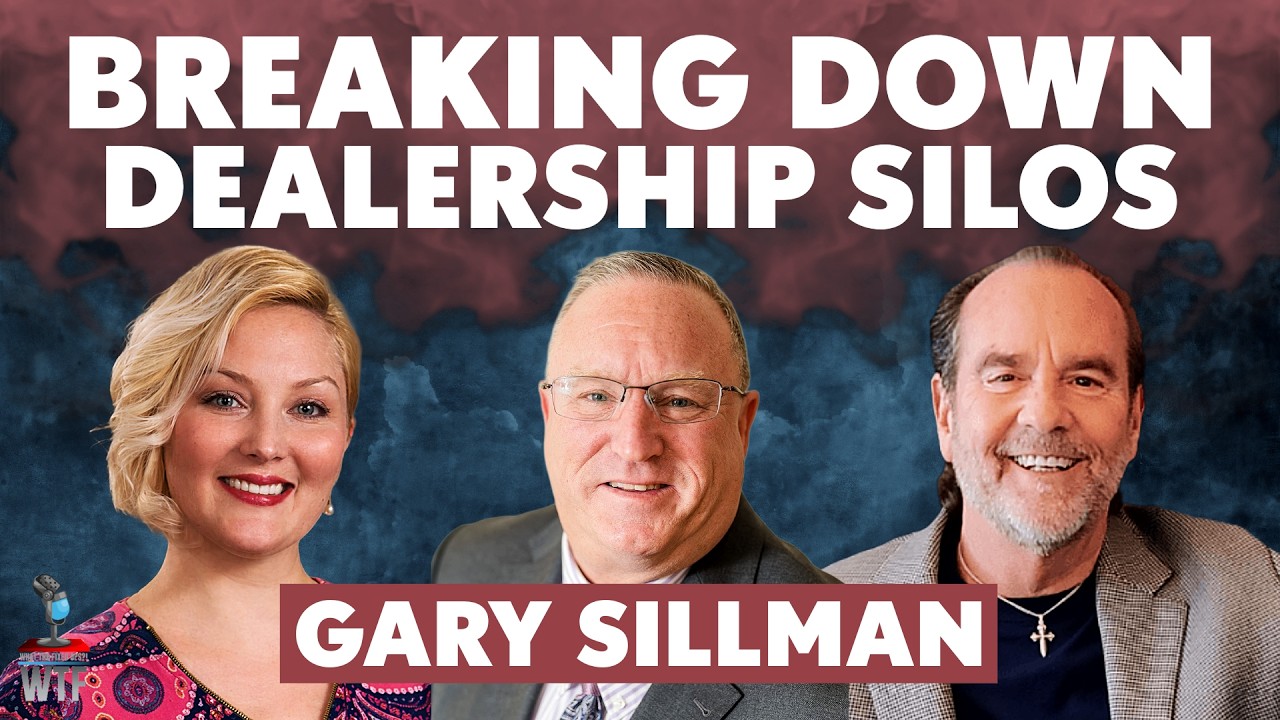
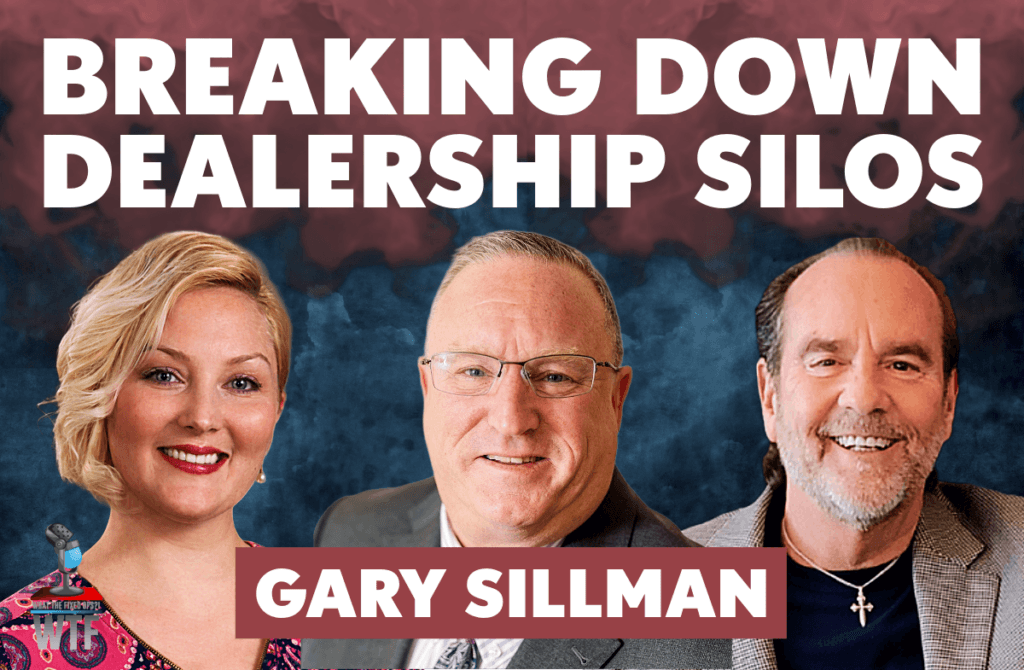
The automotive industry has more technology, customer data, and digital tools than ever before, yet many dealerships continue to struggle with a problem that has existed for decades: disconnected departments. Sales, service, parts, and F&I often operate within their own silos, creating gaps in communication and missed opportunities throughout the customer journey. During his appearance on the What the Fixed Ops?! podcast, Gary Sillman explained why dealerships need to break down these barriers and create a more connected operation centered around the customer.
According to Sillman, one of the biggest opportunities exists inside the dealership service drive. When customers return to a dealership for maintenance or repairs, they are demonstrating an existing level of trust in that organization. Instead of viewing the service appointment as an isolated transaction, dealerships can use that relationship to connect customers with additional solutions across sales and F&I. Bringing departments together allows the dealership to provide more options while creating new opportunities for customer retention and dealership revenue.
Vehicle acquisition is one example of how dealerships can better connect sales and fixed operations. Sillman explained that when a customer visits the service department, the dealership already has an opportunity to inspect the vehicle, understand its condition, and determine its value. By involving the service advisor, used car manager, and F&I department, dealerships can provide customers with information about upcoming repairs, service contract options, and the potential value of trading or selling their vehicle. Rather than allowing the customer to leave with only a repair invoice, the dealership can give them information that helps them make a more informed decision about what comes next.
However, successfully turning the service lane into a vehicle acquisition channel requires more than placing a salesperson in the service department. Sillman emphasized the importance of training employees to approach these conversations carefully. Customers may owe more than their vehicle is worth, have different expectations about its value, or simply have no interest in purchasing another vehicle. Service advisors need to understand how to ask questions, educate customers, and present options without damaging the trust that brought the customer back to the dealership in the first place.
F&I represents another significant opportunity beyond the initial vehicle purchase. Dealership customers are often introduced to service contracts, tire and wheel protection, key replacement, and other products during the original F&I process, but those conversations frequently end once the customer leaves the dealership. Sillman explained that many of these products can also be introduced later in the customer journey, particularly through the service lane. Customers who declined protection during the original purchase may view those products differently once they begin experiencing the realities and costs of vehicle ownership.
Technology can help dealerships create these connections, but Sillman stressed that software needs to support a clearly defined process. A connected CRM can allow general managers, service managers, F&I teams, and salespeople to see relevant customer information and coordinate follow-up. If a customer receives a major repair estimate, for example, the dealership can continue the conversation through emails, text messages, and phone calls while potentially presenting vehicle acquisition or replacement options. Sillman suggested that dealerships could potentially generate additional vehicle sales from the service drive simply by having conversations that previously never occurred.
Despite the enormous amount of dealership technology available today, Sillman argued that leadership remains one of the industry’s biggest challenges. Dealerships have added CRMs, digital marketing platforms, AI tools, and other technology, yet many long-standing operational problems remain. Technology cannot compensate for employees who have not been properly trained or departments that lack accountability. According to Sillman, dealership culture ultimately comes down to people consistently doing their jobs the right way, and creating that environment begins with leadership.
Artificial intelligence adds another layer to this challenge. While dealerships are eager to adopt the latest AI technology, Sillman believes they first need to examine whether their existing operating processes actually work. Adding AI to a fragmented system does not automatically solve the underlying problem. Dealership leaders need to map out how leads, customers, and information move through the organization and identify where handoffs break down. If sales, service, parts, F&I, and management are not connected, new technology can simply become another disconnected tool rather than a solution.
Sillman also emphasized the importance of making dealerships more human through their digital presence. Customers want to know the people they are trusting with their vehicles, and dealerships can use websites and social media to showcase service advisors, technicians, managers, and salespeople. Highlighting an experienced master technician or trusted service advisor can help customers form stronger connections with the dealership before they even arrive. The digital experience should reflect the same people, expertise, and customer service that customers encounter when they walk through the dealership doors.
Ultimately, Sillman’s message is that dealerships need to stop treating sales, service, parts, and F&I as separate customer experiences. A customer may enter through an advertisement, dealership website, service drive, rental department, or body shop, but every interaction is part of the same relationship. When dealership leadership creates clear processes, connects departments through the right technology, and holds employees accountable for consistent follow-up, fewer opportunities fall through the cracks. Breaking down dealership silos is not simply about generating more sales—it is about building a seamless customer experience that strengthens trust, improves retention, and helps the entire dealership work together.
Read the Transcript
Hello, everybody, I’m Russell Hill, I’m your host of WTF and that is what the fixed ops for all of you out there today. And I’m joined today by hello everyone, I’m Charity and today we have Gary Silman. He is the agent owner of Global Fan Solutions. Gary, thanks for joining us. Well, hold on a sec Charity. Who are you? You said who you are, but what are you doing? Well, I’m the co-host. Only people know that by now. I would think. You think so, but. But with all the new people that are flooding our podcast. Thank you. We love you all. Now you officially know she’s the co-host and the one that actually puts all this together. Okay, Gary, who are you? What do you do? Who are you? Good morning. I’ve been in the auto industry since the eighties, so my career has always been around the fashion department. And so I know the industry intimately through the F and I process. But today, as things have changed and Covid and everything has gotten involved, I spent the last few years meeting with smart people like you, Russell, on podcasts, learning about digital marketing and fixed ops. And today we’re where I have multiple F and I products and services, and I consult dealerships big and small, all in the auto industry, but moving heavily into the ag equipment and power sport industry, because now that we have a digital platform, the sail is the same. The consumers can come on to dealership’s website. They can see what they have. But the disconnect has been communicating directly from there. So I’ve been working and talking about connecting the unconnected software that we see. And I bring in solutions. I come, I meet with dealers, I spend thirty minutes doing an evaluation, and we try to build an operating system that their customers are happy and their employees know how to use. And they use every day, making life easier for everybody. So, but I’ve, I’ve shifted a lot and learned about fixed ops. And so that’s why I’m, I’m excited about spending some time with you guys. And, you know, whether on the podcast or after. I learn more about what you are bringing, because I do business with a lot of Ford dealers, and I know that your program is a Ford approved product. So I’m excited to continue to learn. So I’m in a learning platform that I get to vet products and services, and then I bring to the market and help dealers grow their business. Well, that’s what keeps us young and healthy. Gary. Continuing to learn, always learning, always moving forward, never have it figured out or never have a charity question. Yeah. Well, you’ve said dealerships need to stop operating in silos. Where do you see the biggest disconnect between sales service parts and F and I? Well, as as you just said, they’re all in silos. And whether or not they were built that way because the manufacturer, the OEM, has decided. But that’s broken down now, today. Now that we have AI technology, customers are shopping on their phones. They have access. So to keep service and sales separate, it’s not working. And today, more importantly, is that the consumer is in the service drive. And when they’re in the service drive, that shows that they still trust the dealer. And where I see that is that’s where dealers today need to bridge that gap between the sales and service, because that’s where the trust is. We need to start helping customers be able to sell their cars through the service lane, learn about possibly picking up some free products as customers are holding on to their cars twelve and thirteen years, you know, they’re out of the manufacturer’s warranty. So so if anything happens, they’re paying out of pocket. So by bringing sales and F and I all under one umbrella where everybody can see it, then everybody’s working together. And there’s wonderful software in the market today that allows dealers to be able to see what’s going on and to be able to capture that business. So silos need to get broken. The dealers. You know, I do a full evaluation to make sure that I look at the software and look at what they’re doing. And, and there’s tremendous opportunities today in that service drive. I don’t need to tell you guys because you’re, you’re, you’re working in there and you’re successful with what you’re doing. but to capture new inventory is perfect to offer customers protection when they don’t have coverage. I have some dynamic programs where you can get a subscription service contract that’s a month to month where you don’t have to put the total outlay for a service contract. It’s building funnels now in dealerships, capitalizing on what’s going on every day. Well, you’ve talked about using the service lane as an opportunity for used car acquisition. What’s that process look like if it’s done well? Well, if it’s done well, when a customer comes into the service lane, obviously the service advisor should take down all of the information the customer has, what problems they want looked at. Obviously they should, you know, bring it into the service drive, have a technician go through the problems, diagnose what’s wrong. But more importantly, today we have cameras and we can do a a digital safety inspection. So at the end, the customer who comes in addresses what needs to be repaired, but more importantly, the service advisor as well as the used car manager as well as somebody in F and I, when that customer comes in to pick up their car, post the repairs, we should have a quote for what that vehicle qualifies for for a service contract, a quote for any other repairs that would need to be done to make them qualified to be able to purchase the service contract, and then a appraisal, an estimate of what that car is worth. So when they’re done and they’re picking up their cars and there are rows. That’s where the service advisor can go over options that the customer can have. And if they have cosmetic damage and they want bodywork, they can address that with the body shop. If they want to look at maybe trading in. They can tow them back to the sales department. So this is really at the end. You’re not just letting that customer leave. You’re letting that customer leave. Armed with ammunition that if they need to make decisions of repairing the car or possibly getting into a new one, they have it. And that needs to be done on a consistent basis. And from there, that’s where service departments and sales and everybody is now working on the same path. Hey, Gary, would you say that based upon what you just said, and I’ve had the honor and pleasure to get to know you for the last few years on a on a different show. And I know vehicle acquisition is is huge talking point and but it it’s a different type of skill set. I’m thinking I want your, your input on this. Then somebody from the sales department just being there. I mean, I don’t you think it needs to be handled in a particularly different way. So the customer is like, doesn’t feel, I mean, this could seal the coffin and they’ll never come back or there’ll be a customer for life. What are your thoughts on that? Well, there’s, there’s definitely a delicate balance when, when you’re talking to customers, especially if they have ideas of what their vehicle’s worth. So there are software and very smart companies out there. And there’s one particular that’s really, um, doing a wonderful job. So John Ellis and Keith Schrader from agile Auto. Um, I’ve been, I’ve been, I’ve been following those guys and watching what they do and, and the expertise and the knowledge that they bring for not a lot of money is probably the best tool out there because not only can they give, you know, what the value is of the vehicle. They have intelligence, they, they, they have what cars that they’re looking for. So if a customer comes in and it’s a car that meets the buying, well, folks, you know, we would love to acquire your car. Where where are you in your process? Are you still paying off your car? So it’s a conversation that definitely needs to happen. And, and training is involved. The service advisor, you know, needs to be very cautious because some people you find out is that they owe more money than what the car is worth. And you know, they’re already upset. So those are where I would talk about, you know, once you can gather some trust and confidence, that’s where you may have to offer them a service contract or offer them a subscription service plan because they’re not in an equitable position yet. And, and the financial problem may be too big to address at this point, but don’t dig yourself another hole by not having anything to protect yourself. And if you have a problem with the car, well, now you got two big problems. You owe too much and now you have a repair. So just like anything in the auto industry, training is necessary. Questions need to be asked. Education needs to be shown. And you know, there’s tools that can be shared and explained to the customer very easily today. So so it would definitely be a lot of, uh, the training and, and being able to adapt and, and show the customer that you do care and there are options and that you’re not in a silo and that there’s nothing that you can’t do. Yeah. I gotta tell you, uh, John Ellis and his company Agile Autos is, is amazing. And Keith and the team that’s there, I mean, tremendous character integrity. Another one too, I just like to mention, since I am is I just feel like it. Okay. David Long and the vehicle acquisition network, which I know you, you know David as well. Uh, not, not to mention I’ll do a quick plug. Step zero is book. Good deal if it’s still on pre-order, but if you get a chance, go in. You’ll find it to be life changing. Probably end up on the best seller. But these two, these, these two companies and their team are phenomenal with the utmost character and integrity. Just like you surround yourself with Gary. We were very fortunate that the last couple of weeks we had Alex Long, David’s son. He came on our podcast, and Larry and Mike and I were able to listen to a very focused young man that’s doing really good things. And it’s, it’s really nice to see, you know, everyone complains about the younger generation, but boy, they know what they’re doing. They’ve, they’ve been trained properly. And, uh, it was a pleasure to have him on. And then last week, we were also very. We had Bailey Toothman. So J.R Toothman daughter who just graduated college with a digital marketing degree. She was on our show. And it’s really good to see these young kids, you know, with, with their fathers. They taught them well and now they’re bringing value and, and knowledge to a lot more people. So it’s the the spreading of knowledge is, is really good. And I just give a little plug is that I think next week, we’re fortunate to have you two. So we’ll, we’ll be chatting on the Big Idea podcast next Friday. I think most dealers think of F and I products as something sold after the vehicle is purchased. Is there an opportunity to sell F and I somewhere else along the customer journey? Yeah, yeah. I mean, today as long as the the car, if it’s inside the manufacturer’s original warranty, the service contract can be sold without any, any inspection or anything. But if it’s outside of the manufacturer’s warranty, we work with dealers that if they know how to do an inspection and if they do a clean, a full inspection in the car safe for the road. We offer programs for that. And you know, so same thing when it comes to key replacement tire and wheel. You know the customer journey today, the sales department has has done a very good job focusing on selling the car, getting them into F and I and, and offering them. But the problem is, is that customers are getting a little shell shocked when they get into the F and I office, and there’s too many products being offered. So once they’re out of the F and I office and they’re in the service lane, there’s easier conversations to have. And customers are paying attention. It’s not like they’re they’re guarded about their payments anymore. They’re already into the payments. But tire and wheel, I mean, and today all of these products can be offered in the service lane without any problem, without any seamless breakdown. So we are bringing software free software that the service drive can use, and they can take care of the transaction right there. I want to make it. I want to make a comment about that. Apologies. Um, I’m inundated like all of you out there. Not occasionally. It’s every day. It’s either snail mail or it’s television commercials with all these different warranty companies promising all this kind of stuff. Text messages, spam phone calls. This is all day. It’s like an onslaught. Gary. And of course, for all of you out there, I was going to purchase an extended warranty. And instead of, you know, some of these things, I thought that looked really attractive. I ended up calling you and asking you about that as well. And I just bought it online, didn’t I? Right. Yeah. You know, the vehicle belongs to the dealer. I mean, to to you. You know, once that car has been ordered and registered, you know, the VIN number and the car belongs to you. So we’re we just follow along with that. If that vehicle with with proof of the miles and proof of the car’s in full safety inspection, we can sell plans. So what? So what I hear you saying, I just need to hear confirmation. So this is something that what is it? About fifty percent of the people are buying that stuff through F and I and and then after that it’s like it’s never mentioned again. But the opportunity. And that’s why all these other companies have sprung up out of the, you know, everywhere. But they can buy this from right off the service drive. Yeah, yeah. And, and, and it’s been forever, you know, with any, any, um, you know, t p a or third party administrator, they always look at the OEM manufacturer’s warranty. So with the three years thirty six thousand, as long as it’s in that band, they’re available to be sold. If it’s a Cadillac or if it’s a Volvo, you know, and they have a. Four forty eight forty eight you know, it’s still within the original manufacturer’s warranty. We don’t need inspections, but it’s when it goes outside of those warranties that that OEM warranty ends. We just want an inspection and a safety inspection. I mean, dealers know what a safety inspection is. They can’t put that car on their front line if it’s not safety inspected. So that’s all that’s needed. And any of the other products like tire and wheel and key replacement, you know, they can have pre-existing conditions. You can’t have a car with only one key and then buy a policy and think that you’re going to get another key. Yeah. If you have two keys with it and and, you know, a year down the road, you lose your keys, the policy is fully in and it will pay that claim without any problems. Yeah. There’s a certain time frame. It’s like, okay, I have stage four cancer. I don’t have a policy. So I’m going to go out and buy a three million dollar policy. That ain’t happening, right? Yeah. No, no, no, the, the, uh, warranty, the tpas are, are well aware of that. But the tpas, you know, the third party administrators, you know, they built nice software too. And, and so they’re generally making life easier for the dealerships anyways. I mean, with, with cell phones and apps, most of these companies provide an app. So if you just wanted to do it on your cell phone, it’s easy. So there’s tools that dealers can definitely bring in that will allow like you can send an email to a customer and say, if you’d like to find out more, click here. Put in your VIN number. Put in your miles and then it’ll tell you the differences of whether or not you want to buy a powertrain, or you want to buy an exclusionary coverage, and you can walk right through that whole system. And if the customer wants to buy, they can buy it. They can put in a credit card, they can put in a check or and then on top of that, we’ve been using programs called SPE, uh, line five, where they’ll actually finance it if the customer doesn’t have the capital to come up with it. There’s companies out there that’ll let them break it down in a monthly basis. Yeah. Great information charity. So there’s, there’s well, I’m just going to point out there’s one program that I’ve been using that’s really should revolutionize a lot of this. and it’s called honest, and it’s spelled O n u s t. And the administrator is called Triple Auto Protection. Tri pack. It’s a monthly subscription. So if the customer comes in and they don’t want to buy a full service contract, a seven year, one hundred zero zero zero miles, this product, you scan a QR code and you can pick it up and you can have an exclusionary product, exclusionary coverage with zero deductible, and you only pay month to month. And as long as you’re paying, you have full coverage. So that’s a really dynamic product that’s available for the service lane. And that one I talk about, you know, when and if you have customers that are upside down in their vehicles, this is a conversation that you can share with the customer and saying, when you’re ready and you know you don’t want to have any unexpected repairs, check this out. So the technology has made life a lot easier for sharing information in the service drive. That’s awesome information, Gary. Yeah. Well, Gary, you talk when you talk about building funnels back to sales from the service lane. Can you tell us what that looks like? Well, I mean, it’s communication and the communication is, is that there needs to be a master CRM where everybody can be seeing the data coming through the CRM, the general manager, the service manager, the F and I, the salespeople. And that’s just using a CRM effectively that we’ve had a customer, they came in, they needed some repairs. We took care of the repairs and we gave them an estimate, and we’re not sure whether they liked the estimate or not. And that’s just another follow through. Through a CRM where we’re going to send an email, we may text the customer, but more importantly, somebody needs to take that customer and follow them. Make a phone call, offer them. So CRMs that connect the dealership is the best way to create the funnels, because now you can have everybody on the same page and looking at the data and, and this is where dealers, you know, should be able to pick up, you know, five to ten more sales a month just from the service drive, acquiring a vehicle, having that conversation that maybe no one’s having. And so this is a big point that for years it has not been done. It was fragmented and there wasn’t any processes. So the process definitely needs to be managed. It needs to have, you know, there’s software that you can select. Some people are building it on their own using AI, but there’s a lot of smart companies out there that have very good CRMs that just add this into the mix as opposed to the regular sales. Yes, sir. I gotta tell you, man. Okay. We we’ve talked about this before and it’s like, okay, I also, uh, going back to the eighties, start selling cars. In nineteen eighty five, the average salesperson sold ten. Okay. And here we are in twenty twenty six, forty one years later. And the average salesperson sells like nine point seven, okay, ten. Let’s just say ten. Okay. And we have all this technology, all these processes and roadmaps and accountability and data and blah, blah, blah. And then we also still have seven out of ten people exiting and using the independence. Uh, at about the time the warranty is up. And yet we have all of this amazing stuff. What? What the hell’s going on out there? Leadership. And, you know, we we’ve been talking about this for a long time. And when the general manager doesn’t have the tools to lead creates a lot of problems. And so people need to understand that you’re selling cars, you’re fixing cars, and there’s a process that needs to be done every day. So when I talk about leadership is whether it’s the owner or the general manager steering the ship, there needs to be accountability in every department, in every job. And, you know, for many, many years, they just were looking for warm bodies to handle some of these things, and the warm bodies may not have been trained properly, may not have been vetted properly. But, you know, everyone tries to talk about culture, culture, culture. We culture is doing the job the right way, the way that it’s expected. And leadership in dealerships today need to work on that. So I got. So let me yeah twist this a little bit. So they didn’t have all this stuff when I started selling cars and you started selling cars. And even when I was a manager, we had some DMs, but I worked everything with the ten key. And for those of you who don’t know what a ten key is, and then I’m way too old. Okay, but that’s how I figured deals. I’ve leases as well. I mean, I penciled deals that way, and yet we have all this technology today And is it still the same problem? Yeah. Yeah. The problem, the problem, you know, general managers, you know, kind of work their way up. They were good salespeople. They wanted to do it. They got, you know, uh, chummy with the owners and, and they got the job. And some of them still don’t understand half the functions of a dealership. You know, most of the general managers today really don’t have a whole lot of fixed ops training. And, and so they’re working from the gut and, and the gut worked really well years ago. But now when you got AI crawlers and you got digital marketing, the systems are definitely not connected the way that they should be connected. And they don’t even know half of the time, you know, we’re, talking with guys like Mike Larkin and David Rozek. You know, the websites are invisible. They don’t have their websites, you know, to be visible. And they see the data. They hear the data, but they don’t do anything about it. And, and so when I continue to talk back about leadership, is that a dealership today needs to be brought down to the studs and, and brought back down to, you know, they were doing what they were doing five years ago is, is obsolete now. So if you want to win, it’s getting everybody on the same page. It’s getting leadership that understands that we’ve got customers coming in from our ads to our website. We’ve got customers coming in to our service drive rental body shop. And if we don’t have it all connected on one unified system, Um. Things fall through the cracks. Well said, well said Charity. How about you? You got a question for Gary? Yeah, I sure do. You know, talking about roughly five years ago, you know, you’ve been through the Covid experience like we all have. What changes from that period do you think permanently changed how dealerships operate? Great question. Covid definitely did some damage. You know, the auto industry, unfortunately, they follow a pack. And you know, everybody capitalized on the remote stuff over Covid. But that remote stuff was there twenty years ago. And, and so, you know, Covid shook up the industry that was still broken. And so I, I even go to compliance twenty years ago, compliance laws were on the, on the books on the market. FTC privacy. For whatever reason, the auto industry likes to kick the can down the road and not address it. And. And what we’ve witnessed is that the big players, the the Carvana’s, the CarMax, the, the bigger dealer groups, they’ve embraced that technology and they’re winning. And, you know, so the family owned and operating stores are still trying to work off of gut. And, you know, the processes should have been in place. They weren’t in place. And so it was chaos. And, and, you know, I still think that maybe within the last year, um, some of the chaos has settled down a little bit, but now they’re running around with AI. So it’s like they don’t fix what needs to be fixed first. And that’s what I talk about, is you need a complete operating system before you even think about bringing in AI. An operating system is how do you handle your leads on an email, on a text, on a phone call? And we still, you know, I, I walk in and they still got whiteboards and they still got spreadsheets. And today it, it needs to be that, you know, if you want to redo your kitchen, you bring it down to the studs and you rebuild it from there. And, and I talk about that’s what dealers need to do today is they need to take out a pen and paper and map out their processes. And if they don’t have the processes connected handing off from one to the next, it’s broken, it’s fragmented. And so that’s still a major challenge today. It is. It is not. Yeah it is. And even if you do get a process together, but you’re not an effective leader and everybody’s not on the same page. Then you got tremendous turnover and it doesn’t work anyway. We’ve been talking about the same thing. I mean, the definition of insanity. No, tell me it is not doing the same thing over and over. Oh. When you when you say when when you say that the average car sales is still under ten. You know, we haven’t improved. You know, some some young men and women have learned how to use Facebook and TikTok, and they’ve gotten out of their comfort zone and they’re doing videos and they’re doing things. And that’s what dealers need to capitalize on. People want to buy from people like them, people that they trust, people that. And, and so, you know, when you still have dealerships website where you don’t have pictures of the service manager of the technicians. Well, those you need to have those people front and center. There’s a local dealer to Hoffman Auto Group. They’ve been in business for a long time. They have a Ford dealership that’s over one hundred years old. But their Lexus dealership, they have a huge sign when you come in and it’s got all of the pictures of their technicians, and it gives them all of their years of how to do it. It’s it’s educating the customer. It’s making the people that are fixing, selling and repairing their cars trustworthy, human. And that’s where social media is tremendous. And so you can build your platforms today using social media by showcasing your people. I, I listen, I, I totally agree and some of the talking points you just had, I’m gonna have to disagree with you on something. Okay, say it right here, right now. When you talked about the young people, okay, with Facebook and TikTok. But what about the old people, Gary? I use Tik, Tik Tok, and Facebook. Do we not count you? You’re absolutely right. I mean, I’m I’m. Well, I finally got out of my comfort zone a little while ago. And so I’m, I’m doing YouTube videos, which before, you know, I would have never done. My, my kids laugh at me and they say, dad, you know, they, they get some training from my kids. My youngest Julia, you know, when I, when I have technology issues with my cell phone, I still have a cell phone that has a, uh, a home screen where it’s got a button and my kids are all over me. He said, dad, you, you, you can get, you know, a new phone. And I’m like, no, I need that home screen because I always go back to it. But, but you’re absolutely right. And, and thank you for, for disagreeing. I mean, I turned sixty five this year and he dies, you know? You know, I love you, man. It’s just Jack with you because I use that stuff. And. But yes, young people have used it and incorporated it, you know, that’s how they build relationships and network today and, and people to I guess the point that I was trying to make is that, um, social media for our sales people is a wonderful thing. And we should continue to bring that into the service drive and make the service drive human that you’ve got a master tech that’s been working on these vehicles for the last thirty years. I mean, you want that person working on your vehicle or a service advisor that’s been helping customers. So it’s, it’s using tools today to help dealerships thrive and put it front and center, and that’s where it needs to be. We don’t need to hide this information anymore. They know what’s going on. I don’t know why, but you know, the website is nothing but the digital portion of their profit centers. New and used and parts and service. And I’m just thinking, okay, is it the same experience when you walk in the door in the showroom where you can’t see people? People aren’t paying attention to you. Nobody’s, nobody’s nobody’s there. Nobody’s at the counter. You know, there’s a big there’s, there’s a big disconnect when you see a wonderful website and then you go into the store and, and they’re, they’re still using old school, um, processes. That’s where it gets broken. But even more, they’ve got websites that they’ve done five years ago. They’re obsolete. They’re no, a, I can’t find them, you know, so, you know, I’ve been working very hard with, with some of my communication to make sure that my website is AI friendly. Because if it’s not AI friendly, it can’t talk to you. So, you know, some of the simple mistakes of spelling not having the right telephone number. When AI can’t match that up, it does. It’s hallucination that we talk about. And you know, that’s not from LSD anyway, just so you know. But but that’s what they’re missing. Well, you know, you got you got a couple of great mentors that you mentioned earlier, Mike Larkin and Dave Rosa. Yeah, these I, I, I found that over the last several years, I found a nice group of smart people that I’ve learned a lot from. And I continue to learn a lot from, you know, I, I used to be the guy that would go out into the market and, and get dealers to listen to me. And then I could tell everybody what to do. And, and, and that worked well through the nineties and in the early two thousand. But today you have to show them you have to win them over. They have to be confident in you. They have to trust you. And boy, I’ve learned a lot over the last several years is that it’s not what you know. It’s not what you say. It’s how you say it and how you help them understand it. And I’ve always had that. I’ve been very blunt. And sometimes that comes across as arrogance and, and, you know, obnoxious. And the problem is, is just I’m passionate about helping. I can tell dealers thrive. Yeah. And when they don’t have people that are doing the jobs that they should be doing, I pointed out and, you know, not everybody likes to be pointed out that they’re not fulfilling the job requirement that they’re being paid for. True. And accountability, again, starts from the top. And when you have accountability from the top and the leader supports what you’re doing, boy, you can make magic and make the dealership completely turn around from being arguing and frustrating to happy and working together. And that’s probably the biggest joy that I can get, is when I take a dealership that was dysfunctional and bring them together and put a plan in place and help them solve their problems and make their customers happy and let people grow in their positions. I mean, that’s the rewards that I get when I, when I look back over my career, true speed of the pack is set by the leader, and we’re almost at the end here. And we only have like thirty two more questions for you, but we need to get them all. We need to go through some of them. So we’re going to reserve the right and ask you right now in front of everybody, if we ask you to come back on, would you come back on and finish this conversation. Yeah. I look forward to coming back on. And then, uh, charity. Um, yeah. Uh, well, I mean, we talked about a lot of different things today, Gary. And we could dive into other topics that might take us down a winding road, but were there any topics that you wanted to talk about today that we didn’t get to? Thank you for having me on today, and I appreciate that. And I think that we’ll take this, um, offline as I do want to learn much more about the fixed ops marketing program that you guys are doing wonderful things with lots of different dealer groups. So in my Connecticut market, we still do not have the big players in the market yet. We don’t have Lithia. We don’t have I think Penske has a couple of stores, so they’re still family owned and operating stores in Connecticut that, you know, I would love to be able to bring and share your program with them. So, you know, we would love that too, Gary. So we can talk more about that at a, at a, at another time. Sure. Um, offline. But you know, generally I’m here to help dealerships. I know the industry intimately would love to spend time. It’s no charge talk, you know, ten minutes on the phone, thirty minute evaluation and um, it’s just finding areas of opportunity where I can help dealers close fragmented gaps and build seamless structures that they can all be proud of and make their customers happy and make their employees happier. Thank you very much, Gary. How do people get Ahold of you? I’m all over LinkedIn. I’m all over Facebook. Gary Sillman at gmail is a easy email. And then my cell phone. I have it plastered everywhere, but it’s eight six zero seven zero seven nine one two five. And love the chat with any dealer. As I said earlier, I’m working in the AG, the equipment business, the Powersport business, bringing the same processes that we did years ago in the auto industry is now front and center in these other industries. It is marine, ag, marine, sports, motor, you name it. Yeah, absolutely. It’s the same transaction now that we’re digitally online, we can offer protection products through the financing programs, and we’d love to chat to anybody who wants to learn more about that. Well, let’s hope you get a lot of that for all of you out there. Obviously, Gary is very passionate. I’ve known him for years now. Phenomenal character and integrity and is willing to bend over backwards to help any of you out there. All you gotta do is reach out to him when this comes out. Like him, love him, share it. Reach out to him, make comments, tag your friends, etc. uh, it’s a huge opportunity. With all of that being said and all the stuff we talk about, it still boils down to relationship. If they like you, they trust you, they believe you. They buy from you. Uh, you, you can be transactional and there’s a time for that. But it’s still all about relationships, particularly today because there’s so many vendors out there. And Gary, we are humbled and honored for Terry and I to, to have you on today and to talk a little bit about what you’re passionate about and what’s going on out there. And thank you for all that you do for this amazing industry. Okay. Thank you very much. All right. Jerry. Gary.