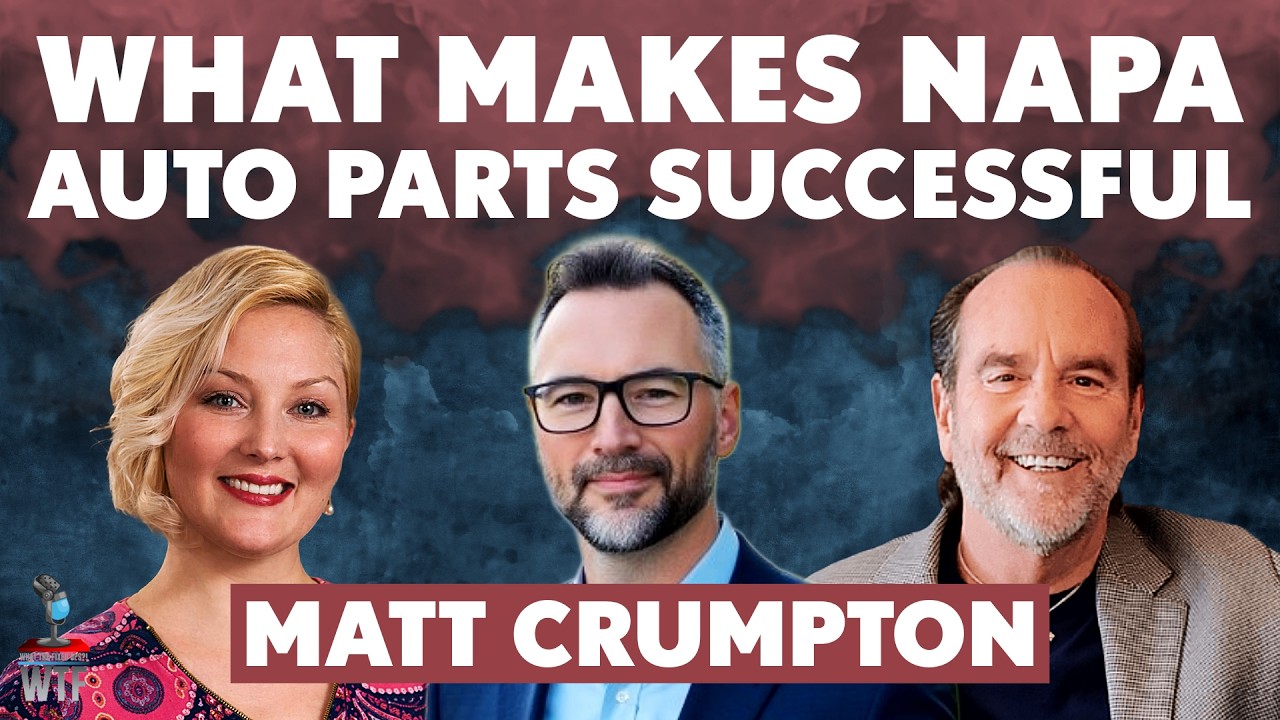
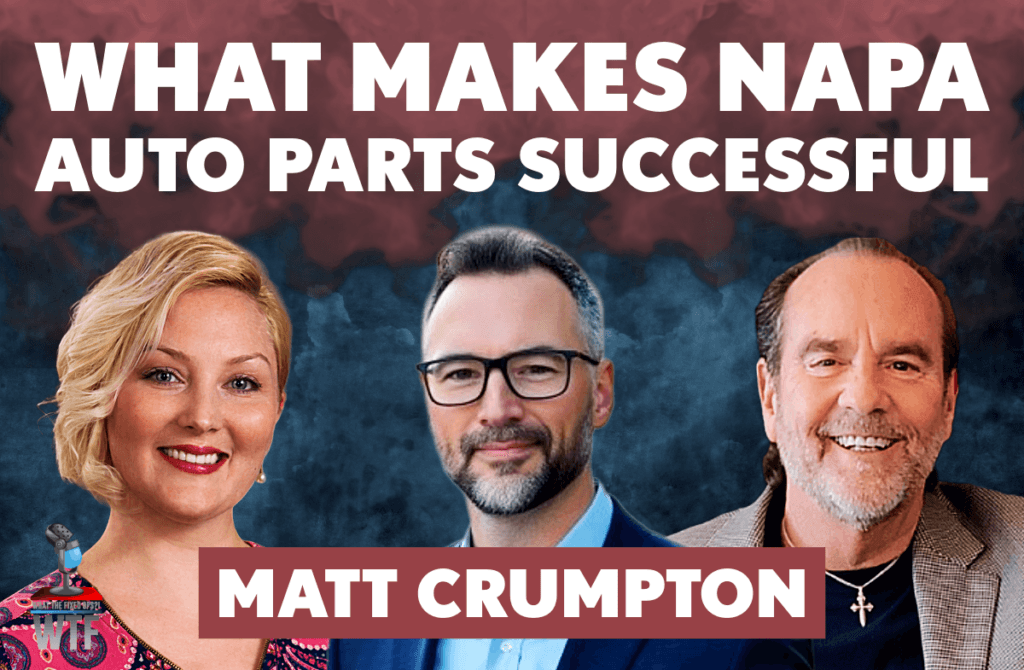
In today’s rapidly evolving automotive landscape, dealerships and independent repair shops are facing the same challenge: how to keep pace with new technology while continuing to build customer loyalty. Matt Crumpton, Director of Business Development for NAPA Auto Parts and NAPA AutoCare, emphasizes that long-term success in automotive service comes down to continuous learning, strong relationships, effective training, and the willingness to embrace new solutions. After nearly three decades in the automotive industry, Crumpton has learned that technicians, service advisors, and shop owners can never stop developing their skills. As automotive technology continues to change, businesses that fail to adapt risk falling behind.
One of the biggest opportunities for dealerships and independent repair shops is using technology and automation to reduce the rising cost of doing business. AI in automotive service, digital tools, and automated processes can eliminate manual work and allow employees to spend more time focused on customers. Crumpton also stresses that training should remain a top priority. With ADAS, electric vehicles, connected vehicles, and increasingly sophisticated diagnostics becoming more common, automotive technician training is essential. Businesses should also leverage coaching and networking to gain outside perspectives, identify blind spots, and continually improve their operations.
Customer loyalty is another area where dealerships can learn from successful independent repair shops. In many local communities, an independent shop’s reputation is one of its greatest assets, and doing the right thing for a customer can be more valuable than maximizing a single repair order. Dealerships can adopt the same relationship-driven approach by recognizing that a customer visiting the service department today could become tomorrow’s vehicle buyer or referral source. Once the factory warranty expires, customer service and trust become critical factors in determining whether that customer returns. The goal should be to build customers for life rather than treat every interaction as a transaction.
Convenience has also become a defining part of the automotive service experience. Customers increasingly expect digital vehicle inspections, text communication, online repair approvals, digital payments, and flexible vehicle pickup options. However, not every customer wants the same experience. Some prioritize speed and convenience, while others want to speak directly with a service advisor and develop a personal relationship. Dealerships that recognize these differences can personalize the customer experience instead of forcing everyone through the same process. By using technology to automate routine communication, service advisors can spend more time building relationships with customers who value face-to-face interaction.
Price transparency is another important component of customer trust. While repair facilities cannot always provide an exact estimate before diagnosing a vehicle, they can communicate clearly about what an estimate includes and explain that a proper inspection could potentially save the customer money. Crumpton recommends viewing repairs as recommendations rather than “upsells.” A good service advisor educates the customer, explains what the vehicle needs, and allows the customer to make an informed decision. Sometimes that means recommending additional work, but it can also mean discovering that a much less expensive repair solves the problem. That kind of honesty builds credibility and encourages customers to return.
Service departments must also recognize that customers have different financial circumstances. When a customer cannot afford every recommended repair, advisors should help prioritize the work rather than simply present a long list of services. Safety-related repairs should be clearly identified, while lower-priority maintenance can be scheduled for a later date. Providing financing or payment options when available can also help customers address critical repairs. Crumpton describes this mindset through his “GAS” philosophy—how much you genuinely care about the customer and the work you are doing. When customer needs come first, service departments can create trust while still generating revenue and improving service retention.
ADAS, EVs, and connected vehicle technology are also creating new challenges for automotive repair businesses. These technologies require specialized training, equipment, OEM information, and diagnostic capabilities, while some repairs may carry significant liability if performed incorrectly. Independent shops and dealerships need to understand what their equipment and technicians are capable of handling and should not be afraid to partner with another business when they cannot perform a particular service. Strategic automotive repair partnerships and sublet relationships can allow a shop to provide a complete customer solution without investing in every piece of equipment or becoming an expert in every technology.
The technician shortage makes automotive training and technician development more important than ever. Crumpton believes virtual reality and mixed reality training can help accelerate the development of new technicians by allowing them to practice procedures, make mistakes, and build confidence without the risks associated with working on an actual vehicle. Technology can also provide technicians with information while they work, improving productivity and accuracy. These tools could help bring more young people into automotive careers while creating opportunities beyond the shop floor, including service advisors, service managers, trainers, and shop owners. The future of the automotive industry will depend on finding new ways to attract, train, and retain skilled technicians.
Ultimately, the future of Fixed Operations will depend on combining technology with strong customer relationships. Dealerships can learn from independent repair shops by becoming more involved in their communities, making their marketing more personal, and focusing on the reputation they build locally. At the same time, both dealerships and independent shops should take advantage of AI, automation, training, and strategic partnerships to make their businesses more efficient. As Crumpton explains, businesses do not need to be experts in everything—they need to find trusted partners who can provide the right solutions. Fixed Ops success is not about choosing between legacy and innovation; it is about using technology to strengthen the relationships, service, and trust that keep customers coming back.
Read the Transcript
Hello everybody. I’m Russell Hill, I’m your host at WTF and that is what the fixed ops to all of you out there. And I’m joined today by. Hello everyone. I’m Charity, the co-host here. And today we have Matt Crumpton, the director of business development at Napa Auto Parts. Matt, welcome to the show. Thank you for having me. It’s a pleasure to be here. Russell’s been telling me all about it for a long time now, so I finally get my swing at it. Yeah. We got you today. That’s right. Yeah, we love it. Yes, but why don’t you introduce yourself and tell us a little bit about what you do? Certainly. Thank you. Charity. My name is Matt Crumpton, director of business development for Napa Auto Parts, uh, more specifically for Napa auto Care program. So that is the largest banner program in the United States with nineteen thousand locations. I basically handle partnerships, operations, and then any technical development. And then on auto tech training, I handle all curriculum and technical development, everything from our learning management system to our in-person classes and now our new accelerator, virtual and extended reality training. How in the hell do you do all that? That is a lot. I have a I have a fantastic team. Absolutely. Rock stars, right answer, right answer. Well, um, what have twenty eight years in automotive taught you that you absolutely could not have learned in a classroom? Oh, wow. That’s, uh, that’s a pretty loaded question, but I, I would, I would say this is that to even give you a little background, I did not do well in high school. I, I just, uh, was one of those people that was always wrestling in my seat and stuff like that probably gotten a little bit more trouble than I, than I needed to especially turn my parents grayer than they sooner than they wanted to be. But I went right into automotive, and there was a couple of things along the way and all these different stages in my career. That one, it taught me that you’re never going to stop learning if you want to be successful. So there’s always something new that you need to learn about. You need to push yourself and that this industry doesn’t reward slackers or people who don’t want to be the best. You tend to to fall behind. And even though that’s a harsh reality, it is something that I learned very quickly. You have to hustle, you have to be determined. You have to be mentally, emotionally and physically tough to survive this industry. And we have so many great people in it that were great mentors to me. But so always being kind of a lifetime learner, making sure that you got your head screwed on straight, you got your priorities in order, and then relationships. It was all about not only the relationships that you value that help get you to where you are because you don’t get here by yourself. But then also finding ways to give back and realizing that you have that responsibility to make sure that you impact the industry, like somebody impacted you. And I wouldn’t be here in this chair if it weren’t for a long line of mentors. And it started with my father. And then some of the greatest people I’ve ever met have been at Napa Auto Parts. It really is all about relationships and networking, and I’ve had the pleasure of having many, many, many interactions with you in person now, as well as online like this over the last couple of years. And it’s been quite an honor to get to understand what you and your team are doing. So what is happening in the independent repair world right now that franchise dealerships should be paying attention to? Matt. Well, you know, it’s, it’s, uh, you know, you look how fast technology changes in this industry and, uh, it’s mind blowing and it’s very difficult on our repair facilities and technicians, shop owner, service advisors, just to keep up and to stay educated. So, you know, training is always has got to be a priority. And because what you think, you know, today is not what you’re going to know tomorrow, and being a little bit versatile and making sure that you adapt to new technologies, new way of doing things, you don’t want to always do things the same way for twenty, thirty years as new technology, resources, tools come out. Embrace that and be the one that wants to get out in front of it. But I would say that the cost of doing business is higher today than it ever has been. So that’s why we really do encourage our customers to lean into those technology tools to help alleviate some of the manual processes and things like that, so they can stay efficient and they can focus on the best thing about their business, which is customer relationships and value. So I think that’s probably one of the biggest things is, is that if you’re feeling the pinch of operational cost and just cost of doing business. Maybe you need to evaluate of where you’re putting your money and making sure that it’s taking some of that pressure off of you and that that investment is well spent. Always invest in your people. Training should be the number one value add that you bring to your employees and your organization. And then three networking. You need to network with people who do it different, who think differently and bring some different perspective to your business, which is why we always encourage coaching so much, is have somebody that’s not personally attached to your business, give you some insight that maybe you got a little bit of blinders to, it’s okay. I mean, it’s shop owners tend to not be accountable to somebody because they’re the boss. It’s good sometimes to have somebody point out some things you need to be working on and keep you on the right path to meet your goals. So I think it’s always having some type of insight, whether it’s coaching and things like that, to help drive you to the next stage in your career. Well said. Yeah. Now, I wanted to ask you, Matt, is your was your father an automotive? Yes. So, uh, my grandfather was a battery rep. Uh, and in fact, my family owned a battery distribution business that later was sold to Exide batteries. So we’ve been in the automotive industry pretty much our entire lives. My dad worked for Napa for forty years and retired. Wow. About two or three years ago. Uh, I’ve worked for Napa for fifteen years, and now my middle son, he actually works for Napa as a business development manager. So it’s a long legacy. But in my family, you only had about three or four career paths. It was automotive, racing, military, or some type of construction and manufacturing. So that was the four paths. You know, you woke up and you said, these are the four you get, buddy, and you better be good at it. Napa has been around forever. Forever. This is my forty first year in the business. Now, sixteen of those, I was actually in running stores as well. And on a regular basis, the Napa truck would show up and drop off parts. So you deliver and distribute parts to everybody. Independence franchise. It doesn’t make any difference. I mean, you are. Would it be safe to say you’re worldwide? Yeah. Because we are in Europe. Um, you know, we have different branches. Not all of it’s technically under the Napa brand. That has been something that has expanded, but we do have Napa branded facilities and, and Europe, New Zealand, Australia and some parts of, uh, parts of Asia and of course, North America with US and Canada. So cool that you work for a business that your family has worked in your father, your grandfather, and now your son for generations and one company. It’s pretty cool. It’s it’s rare. It, it’s rare, but I think it speaks to the company legacy. You know, we’re over one hundred years old, and it was something that my father recommended. I was a technician for a long time. You don’t recommend a company to go work for for your children if it’s not something you truly believe in. And my father always believed in Napa, and so did I. And that’s why my son works there. And it doesn’t matter if you finish your career there or not. It’s still one of the best places I’ve ever worked and some of the best people I’ve ever worked with. Yeah, I’ve met some of your some of your staff. Amazing. When I came out to your when Eric Wilson and I came out to your headquarters, and I gotta tell you folks, I can’t even remember all the hoops you had to go through just to be able to get upstairs so I could have a sit down with him and part of his team. It was it was like ID and you had to input this and you had to have a person of reference and they somebody else couldn’t take you up. That person had to come down. Whoever you referenced. And then leaving was the same way. You don’t just leave, You got to turn in the badge and you got to exit out. And so I thought that was really cool because my conversations with Matt and members of his team over the last couple of years is they’re, they’re doing a lot to get into the twenty first century with some of the things you were mentioning earlier about AI automation and where things are going and how fast they’re actually going, and they’re going really, really fast. And you, you seem to be on the cutting edge of that. And I think that’s going to be crucial for Napa and all your major accounts and all the things that that you’re doing to remain. But also being, I think one hundred and one years, right? One hundred one year old. Yeah. This year is one hundred and one years. We celebrated our centennial last year, which was, uh, we had a fantastic event in Las Vegas at the Napa Now event and then one on one this year. And I’ll make one comment. Russell. I think, uh, our ability, especially in Napa, Autocare to be valuable and to be innovative and stay on the cusp only comes from our partnerships. We have over seventy partners in this program. They all bring a unique piece of the business and fantastic kind of solutions for our customers that are always innovative and cutting edge. And instead of Napa having to try to come up with that all by ourselves, we really do rely on partnerships that are the specialists and the experts to come in and give us those type of solutions. And I would say this is that that’s the that’s the strength of the Napa Autocare program is nobody has the partnerships that we do at the at the size that we do. And every single partner, when they come to our partner summit, they don’t just work for those companies. They. They bleed the blue and gold as well with Napa and some of the best branding ambassadors that we could ever ask for. So and you know, these are personal relationships to us. And so I think that, uh, you know, you hear about SEC football country that they say it means more. I think that’s how it is for the Napa auto care program is that partnership means more to us and means more to our partners than maybe some of the others. I think that my my experience with that, I don’t know how many interactions, but it’s been a lot of interaction or probably the last two years. Would you say, Matt, getting to know each other? And I don’t even know if I’ve ever really asked you this, but all the things we’ve talked about and, you know, stuff that comes up and, you know, you travel a lot, you’re, you’re making moves and trying to expand and pull everybody together. But it seems that my experience with you at forging, uh, you know, partner, it’s, uh, there’s a lot of character integrity that’s involved. I don’t know if you purposely do what you do, but the vetting process to become a vendor is like. Second, it’s almost like showing up to your corporate offices and, you know, having to sit down meeting that was scheduled. I mean, you go through a lot. Do I have that right? It is. I mean, we didn’t always used to do that. We slowed down for a couple of reasons is to properly vet out our our partners and see the potential, but it’s got to be a two way street, so it’s got to make sure if we load a partner, do we have enough runway in that particular field that they’re going to get growth and revenue? Because if you load a partner and there’s not a pathway for growth, then that’s not a two way street, that’s not a partnership. You’re just a vendor at that point and there’s no real return. And we can’t ask you to continue to invest in your product with Napa if you don’t see a runway. So we slowed that down a little bit. Also, that vetting process is sometimes we have lost partners along the way because of our vetting process is so long. Um, so it also kind of shows us a little bit of a commitment level. How bad do you want to be in Napa? And, and again, making sure we have a successful game plan and then as well, loading partners throughout the year does make it a struggle to get the attention of the sales team, things like that, and also get our partners everything they need to know. So now we vet them through the year, we load them and launch them at the beginning of the year. And then before Partner Summit, we asked those partners to come in and they get kind of a orientation crash course. And in that crash course, it’s everything. Napa, here’s your contacts. This is how everything works. But we really do emphasize code of conduct in our partnership program, not just how you interact with our customers, what our expectations are, our team, but also our expectation of how you interact with other partners. And there are very strict rules about that. And it’s all about respect and making sure everybody stays within their borders and, and that we’re doing what’s best for the customer and not always what’s best for your independent company. And so far, we’ve had very little issues doing that way. The ones that we did have issues, we moved on from them. But the partnership program is an extremely good shape right now. And again, that’s due to our incredible staff, but really the willingness of our partners to come on and and kind of be a part of that culture. Yeah. That’s great, I love it. Charity. Yeah. What is happening in the independent repair world right now that franchise dealerships should be paying attention to? There’s a couple of things is, is well, you know, there’s one with, uh, of course, the evolution, the evolution of especially emerging what’s no longer emerging tech they used to call emerging tech, which is Adas and EV. Those are the ones that there’s a lot of liability understanding that needs to, to be had. So they need to investigate local laws, state laws, federal things like that. When it comes to liability, making sure you have access to the proper type of OE information to do those proper repairs, make sure you’re trained, make sure you have the right equipment, you’re compliant, and you’re not getting in over your head. Yeah. So especially when something’s new, make sure that you’re prepared and it’s okay to say that you’re not, it’s not worth the liability of trying to dive into something that maybe you don’t have the skill set or even the right equipment or information for. So make sure that you’re, you know, not letting pride get in the way. Make sure that you’re focusing on protecting your business and being transparent with your customers. Another piece is, is that, you know, we’re seeing a massive change in the independent field when it comes to private equity. We’re seeing a lot of acquisitions and things like that. And, you know, the biggest thing for Napa Autocare is we want our customers to fulfill their career path. And basically, if they did this to be able to sustain a life that they wanted, provide for their family, and then one day be able to retire and retire in the way that they want to and maintain that lifestyle. So sometimes that’s in the way of private equity. Sometimes that’s a way of a a succession plan, things like that. So I would encourage everybody to make sure that you have some type of exit strategy of how you’re going to transition out of the business. We would prefer that to be a succession plan just because, you know, Napa does business with a lot of great private equity groups. And then there’s some that that they don’t do a lot of business with Napa. So of course, our interests are always going to be is how can we help the private equities that we do have great relationships with? How do we help our auto care centers set up succession plans? How do we provide training and guidance for maybe somebody that has that dream of being a shop owner that needs a little bit more business training when it comes to reading panels, how to manage payroll, things like that. So those are the things that Napa has invested in, is making sure that whatever our customers may need help with, that we have some type of solution to provide them. I love it. Now listen, you brought up M&A and there’s a lot of that going on. And of course, we spoke about it, but I still am. People are asking me almost two or three times a week. Napa got bought out, Napa got bought out, Napa got bought out. Is there any truth to that? Yeah. No. No. So listen, this I think what you will see and what I can speak to is that genuine parts company through rigorous research and really just months and months of grinding on what is going to be best for our industry when it comes to Napa Auto Parts and motion industries, which is our industrial side. And the decision was made is to split those companies into two independent entities and they will be publicly traded, but that allows them to be more focused on their industry. And we’re not sharing it resources and funding and things like that, which sometimes can be a little bit of a tug of war. So we were all very, very excited about the announcement because it does allow us to really focus just on what Napa needs and motion can focus on just what motion needs. So it is it was definitely something of announcement that really took the industry by storm, but it’s the right one. And we are on track for that transition. When something like that happens, it’s always going to bring maybe potential bidders, but it’s definitely going to bring a lot of speculation about players in that field. And that could be anywhere from I’ve heard everything from O’Reilly’s to Walmart, Amazon, stuff like that. I mean, last I heard, my neighbor was going to buy us, but it was it was one of those things that, uh, a lot of speculation came out. And of course, anybody can start connecting dots and make a story, but our CEO came out and said that they’re not currently in any discussions. And we appreciated him clarifying that. And we’re focusing on our future and the split, which is on schedule here in the first quarter. But again, you also got to look at it this way, is Napa is an international over fifteen billion dollar a year company, just Napa Auto Parts. And then, you know, the story was, is that O’Reilly’s put in a bid for ten billion dollars. And I’m like, well, they’re a little light, so I just look at it as as Napa is, is a tradition powerhouse with a lot of legacy. Like I said, one hundred and one years, we’ve been the the player in the B2B solutions in the automotive space. And like every company that we’ve had our ups and downs, but our new leadership is energized. I love their direction. And I think it’s really going to bring a lot more focus back. And I think you’re going to see some of the core things that made Napa great, are coming back and realize that you can still build on the things that you’ve always done well, and then innovate at the same time. You don’t have to have one or the other. You don’t have to kill legacy for innovation. You can you can operate and they can, they can live or coexist in parallel, making sure that that’s how we’re going to be successful. And if you look at our first half of the year, you could see the impact. We’ve had two great quarters meet and goal on sales and profit and things like that. So we’re definitely back on track. Making headways. And we’ve got a lot of great things coming out over the next couple of years. That’s awesome. Thank you so much for sharing that and dispelling that. So I can see right now when this comes out and there’s going to be many shortages too. I could see Nathan having did O’Reilly’s or did you know whatever. And you know, and people will be listening to that one, I’m sure. Thank you so much for sharing that. So let me that perfect segue into what do independent shops understand about customer loyalty, Matt, that dealerships sometimes or don’t? So you’re talking about the comparing of independents versus dealerships on loyalty. Yes, sir. That that’s a great question because I think in the independent world, here’s the biggest thing is everybody kind of focuses a lot on the metro areas. But let’s face it, a mass majority of the independent shops are actually in outside of the cities and in rural areas and things like that. So a lot of times your reputation is all you have in your community. And so they focus truly on that relationship and always doing the right thing and making sure that sometimes even losing on a job, doing the right thing is what is going to retain those customers because you put them above everything else. It doesn’t mean that anybody expects them to operate at a profit loss, but there is the ability to make sure that your moral compass guides you. And I think our independent, just the network of independent shops, not just Napa, just independents in general. I do a tremendous job of letting that moral compass and customer service and customer loyalty guide every decision that they make and then instill that into their employees. I think on the dealership side that is there and insert, but it’s in pockets. And you look at some of the great organizations I’ll single out, like Hendrick, you want to talk about a class act. And that’s what they try to instill across the board. I think when it comes to dealerships is that they’re selling cars. They’ve got service and warranty and things like that. And the trap that some OE dealers fall into. Is the machine operating like this fine tuned machine of just production and realizing that a customer coming in for service is that same customer. You want to buy the next car from you, right? Whether it’s used new or what you want to be recommended to somebody. And in fact, you know, up through most of my adulthood, I never bought a brand new car. I was always buying used cars, things like that. So now, uh, when I did buy one is I went to four or five different dealerships. And the dealership I bought from was the one that really kind of showed me that cared more about what was going on with me and meeting my needs than making a sale. In fact, even recommended, like, you know, there is a truck that you’re looking for at a dealership. I want your business. Give me the opportunity to make a deal. But the exact truck you’re looking for is actually over there for this price that you said you wanted. And I didn’t go to that dealership. I bought it from the gentleman that said, give me a chance. And I actually spent probably a little bit more money. And I was okay with that because he did everything he he could to give me everything that I wanted. And then over the next six months, he called me about four times, made sure I was happy with my vehicle and everything else. I’ve now referred probably six or seven people to that, to that gentleman and that dealership. So I think that’s the one thing with OES is don’t let the machine catch you up in the day to day, and that you’re just kind of going through the motions. Make sure you understand is that customer is not just the customer that today it’s going to be that customer tomorrow, and it may be for your sales department, even off the sales, that’s going to be your service customer. And after the warranty is up, the only thing that makes them return to the dealership is customer service. When the warranty is gone, they’re looking for somebody to take care of them, not just their car. Take care of them. Give them a peace of mind that they know. Like for me, I travel a lot. I need to know somebody’s going to take care of my wife if she breaks down and I’m not there to take care of it. I have to have somebody I can trust. There are some good dealerships that do that. Yes, sir. But you got to make sure you win them in the warranty stage so you get them when that warranty is done. I got man, that is so powerful. It people think it’s really all about price. It’s not. Yeah. I mean, price is certainly a consideration. But if they like you, they trust you. They believe you. They’re going to buy. It’s more relational. But I think most of the time it’s treated transactional and it’s actually the opposite. So customers want to like you have a good experience where you, uh, have no problem referring whoever he or she was because of the way that you were treated. Uh, and service. Yeah. You want to keep them coming back. And I know that the, you know, nationally with seven out of ten people have defected by the, by the time the two and a half to three year warranty period is up and it’s like, that’s one reason probably these questions. Charity is very thorough. And that was her question about it’s really all about the relationship, isn’t it? It is because you look at also dealers are from a volume standpoint. I’ve worked at dealerships and you know, the warranty really provides a lot of volume there. So that’s a, that’s another thing that kind of gets in, I think, with customers is you have a lot of dealerships that have long wait times. I’ve dropped my truck off before and it’s three days before they can get to it. That’s that it’s warranty work. So I’m going to deal with it. But after that, it’s that sticks in the customer’s mind. I think there’s ways that they can maneuver around that because you can’t change the workload. But what you can do is you can make sure that you’re setting the right expectations, that you are also overcommunicating what the outcome looks like. And then reassure them is that I would take a spin on it. I said, you know why we’re so busy? Because we’re that good and we take care of our people. So we’re worth the wait. And there’s ways that you can message that and make a customer feel comfortable. And then if you can deliver on that, then you’re winning a customer over. They’re willing to wait. And I’ll say the last thing about price, if somebody’s really cheap, I have questions. Yeah, I really do. I have questions. Well, we’ve had some experiences with that. Now listen, um, the communication is key. Timelines move, I get it. I mean, there’s, but if you’re communicating to people that, that they’re, they’re okay, just communicate, let me know, respond to me. Yeah. Well, on the flip side of that question, um, where do you think dealerships still have a competitive advantage over independents, dealerships? If you look at the OE side, even though we have the right to repair and their shared information, there is some information that the OE dealers have access to from the manufacturer that aftermarket does not. That gives them a competitive edge. Also, you look at they specialize. If you’re at a Ford dealership, you’re pretty much only working on Fords and an independent. He could have a Ford to a Mercedes, to a Volvo, to a Toyota. So when you specialize in a brand, you get to really fine tune your skill set. And again, you can become a little bit of a robot, but it allows you to move at an exceptional pace. It allows you to be very, very confident. And that’s why you see a lot of high production. So there’s from information specializing, things like that. And here’s the other thing. Nobody really wants to talk about it. You’ve got a whole parts house of known good parts. Here’s the difference. If you put on if I’m at an independent shop and I tear something down and I put a part on there, that part’s staying on that that car. If it wasn’t the right diagnostics, it’s not like you take all that back off and ship it back to the parts house, dirty and oil and everything else. Yeah, and I’m not saying they do that at the dealership, but if you wanted to test a solenoid and that solenoids on the shelf. I worked in the dealership. I’d go grab it off the shelf, plug it in and be like, nope, that’s not it. So there’s some advantages to information. You have an entire parts supply, and then you have specialization that really fine tunes your skill set. There’s massive advantages. And then the last thing I’ll say from training programs, but also tools. This is something that we’ve gotten into is helping shops supply tools to young technicians. A lot of dealers, they’re going to tech schools and say, come work for us. We supply all the tools. You don’t need to buy anything. And that’s a massive advantage over the independents. So we’re trying yeah, we’re trying to work on that to help level the playing field a lot. But again, you don’t need as many tools when you’re specializing just on Ford or just on General Motors to where the independents. The reason you go into a lot of independent shops and you see an eleven to fifteen foot toolbox is because they’re working on fifty different manufacturers. So they got to have a little bit of everything. So what can dealerships learn from the way successful independent shop markets themselves in local communities that they may not be doing? Or do they do a lot of the same stuff? And it’s just about the the relationship side versus the transactional side. Some dealerships, like I have some here in Atlanta that do a good job of this, is separating yourself and saying that you have a big brand on the building, but you’re just still a part of the community and that you’re because a lot of times they look at it as big corporate America, right? Because it’s got the big emblem on the building and realize they’re still independently owned or they’re owned by groups. So I think the best way to market is continue to do your marketing strategy through social media and things like that. But what I would probably recommend to an OE dealer is making sure you’re getting a lot more personal, be involved in the community, be involved in events, things like that. Make sure you’re putting a personal touch on that social media. And it’s not just rubber stamped. A lot of times you get media packages from the manufacturer and they’re just, you know, kind of copy and paste, make make sure that you also, if you are involved in charity events and schools and tech school recruitment, things like that, get that out there and let the people know that you’re a part of the community, you contribute, and that you care about the customers that are coming in, not just about what business they bring, but what’s actually going in the community and what’s happening around them. So I look at like one, I remember growing up, Carl Black, GMC, they used to sponsor rodeos and things like that, or the dirt racetrack in Woodstock. And that was that was big time because that brand was not GMC, it was Carl Black was the brand that stuck in my mind. Yes it was. So I think that’s how you get some recognition. And then it was like, hey, Carl Black’s doing the doing the thing at the road track or whatever, like that. Everybody was like, oh, well, they really do a really good job with that event. So we all want to go. And then then that’s when they would market about their charities and things like that. And it really made an impact and it stuck with me. And that was over thirty years ago. And I still remember it like it was yesterday. And then they just said his name, not the franchise. Yeah, yeah. That’s awesome. They never said GMC or Buick. They just said Carl Black. How important has convenience become in deciding where a customer services their vehicle? Oh, everything. Especially nowadays. I mean, I’m, I’m old fashioned and grew up in a very, you know, kind of old fashioned way in the automotive industry. And I tell you what, right now that the convenience factor is everything from communications to dropping your car off, picking your car up payments, everything. I don’t want to talk to anybody. I don’t have time. So everything is. I drop the car off before they open. I get communications, I approve work all through text message and phone. I pay that way. I pick up my car after hours. And frankly, from being a technician for sixteen years and then a trainer and everything else in my career, my shop’s just as happy, me not talking to them as I am the other way around. I’m probably the worst customer because when they tell me I usually come in, I don’t tell them like, I need you to diagnose this. I said, here’s everything I need you to replace. And they hate that. So, uh, I think it’s just as good for them. But, uh, I think on the dealer side, they need to lean into that as realizing that first you can gauge your customer when they bring it in, if it’s a drop off and they’re not walking in to face to face with the service advisor, you already know that they’re all about convenience and they’re all about quick, easy convenience, whether it’s communication, approval, pay for it, pick up everything else. If somebody comes in and they schedule their time in between business hours and they walk in and they want to talk to somebody, that is your trigger right there to tell you that this one is a relationship type customer. They’re not looking for convenience. They’re the ones that will sit in the waiting room for three hours reading a book. Because one, they, they want to feel comfortable. They want to have somebody to trust so you can change your tactics. So I think it’s more so on the OE side is realizing that you’re going to have a mass number that want convenience. Do you have all the tools in place to operate in that convenience space, which means digital vehicle inspections and text messages and being able to show video and pictures and any type of notes from the technician all the way down to pay Dropbox, pick up and everything else. Do you have all of that in place and at the volume that they deal with? Can it handle that? And then it allows your service advisors not to have to be kind of babysitting that process along the way. And they can focus on the ones that want the face to face relationships. So you got to be really versatile, but you got to make sure you have all the tools that this is almost automated and allows them then to focus on the relationship side. Great point. Do you think customers are actually more price sensitive today, or have we simply become more aware of how easily they can compare prices? I think it’s actually a mix. You know, I get that question a lot. And I don’t really think there’s a true answer to that or a single answer. And, and I think it comes down to this is you have certain customers that value means everything to them. So if they feel like the value is there, the price really doesn’t matter. If they’re comfortable, they have trust and the value has been proven to them, then, uh, price is never really a factor as long as it’s within reason. Yeah. reason. It’s not just astronomical. Those are your best customers. They are. I think also on the other side of it is what’s face it. We have a mass amount of our population is in that lower class middle tier. And also on the the families that struggle, that work their butts off every day, but it’s paycheck to paycheck to paycheck. And they also appreciate value, but due to their circumstances, they have to be more price conscious. And so understanding that that’s actually a larger amount of our population than, than the latter. So realizing that is you have to be able to understand is how to prioritize, help your customer prioritize. So I think realizing you have this versatility of customers that fit all these different kind of price ranges or incomes and things like that is gain the trust of the customer where they can be honest with you and say, I’m on a limited budget, it’s okay to ask and be like, hey, we’re going to check everything out. And as you walk through it with a customer, if you realize through, say, a DVI, they send out, here’s everything and they’re approving work and they deny a bunch of it, that should be an indicator is either two things are happening, they don’t trust everything or that’s not within budget. And that indicates to me I need to have a one on one conversation and help that customer prioritize. Let me tell you the things that are safety features that we really need to focus on. Here are the things that can wait. And let me give you a timeline where I think you should try to plan to get that done. So it doesn’t create issues, but these two or three things are safety related. Now let me provide some options. If you can’t pay for all that, maybe there’s credit card or financing or interest free type options. Then that allows you to build that trust line. And then you’re saying, these are things you have to get done because they’re major concerns. But I also am very empathetic to your financial standing, and let me provide some options to help you out with that. And, and again, I call it gas. And, uh, I don’t know if you’re going to have to bleep anything out, Russell, but go ahead and say it is. I tell everybody how much gas do you have. And that’s the give a shits means that that is what gas is is. And I, I go around and say how much gas is in your tank? And what that means is how much do you care about what you’re doing? How much do you care about the person? Because if your tank’s full, you’re never going to lose. You’ll never lose because you’re always going to be taking that into consideration as your first option. If your gas tank is low, you’re never going to be doing the right thing. And you also are going to be passing up these opportunities to build relationships, help somebody out, and also in turn helps you. You’re making a sale and you’re doing the right thing. So I that’s, that’s always going to be our catchphrase. I mean, just the way, just the way you laid that out was, was amazing because if it’s a safety related item and you’re communicating with them, they may be embarrassed. I can’t really afford it, but there’s no way somebody should leave needing breaks. It’s a it’s a serious safety issue. You know, or maybe tires or something. So somebody to take the time to engage with them and ask them and make sure they understood it and maybe offer some solutions. And I know Napa has solutions for people, uh, financially that in that moment, they don’t have the extra for that. But, you know, uh, you, you have. So that’s really amazing. Well said. Thank you for sharing. That was good. Yeah. And I definitely won’t forget your acronym gas. Yeah, yeah. And we’ll probably, yeah, we’ll probably promote that as short, give a shit, give a shit episode or give a shit. Yeah. There you go. Yeah. Yeah. Well what if what about price transparency? Do you think that’s, well, something that affects customers trust in independence and dealerships. It is. And we have a lot of people, dealership and independents alike that are hesitant to have like online estimators and things like that. Or a lot of times they don’t want to give out estimates. They want the car in there. And I completely understand that from coming from the industry, is that you don’t want to set the expectation of, oh, it’s this, and it costs this until you’ve looked at the car, because when diagnosing a problem, you have no idea what you’re getting into. So, but I still think there’s a way you can do both. A way that you can give the right expectation, show some transparency and that you’re confident in your estimate, but also making sure that you’re setting the example or the expectation of, I still need to look at it because there’s always things that I can’t tell over the phone that could impact this. It actually could save you money or it could cost more. I won’t know that until I see the car, but we always sit there and every shop makes this mistake. I need to look at it because there’s things that could impact the price and it could cost more. And I’m not going to be estimating. Nobody ever says or I could find a way to save you money. They never say that. Well, so always the expectation is, is the customer is like, great. Of course they’re going to find something that costs more money. So I think having and plus now there are online estimators that are AI generated that you have the ability to backfill in. This is the parts that we use, this is how we quote and everything else. And it’s really, really robust. In fact, we have some of those programs in our partnership network. And so you can get really, really accurate with your estimates. I think it does give transparency because here’s the other thing, like we talked about, if you’re too cheap, I’ve got questions. So if I’m doing an estimate and this guy is a thousand dollars, I may ask like, well, what’s all involved in that? And if the guy down the street is two hundred dollars, yeah, you may have questions. Why are you a thousand? He’s two hundred. And in my experience, I probably am more reluctant towards the one that’s two hundred. Because then it tells me, it’s like, how can you do that so cheap? It usually tells me you’re cutting corners. Yeah. Or just like what you said a minute ago, it’s like, uh, it’s a, the few times in my life where someone gave me a price on something I can’t remember off the top of my head. But in many, whether it’s home or car or something like that, and you take it in, it’s always more, uh, and I feel like I was baited and switched or, you know, etc.. I really love your approach to that. That well done. Yeah. And a lot of times, listen, I understand who was doing this, this, this and that. We, you get it in there and it won’t do it. Um, if they can’t duplicate, I mean, just it’s, you know, and, but yeah, you could actually save them some money. Wouldn’t that be a switch? Yeah. I had a customer years ago that, uh, called in and said, I’d like an estimate for front timing cover. It’s leaking oil. We gave him the estimate and that’s what we told him. It’s like, this is what it’ll cost. And they said, wow, that’s kind of high. And I said, well, we stand behind our labor rate. We have the best technicians. They’re all ASE certified master techs. This is, you know, we have very low comeback ratio. We have extended warranty program. So we sell them on everything. Why we charge what we do. We have the latest equipment, the best trained techs, things like that. So then when they came in end up being just the crank seal that’s in that timing cover, not the timing cover itself. And we said, hey, instead of this amount, actually, it’s going to be an extreme cut cost here because all we’re having to do is take off the harmonic balancer, put a crank seal in, and we’re done. And they were like, wow, I didn’t think that. It’s like, that’s why we got to look at it because it’s not always more. There are ways that we can look at it and properly diagnose and say, you know what? That’s not actually what needs to be done. We can do this as a lot simpler, repair and be able to save you some money. And, and you should take those all day long. I tell shops all the time, you know, we always recommend repairs because you want to educate your customer. And you know, I hate the word upselling. It’s not an upsell, it’s a recommendation. Upselling means you’re looking for something. A recommendation is to notify the customer given the right information so they can make a decision. And a lot of times when you’re doing these inspections, you should be looking at the opportunities to sit there and say, you know what? There’s a way we can save you some money by doing this, this and this. And they will appreciate that. And a lot of times educating them and not trying to hard sell them is the best sell tactic because they go, wow, they told me about that and I’ll get a follow up about it maybe in a couple of weeks. Hey, we tested your battery. It’s weak. Don’t forget, before the winter comes, we want let’s test it again to see if you’re going to be okay. That’s something that builds trust because it’s like, wow, they didn’t try to sell me that. They just notified me and they followed up and they were concerned about me getting stranded in the wintertime because of a battery, and offered to test it again for free. That’s how you build Customers for life right there. That’s right. I mean, they they certainly would be. Go ahead. Jerry. I wanted to ask you this. And I’m realizing our time is ticking away. And we have so many questions to go through. So we’re we’ll have to be a little bit more picky. But I do want to ask you because I’m curious because Napa Auto Care operates across a huge network of independently owned businesses. What have you learned about creating consistency without taking away the individual shop’s autonomy? Wow. Wow. Great question. That’s charity there. Thanks. Charity may get stumped on this one. Well, first of all, the diversity of the auto care network is its strength. You have everything from small shops and small communities to large facilities to even multi store ownership regionals and things like that, and big brands. So that diversity allows us to have all types of customers be able to choose what their preference is and what they’re looking for. What we tried to do from a Napa, autocare standpoint is said the consistency should come in some of the branding, or at least the experience, and that comes from the partners and the solutions that they provide. So we try to have every Napa Autocare when they come in, they should have it, you know, whether it’s through digital vehicle inspection, you know, Napa credit card, or maybe it’s through our partner three hundred sixty payments, they’re having their processing and finance available, multiple different things. Even Napa tracks from a shop management system, from down to the receipts and the note taking and everything else. So we try to get as many different partners that operate in those spaces to provide that type of consistent experience. Even though it may look a little bit different, it may come across a little bit different and the shops all look different. The the experience should be as I dropped my car off, I got great customer service with great quality parts, and I got a warranty when I left there to give me a peace of mind. And I know there’s eighteen thousand something other shops out there that if I’m across the country, they can take care of me too. Wow. And that’s where I think that consistent value comes from and still gives you kind of that, you know, down home feeling when you walk in one of these independents, you’ve introduced XR technology into automotive training initiatives that you have. And where do you think immersive or virtual training actually adds value versus simply just being cool technology? It adds a tremendous amount of value. And you know, me being a technician and then a trainer and all that, I was very skeptical about using virtual reality and mixed reality as far as training, because everything has always just been hands on and in person. Now being part of this development process and that product being launched, I’m a, I’m a firm believer because the data and the science backs it up. So you look at how many technicians we’re going to be short. You know, you’re talking about depending on, you know, which resource you’re looking at. It ranges anywhere from five hundred to seven hundred thousand technicians over the years. We’re going to come up short. So I think if you did have every single one of those individuals lined up ready to take those jobs, how long does it take you to go from zero to what we would consider a C level technician or mid-level technician? That creates a lot of value and can sustain the type of production that that technician is earning a good living. Because you gotta remember, they have a massive amount of investment in tools and we use a lot. We lose a lot of good technicians because they get into debt for tools, and the income is not reached the point to offset that investment. So the average time is around two years to three years. I will tell you from an experience level to be extremely productive and versatile, you’re probably talking more like five to six when the when the light bulb really goes off. Yeah. But two to three years is where you can go from zero to where you’re handling probably around seventy percent of what comes in a shop, which is a lot of breaks during suspension components, maintenance, stuff like that. So with our virtual and mixed reality training is we took our two year apprenticeship program. And through this robust and credible platform, we can get somebody up to speed within probably about sixty to ninety days. Wow. So now it’s not just about taking them. So look at all the ways it impacts. It impacts the shop because now it’s got everything from assessment tools in IT training, and now even smart glasses that assist the technicians productivity level by them able to access information in the flow of the job. So from the shop owner is I can get somebody assessed up to speed, and they have a productivity tool that helps track everything and give them the information, uh, within ninety days instead of two years. That’s a massive return on my investment, because now they’re actually adding to the revenue of the shop for the technician. Now I’m actually being able to take a gain that experience, use the tools to be highly productive and also do quality jobs. I can focus on the quality instead of the speed, because speed’s the name of the game of how you’re going to make more money. We want them to focus on the quality and let the tools help you be faster in that way. So by doing that, the technicians now can be more sustainable from an income standpoint to offset their investments at a faster pace instead of two to three years or five years waiting for, I’m finally making enough money to where I can sustain my tool bill. Which is, by the way, the reason I always had my tool bill sent to the shop and not the house. But, uh, so all of that kind of incorporates the, how do we help the technician? How do we help the shop? And then by speeding up this process, we know everybody wins. And here’s the other thing, is using these tools to assess the proper skill sets for people, even in the high school level, that says you don’t have to go to a four year school, you actually have all the skill sets to go into the automotive industry. And this is a great pathway. You can make six figures turning wrenches. That’s right. I. And look at what else it revolves into is I was a technician then a trainer. Now at Napa headquarters. We have a lot of people that are in that boat. It’s not just turning wrenches. You can do that for your whole career, or it could lead into being a service advisor, service manager, shop owner, or into the manufacturing side of things. So there is a, a million avenues that starting out under the hood of a car can lead you to. Yeah, we just got to make sure we’re identifying the right people, give them the right tools to be successful, and we will start to pull more of that young talent into our industry that we desperately need. I think that’s that’s amazing. And there’s a lot more of that going on. And you don’t need to. Honestly, you don’t even need a high school diploma or a four or six year degree. You know, coming out heavily debt laden. And, you know, it’s just you’re paying it off for years. It’s never really heard a response quite like that about that training. And we’ve had I don’t hundreds of guests are probably over the years. That was amazing how that’s being used and how that can accelerate, uh, new young men and women coming in as technicians, wrench turners, etc. because I know a lot of them, some of them, the ones that are really good make a lot of money. Yeah. And they don’t, and they don’t have a lot of comebacks either. No, you just got to get them there. I mean, that’s it’s a very front heavy industry. You’re spending a lot of money. It’s very complicated. And also there’s let’s face it there’s some anxiety to it. You’re making mistakes. Some of these mistakes are very costly and can be dangerous. So that’s the other thing that we heard some of our students go through the virtual reality. It says this allows me to learn and make mistakes without risk and allows me to build my confidence. So when I do go out in the shop, I know the right way to do things. That is all I needed to hear from a young person of the type of impact it has. Yeah, that that level of confidence can eliminate mistakes because they got it. Yeah. That’s that’s amazing. What does growth of EVs, connected vehicles and increasingly sophisticated diagnostics mean for smaller independent shops? It goes right to that cost of operations. If you look at take a DOS, a DOS is probably the biggest saturation out of all of them between connected vehicle EV and then Adas. It’s got the most market penetration. It’s also the one that has what’s, let’s face it, doesn’t have as much information that these independents need to help make decisions. You look at the new Audi’s. If you put tires on them, it’s. You’re supposed to do an alignment, and then you’re supposed to recalibrate the lane departure camera. How many shops are actually doing that? But it’s in the single digit percentage. You know, it is. You know it is. Yeah. So then when you get them into that one there, there’s more cost than just the equipment. You’re looking at initial purchase of the equipment information systems, but also the licensing or the subscription to the software that they’re having to renew every single year, whether it’s an alignment machine, an Adas machine, a scan tool, TPMs tools, everything’s gone electronic. Then you have to look at it is, is you should be spending money on consumer education. So when they walk into your shop and you’re you’re about to sell them what the guy down the street is doing at a eighty nine ninety nine alignment. Why is your alignment six hundred dollars? And it’s like, well, your vehicle that Mercedes requires me to do this, I have to align it. And it requires certain things for me to do in that alignment. It’s a little bit more complicated than a Ford on that Mercedes. Then I have to do an Adas calibration. Here’s where it’s recommended by the OE specifications. I need to do this. And this is how it could impact your car if I don’t do it. The reason the guy down the street is so cheap is because he doesn’t have the equipment. He’s not doing it right now. It doesn’t mean that he intends to do that. He probably just doesn’t know. And then that way you remain neutral. But you need to have consumer education, whether that’s like a lobby TV that’s putting out these consumer clips, or it’s within the information that you send to them in links like auto Net TV, one of our greatest partners, they do a phenomenal job of lobby TV messaging and things like that. And it helps explain from a third party, it’s not just you telling them it’s a third party with all this educational information. So I think that’s probably the biggest thing, is that it’s a huge added cost of operations, not just on the equipment and the training, but also marketing, consumer education, but it’s also something that you cannot avoid. And if you can’t do it, the best thing a shop can do is go find somebody to partner with. Have another shop in your market or your community that you have good relationships with and say, hey, I don’t have the space to do this, or I don’t have the expertise to do EV, but I have a customer that I do all the other work, but they just bought a Tesla for their wife or their mother in law or something like that and be like, could I send them to you? Or if they do bring it in, I’ll bring it to you and pay you as a sublet. We have shops that do that all the time. If you can’t do it, don’t lose the customer. Find a connection point to where you could sub it to somebody that you trust and can hold responsible, and then work through that way. Yeah. The third party validation reinforcement you alluded to a minute ago to that, that that’s huge too. So yeah, we have people doing it right now. A lot of collision centers actually sublet out Adas to a third party, another shop or mobile unit or something like that. So I think a lot of people are afraid of that because they think that they’re going to lose their customer if you have the good relationship and you’re taking care of that customer and you’re being competitive and you’re not being, you know, overreaching on your price and everything else, you’re not going to lose that customer because you sublet one service. No, I think that adds tremendous value. And consequently, the opposite should probably happen. You, not only you, instead of being afraid to lose, be confident that because of that and the networking relationship, you have a so and so is going to keep them coming back. And they’re going to remember that, well, I’ll just, I’ll just I’ll just call Matt. Yeah. The, the first shop I worked in as an apprentice, we did not do tires, but every customer came in there if they needed tires. There was a rapid rotation across the street and what was called a tires two and a little shopping center. We took it over there. We had a deal with them. They would put the tires on, do the alignment and everything else. We’d bring it back and we’d build out the customer. The customer trusted us to take care of it, and we selected the partners who we subbed to, but we never lost a single customer. Nobody went across the street to go get tires. They brought them to us. It can be done if you are building the right relationships and showing that convenient factor of. Let me select the people, because you don’t have to find the trustworthy other shops to do those services that I can’t provide. Let me do it. And then I’m responsible because I’m the one taking care of you. You got one throat to choke, as they like to say. You can come back and say, hey, this isn’t right. Valuable lessons right there, everybody. And we have burned up the entire hour. We have. We have. But we do like to ask Matt, are there. We did ask you a lot of questions today, but there are are there any questions that we didn’t ask you that you wish we had? No, I think the questions were fantastic. I am just very appreciative for the opportunity to come on here and to be able to kind of chat. Like I said, I think the questions were fantastic. I love these types of discussions. I’m sure we could probably go for another four or five hours. We could. Especially me. I’m a talker and it, uh, But no, I just think that the one thing I would kind of like to wrap up with is to whether you’re an OE dealer or an independent, you should leverage your business for solutions and partnerships. And don’t be afraid to utilize them to the maximum potential. I think a lot of times we have solutions in place and they’re not being utilized to maximize the potential or the outcome. So and you don’t have to be the expert in anything. Find the people that you can trust. You build those relationships and then have them be the expert for you. That’s what Autocare does is that we’re not the experts in marketing and everything else. We, we bring in the best partners to tell us and help advise us and our customers what we should be doing to get the best return on our investment. So dealerships need to do the same. Thing is you’re not handcuffed to every solution. You should be able to look at and be very versatile, and then leverage the size of your business to get the best deal possible And to make things as easy for your customers and your employees. If your employee’s job is made easier, they can focus on the reputation of your business and the customer service instead of all the, you know, the manual operations. So always look for automation. AI is a huge, huge work tool that is not being utilized, but you should be looking at how you can deploy those things in your business today. Yeah. Thank you. Great stuff. Matt, can we reserve the right to ask you to come back on another time? Absolutely. I would love to. And let me tell you, um, this wouldn’t even be possible without that lady right there. Charity is amazing at the questions and the homework that she does. And, uh, so I want to make sure that that, uh, kudos to you, Charity. Thank you very much. Those are some great questions. Absolutely. So wow, this is another wrap. Extremely successful. WTF. And that’s what the fixed ops to all of you out there. So Matt Crumpton, thank you so much. Director of business development at Napa Auto Parts. Invaluable stupendous information. Thank you so much for sharing what you did. And no wonder. And I bet you’re just as excited today as you were when you first went to work for Napa. Yeah, I got a lot more gray. But yeah, I’m still excited. Well, we look forward to future interactions and all of you out there, make sure you watch him on all the whoever you use for podcasts, Spotify, Apple. It doesn’t make any difference. This is going to be everywhere. Not only that, it’s going to be everywhere. Also in many, many shorts, especially some of the things that were just really, really stand out. So you make sure you like them, you love them, you make comments, you connect with them, engage with them. And I hope all of you out there learned as much as we did today. So be looking forward to that. Thank you once again, Matt. Thank you Matt. Thank you both.