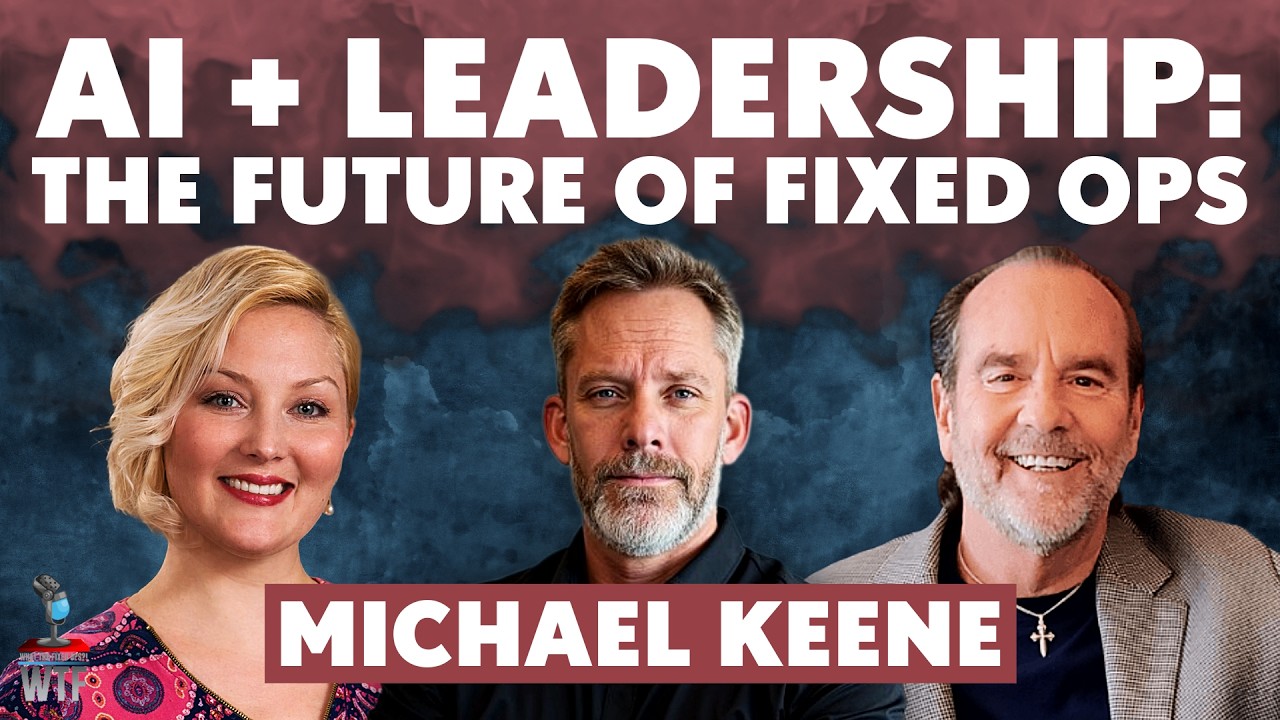

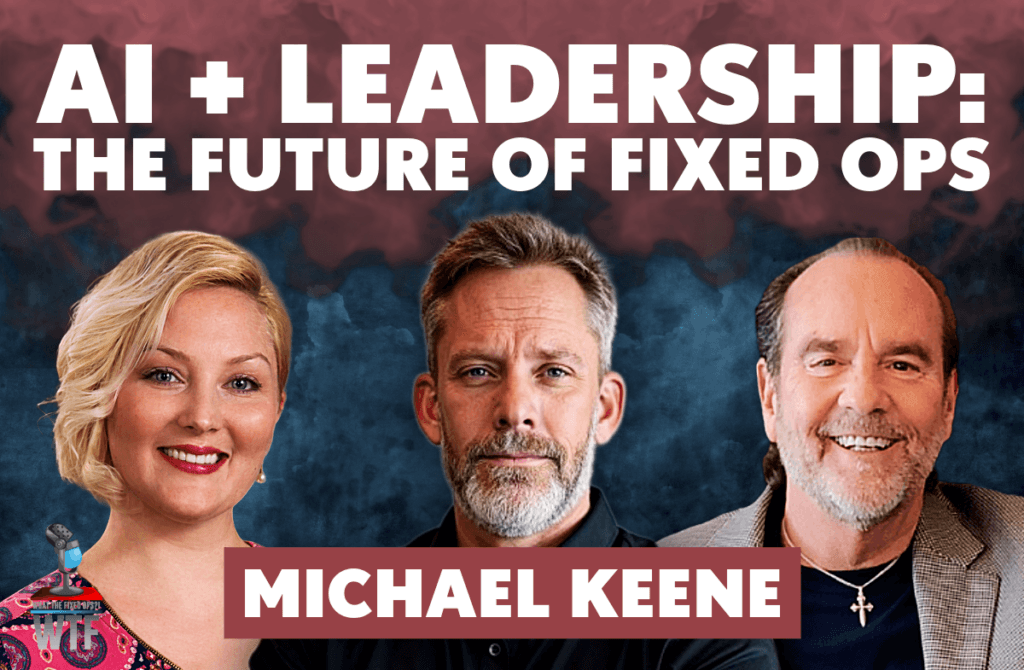
Artificial intelligence has quickly become one of the most talked-about innovations in the automotive industry, especially within dealership fixed operations. Every week, new AI-powered solutions promise to improve customer communication, increase service department efficiency, and boost dealership profitability. While many dealership leaders are eager to embrace these technologies, others remain concerned that AI could eventually replace employees. During his appearance on the What the Fixed Ops?! podcast, Mike Keene challenged that assumption by explaining that AI should be viewed as a leadership tool rather than a replacement for people.
According to Keene, the automotive industry has spent decades searching for better ways to improve operational performance, but technology alone has never been the answer. Dealerships have invested heavily in dealership management systems, reporting platforms, customer relationship management software, and other digital tools, yet many organizations continue to struggle with employee development and customer retention. Keene believes the issue is not a lack of information but rather a lack of time to act on that information. Artificial intelligence has the potential to bridge that gap by helping managers spend less time analyzing reports and more time leading their teams.
One of the most common misconceptions surrounding AI in automotive dealerships is that its primary purpose is reducing payroll or eliminating positions. Keene argues that this mindset overlooks the true value artificial intelligence brings to fixed operations. Rather than replacing service managers or service advisors, AI should eliminate repetitive administrative work that prevents leaders from coaching employees and improving the customer experience. When implemented correctly, AI creates opportunities for managers to focus on leadership instead of paperwork.
Throughout the conversation, Keene emphasized that dealerships have never suffered from a shortage of data. Service departments already collect enormous amounts of information related to effective labor rate, customer retention, advisor performance, technician productivity, warranty reimbursement, and profitability. The challenge has always been turning that data into actionable insights that managers can actually use. AI accelerates that process by identifying trends and highlighting opportunities before they become larger operational problems.
Keene explained that many experienced service managers develop an instinct for identifying performance issues after years of working in the automotive industry. Newer managers, however, often lack that experience and are forced to spend hours reviewing reports in an attempt to understand what is happening inside their departments. Artificial intelligence helps shorten that learning curve by providing insights that would normally take years of experience to recognize. Instead of relying on guesswork, managers can make informed decisions supported by real-time dealership data.
Leadership development became another major theme throughout the discussion. Keene pointed out that many dealerships are promoting employees into management positions faster than they can properly develop them. As experienced leaders retire or leave the industry, younger service managers often inherit significant responsibilities without receiving the coaching needed to succeed. AI cannot replace leadership experience, but it can provide newer managers with valuable guidance that helps them become more confident and effective leaders.
Confidence, according to Keene, is one of the most important qualities a leader can possess. Managers who lack confidence often rely on assumptions rather than objective information, making coaching conversations more difficult and less productive. Artificial intelligence allows leaders to approach those conversations with facts instead of opinions, creating an environment focused on improvement rather than criticism. This shift not only strengthens accountability but also builds greater trust between managers and their teams.
During the interview, Keene introduced the idea of what he described as “data fog,” a situation where managers are overwhelmed by the sheer volume of reports and performance metrics available to them. Modern dealerships generate enormous amounts of operational data every day, but too much information can become just as problematic as too little. Artificial intelligence helps cut through that complexity by organizing information into clear, actionable recommendations. Instead of searching through multiple dashboards, managers can quickly identify where coaching is needed most.
Perhaps the most important point Keene made throughout the conversation was that great leadership happens on the service drive, not behind a desk. Every hour spent manually pulling reports is an hour that could be spent coaching advisors, mentoring employees, or improving the customer experience. Artificial intelligence gives leaders the opportunity to reclaim that time by automating many of the repetitive tasks that consume their day. Rather than replacing managers, AI empowers them to become better coaches and stronger leaders.
Keene repeatedly returned to the idea that dealerships will always be people businesses, regardless of how advanced technology becomes. Customers still want to work with knowledgeable advisors, communicate with trustworthy service managers, and build relationships with people they know. Artificial intelligence can improve consistency, streamline communication, and provide valuable operational insights, but it cannot replace genuine human connection. The dealerships that will thrive in the years ahead will be those that use AI to strengthen relationships rather than substitute for them.
Read the Transcript
Hello everybody, I’m Russell Hill, I’m the host of WTF and that is what the fixed ops. Hello everyone. I’m Charity. Welcome, Mike. This is the second time you’ve been on the show and we’re happy to have you again. Why don’t you give us an update on what you’re doing and where you’re at? I am at Chameleon Limited, and we are innovating the way that managers and dealers are operating their entire fixed operations vertical by giving them more insight, better clarity, and trying to return time back to their managers to actually lead instead of just sit behind their desk and pull reports. Thank God, thank God somebody’s doing something like that. Now that that is really great. And I think you just started when we had you on with chameleon and that here you are, and we’re going to be doing some stuff together and you have an amazing team. You’re an amazing guy and talent, and we’re really honored and humbled to have you back on today. Well, let’s talk about AI. Everyone is AI. AI, let’s let’s do it. Everyone’s talking about AI replacing people. Do you think that’s the wrong conversation? I do. Currently, I’m not sure where it’s going. I’m not sure any of us have really any idea how far it’s going to infiltrate our lives. But right now, I believe that people, the dealerships themselves, let’s just say the industry is adopting it faster than we can figure out the best way to use it. And the reason I say that is not because it’s not effective. I just don’t believe that people love to interact with it quite yet. The reason that they’re tolerant of it is because it’s at least consistent. And that’s something that we need to get back to at the fixed operations level within dealers. I started in the industry about thirty years ago, and we have had an attrition problem the entire time I’ve been in the industry. We’re not attracting as many young people to it as we could. But what’s happening now is we’re promoting leaders and managers faster than we can develop them. And I think that if we use AI properly in its current form, we can help to develop those leaders a lot quicker and then give them the influence that they need to have over their staffs so that they can do the job the best way possible. You know, everybody always talks about getting back to the basics. That’s the one thing that AI does well for us. It will be consistent with our customer retention by calling them when we say we’re going to call, by following up on appointments when we need to follow up with them. But, you know, the industry hasn’t changed. We’re not waiting on that many more cars at an advisor level. They’re still seeing the same fifteen to on a busy day, twenty customers. We have the time. We have the ability. We’re just not teaching a lot of the basics. And that’s what AI is right now picking up for us. But I believe that if we just turn it loose at what it’s really good at, analyzing the data, what we end up with is empowering some of those younger managers to truly become the leader that we want them to do or to be, because they will be able to have the insights of a thirty year veteran, even though they’ve only been in the position maybe for a few months, because AI can help clear the way through the data fog, for lack of a better way to describe it. Well, we’ve never been there before like this. To have that level of information at your fingertips is amazing. And I’m in so many different rooms and it’s almost a daily thing. I remember two years ago, dealers were signing up for AI, anything, said AI. I want it, I want it. And then then they were cancelled in about as quickly as they signed up for it on the variable and on the fixed side, because it was like another damn dashboard, another ad, and it’s like nothing communicated. It was misrepresented. Either it was misrepresented or they didn’t understand, and they had their own interpretation of what they thought it was going to do for them regardless. Initially, most people thought, well, I’m just going to do this and I don’t have to do this anymore. No, there’s always a human side to it. There’s a human. Exactly. Tell us about that. You know, I just I’m a strong believer that AI isn’t going to replace a manager, but it sure as heck can enhance one. And it can certainly stop the guesswork that many managers go through when they’re trying to correct a problem. You know, what we’re utilizing AI for is not to just provide a screen full of numbers, but to give them actionable insights. Our main product, time AI, was named well before we thought AI was going to infiltrate the marketplace the way that it has. It stood for two things. Time and actionable insights. And those are two things managers need so that they can again, lead and not manage. We’re just trying to make sure that they have more time to coach than they than they are spending currently because they’re just stuck. You know, dad has never been the problem is what I’m going to tell you, thirty years ago, we had plenty of data and more than managers could truly utilize to help lead their staffs. What AI can do when utilized properly, is dig through that data, spot the trends as they’re occurring. Not in hindsight, but quite literally, even within open rows so that a manager can go out and, you know, for lack of a better way to describe it, put the advisor’s nose and the mess they made before it actually becomes a mess on the floor. Yeah. Wow. Well said. It’s so true. I, I remember having a conversation early on with Jim and AI was automated intelligence, not artificial intelligence, because there’s different acronyms for AI. Absolutely. And you have you have both now, though, you have automated and you also have artificial intelligence too. And I think here, I don’t know why it’s in in the United States, though, the way it is, but there seems to be some preconceived notion, particularly with younger people, that they don’t want any part of it. They’re not engaging with it the way that we are or, or threat that they’re not going to have a job. They’re just not going to have a job. And I, I’d like along the same lines, are people going to lose their jobs? Not for the area we’re talking about. Yeah, there’s going to be some job displacement for sure, but it will become part of their job description to incorporate and use AI to make them more efficient in the things that are mundane, like getting into the numbers, the reporting. Oh my God, it could take hours or it could take seconds and keep you on track. That’s where I think in one area I think would be really beneficial. And communicating with customers, you know, with follow ups and stuff like that. Do you also agree or what are your thoughts there? I do. I think that, you know, we call dealers all day long nationwide, and AI is getting good enough that with the phone receptionist AI piece, a lot of times I’m a few questions deep before I even realize I’m talking to an AI agent. So it has made leaps and bounds of progress in comparison with where I thought it would be just a year ago. But you know, the the thing that I can’t get over is that, you know, the win isn’t utilizing the tool. It’s what the time, I guess, recipient gets from it. And what I mean by that is if we are going to utilize AI to help the advisors deal with the phones, what can we point the advisors towards to make sure that they’re benefiting from that time relief and that a lot of times can be magnified when we’re talking about a manager. You know, it’s just it’s simply the, the, the win isn’t the tool. It truly is the time that the manager gets back. And how do we now utilize that time for them to coach, train and develop their staffs? Because, you know, attrition in the industry is definitely making it. So we’re promoting managers faster than we can develop them. And if you don’t have confidence, you’re not going to be able to lead and data and understanding the data builds confidence. And that’s what builds leaders in my mind. Well said, well said. Do you think experience still beats AI? I believe entirely, you know, what we’re trying to do with it is utilizing it in the data, I guess, uncovering so that what we’re trying to do with attrition is give that what I’m going to say. One two year manager, the kind of insights that a thirty year veteran can get just off gut reaction. You know, I was commonly in situations as a vendor in my life where I would participate in early morning meetings with advisors or technicians, by managers and often those managers in order to effectively lead those meetings had to come in thirty minutes, maybe an hour early, dig through the DMs, pull up a lot of reports because without that factual information, they end up trying to lead by gut instinct and feelings instead of facts. So they make statements like, I feel this is occurring. Maybe we’re discounting too much, but without having facts to back that up. Many advisors just shrug it off their shoulders and they must be talking about somebody else. I don’t offer too many discounts, but if AI can pull ten different arrows for each one of the advisors, and they can hand out those arrows as we discuss the problems that those particular arrows are creating within the numbers or the metrics. Now we’ve got a real conversation, and what you have is accountability and a conversation form instead of a confrontational form, which I think most managers really do struggle with. Certainly early and young managers, I like that distinction because, yeah, you’re making the wrong decisions if it’s from feelings, that’s for sure. Absolutely. And I know people use that and I’m guilty of it too, but I try to be really kind. Well, I feel like we should know. That’s not a feeling. That’s a thought. So what you think is this. But how did that actually make you feel? You know, that’s a totally different deal altogether. Not that I went down, but you also use stuff like managers and leaders and they’re not the same. They’re entirely different, uh, functions, I believe, you know what managers do. And then real leadership, if someone wants to go to the next level, what it takes to actually do that, managers tell people what to do, leaders influence them. You know, I had a manager one time tell me that management is a title. Leadership is earned and. And it’s simply for the fact that leadership really does distinguish the influence that somebody has. You know, you could have a porter who is a leader. You definitely. If you’ve got good advisors, you’ve got advisors that are leaders. You know, again, as a vendor being on hundreds of drives over the the last few years, you get into situations where I will watch an advisor who is well trained and good at their job. They remember the customer’s name. They even can remember maybe you know their children’s name. Previous repairs. There’s a genuine interaction between a good advisor and a customer. But fifteen feet away from that good advisor sits an advisor that when a customer walks up to him, it just feels like they’ve interrupted the advisor’s day, you know? And we’re talking about an advisor with the same pay plan, the same leadership, the same training, but yet one who has truly understood. The basics. And one who’s ignoring them. And that is again, where the basic problem lies is that we overlook the easiest things. You know, I said on a podcast earlier with Sean and we were talking about even things as simple that you ask a general manager how many of their customers get a handoff between sales and and service after a car purchase, and a general manager is going to say, oh, it happens almost one hundred percent of the time. And being in fixed ops for the last thirty years, I can tell you it might happen twenty five percent of the time at a well-trained dealer at a well trained, I suspect, a lot less than that. Yeah. And you know that that is the beginning of why, you know, we’ve got to return to the basics. But if we’re going to utilize AI in our systems, I believe that that free time should be honed. On getting back to some of those basics. How do we actually talk to customers? What is our process for setting an appointment? You know, again, the data has never been a problem. I just read a stat, I think it was out of Cox showing that for every extra question an appointment booking requires in an online book, it removes seven percent of the completion of that booking. So we need to really just understand what do we need to know from a customer and then let the advisor do their job? The appointment is to get them in the door. The advisor’s job is to make sure that we understand what the problem is. And you can’t do that unless you’re listening and build a relationship. Not really. That’s exactly it. And AI will eventually impact these areas, there’s no question in my mind, but people will still always want to do business with people. You know, every sales book out there says that people like to buy from people that they enjoy spending time with. I’ve never had an interaction with AI yet, at least that I have enjoyed. There have been times where it surprised me and startled me how real it was. But they’re not asking me sentimental questions or transactional bingo. And you know, if we’re going to talk about the entire sales process, that circular, I guess, process starts with sales, goes right through service. And if service does their job well, it translates right back to a sale. And we’ve known that for decades. And here we are still seven out of ten. Yeah. Here we are still seven out of ten people defected. I wondered if you if, if, if Sean, in your podcast this morning engaged with you on some of the same ways he engages me talking about the silos and, and, you know, all that kind of stuff. It’s now I did when I was selling cars I had to go to, and I had a second go to, to introduce my customer service department walk ups. So they knew and felt comfortable. I would want that. I’m just thinking of my own experience. But know when I walk into an establishment, we have the old conditioned response. What? Can I help you? No, I’m just looking. Yeah, I’m looking for somebody to engage with me. That’s what I’m really looking for. But I don’t finish that part. I just say I’m looking. You know, that’s exactly when they asked me a day, I said, you ask instead of me walking around for twenty minutes and then finally getting somebody to show me where to go and answer some questions. Yeah. You help me find this right now. Yeah, I appreciate it. You know, it’s such a different interaction in service. I commonly use the best by analogy, but the sales floor is the exact same. A salesman walks up to a customer and says, hey, thanks for coming in today. Is there anything I can show you? Anything I can, I can help with and average customer is just going to go, nope. Just looking, just looking. Yeah, the service drive is the only sales environment with that never happens. If somebody pulls into the service drive, they already know they need something and they’re there to buy it. As long as the advisor doesn’t mess up that equation. It’s simple. All we have to do is relay to the customer that the advisor that they’re dealing with is the one person that they need to talk to that will handle all questions and we will fix the car for you, right? As a matter of fact, we’ll do even more than that. We’re going to point out anything else that we can do, educate you on what those options are, and then let you choose what you want to do. It may be nothing, but at least we’re educating the customer and giving them a reason to come back. You know, the dealer is the one place in the world where everything can happen to that car. There’s not a corner garage out there or an independent shop that can fix everything. They don’t even get access to all the parts. So if the dealer does their job by training the advisor and having that genuine good interaction with the customer, they’re never going to defect. But we don’t train the advisors well enough. And that really does start with the managers. You know, we’ll spend thirty thousand dollars converting a salesman into an FNI guy as they go into that office and become a different type of salesperson. Yet we will promote an advisor to a service manager role, give them absolutely no training and let them interact with our customers five to even ten times more than that salesman or fat guy ever did. Yep. So, you know, you’re only as good as the person that you’ve replaced. And that is no more evident than when an advisor gets promoted into a service manager role. They’re generally, at best, eighty five percent of their previous manager. If they’re given enough time, they can develop into being a better manager. But so often it’s trial by fire. And, you know, they’re just leading these reactive lives where they don’t get a tremendous amount of time to become better at their job. And that takes me back to the confidence. Without confidence, you have zero ability to influence and lead. Yeah. This is the most maybe because both of us are on this side of the business. This is the most crucial time. We have everything that we need. We’re not going to get rid of all the independents. I mean, we created them. There’s sixteen of them around every franchise dealer, but the retention piece and keeping those customers coming back and the experience, it’s like AI is going to be an important forefront of that because right now between EV and connected services that these independents are gearing up for, but they don’t have the levels to do at the level that we do. The only place you should ever go is the dealership. Absolutely. And yet, we still have this problem. What have we got to do to get their fricking attention, Mike? You know, the only thing that I can think of, really, is that we need to go back to utilizing the data to hold people accountable, and then understanding that accountability isn’t about catching people. It’s about giving them no place to hide from their own potential. You know, we’re not hiring bad advisors. There’s we don’t have a hiring problem. We have a leadership and development problem within the dealers. You look at the workforce studies that come out of the Nada surveys and, you know, forty three percent of managers churn after their first year. When you look at that within the service departments, what you end up with are now a whole bunch of service managers that maybe were half trained advisors. So everybody is trying to learn by fire and on the job. If we can go back to just giving them enough data so that they can make good decisions and then have enough confidence to lead those people, they can really understand where the training needs to be held. But, you know, the fact of the matter is, is there’s not a service manager out there that doesn’t get once a week, once a month called into an executive meeting where they’re held accountable for numbers that half the time they don’t even know how to get. And so you look at that at the next level down. And, you know, I’ve had good managers that ran a lot of reports for me as an advisor. And early on I didn’t understand why they were so important. But you get to, you know, a little bit further on your along in your ten year within the the automotive system. And I spent some time underneath managers that didn’t give me those numbers. And then you quickly end up with an advisor that doesn’t even know what a good job looks like. They’re basing their effectiveness on their own paycheck. And there might be five, maybe ten lines of KPIs that impact my paycheck, but that is nothing in comparison with the fifty sixty different KPIs than advisor needs to be aware of so that they understand, again, where they’re succeeding and where there’s potential for improvement. Well done Charity. Yeah. Well, can you share an example of where data told a different story than a manager’s gut instinct? Almost always it occurs in areas that people don’t even realize, you know, but just, just to hit on a topic that everybody is aware of is, are discounts. If, as an adviser, I understood the impact that those discounts were having on my profitability and my effectiveness as an advisor. You know, I commonly as an advisor, and I think many do have this feeling, especially early on in their career, they sell with their own wallets. So, you know, almost every dealership and independent garage operates on kind of a rim status, if you will. The requested items, the customer comes in for any immediate items or safety items that we find in the inspection and then maintenance items, we’re truly prioritizing them for the customers. But yet advisors a lot of times won’t even let the customer know everything that the dealership has found out about the car, because it’s the first time I’ve dealt with maybe Russell you as a customer. So I just want it to be a fast, easy exchange. So you’re happy with me if you do, I guess, authorize a big repair. A lot of times without even you coming in with a coupon, I might sell with my own pocket and give you a little bit of a discount. If I saw the impact that those discounts were having upon my paycheck, let alone the health of the organization, I would have offered him a little bit differently. But I’m just going to utilize the fact that, let’s just say you spend one thousand dollars on a repair. We had a coupon that was four hundred dollars off. I’d just throw that on there to make you feel like it was a better exchange and make me feel better about taking the one thousand dollars to fix your car. But if I saw those, the cumulative total of those one hundred dollars discounts over a month or a quarter, and how much money that cost me as an individual, my dealership and profitability, I don’t think I would have offered quite as many. And what seeing the data on a daily basis truly enables is what I call transparent accountability. And that transparent accountability leads me back to the fact that if you’re informed of your numbers, then when you have a conversation with your manager about that accountability, it’s a conversation. It’s not a confrontation because I already saw the problem. Now I’m just getting some coaching to understand how I can make it better for myself, the team, and my clients. I love it. Yeah. Makes sense. Well, yeah. If you. So you’ve spent twenty years in fixed ops. What do you think has surprised you the most about the industry’s resistance to change? You know, I’m going to go back to the fact that it’s very hard to accept change when you’re just mentally tapped out. It’s hard to work in fixed operations at a dealership. You know, early on, a manager taught me that you’re not necessarily fixing the car, you’re helping the customer. You’re, you’re truly providing them with the service that they can’t find anywhere else. You know, I had a conversation with one of my coworkers earlier today about the fact that a car is often the second or maybe third most expensive thing behind a private education and a home that a customer will buy or an individual will buy in their entire life. Yet they won’t even take the time to pop open the glovebox and read through the basics of the owner’s manual. If they do have that owner’s manual open, it’s probably to figure out how to work the infotainment system. I can assure you it’s not looking about the basics, like how often do I change this filter? Or how often do I need to change my oil? We have a guy for that, and that guy is often the advisor. Or if you’ve got a really good salesperson, it’s that salesperson who introduces you to his guy, the advisor. And then all we do is take their advice. But in reality, if we had advisors that offered all of the advice and truly looked at the inspection not as a selling tool, but as a an educational piece. You know, I took to calling it a report card because that’s what it is. If if I go into a parent teacher conference, that teacher does not start off with all the bad things going on with my child. You know, he doesn’t say, oh, thank God you’re here. You know, Russell talks all the time in class. He’s a distraction. You know, they don’t go about it. My teachers used to talk to my parents that way. They did because I was no you know, but what they do is they say things like, you know, Russell contributes so much in class. He even contributes when I don’t want him to, you know, and then what they do is they, they lay out everything in writing and that’s that report card. If we just did that with customers cars, you know, it would make the job a lot easier. And then what you end up with are advisors and managers that aren’t just so reactive that they’re tired. Because the one thing I can tell you is it’s really hard to lead when you’re mentally tapped out. You know, leading people takes energy. It takes time. And if you’re left with no, no, no fuel in your tank, you’re not going to be able to, to truly grow your department. And that’s one of the hardest things. It’s, it’s taken me to accept, I guess, is the fact that there’s not a manager out there that every day wakes up full of energy and ready to go to work. You know, a lot of times they get to work and a service manager’s got a million other things on their plate. They’re not just trying to train advisors and lead technicians. There are facilities managers. They’re there. They’re counselors, they’re hiring managers. And in reality, they’re middle management. They’ve got techs on one side trying to get the job done, and they’ve got management leaders and advisors on the other side trying to tell them how to do it. And it can become overwhelming if we just give them the tools and train them how to use those tools. Most of them will become from managers to effective leaders, very, very gives us that opportunity. If we if we take advantage of it and not be afraid of it, I mean, it just truly takes the burden off the plate. The the simple fact of the matter is, is that AI has gotten good enough. If you’re feeding it credible information, you know, we’re utilizing it to take what used to either cost the dealer tens of thousands of dollars to have a consultant come in and work for, you know, five days, two weeks to uncover the problem. It really does turn that situation into the click of a button. And then with the proper AI trained, it will uncover those trends and then spot opportunities for coaching and training. You know, a lot of times the question is, where’s my GP leaking at? If you have a traditional DMs system and a manager, he’s now going to sit in front of that computer, pull six, ten, fifteen different reports and sit and analyze them. That can take a veteran manager thirty minutes or an hour. It could take a rookie manager two weeks with AI properly trained and utilized. It takes 30s a quick review of a synopsis, and then the direct, I guess, insights to properly train and coach your staff. I totally agree, way more effective people don’t need to be afraid of it. It’s coming. It’s here. It’s gone. It’s evolving fast. There’s no real experts on it, but you just you need to get involved and not be afraid and be open to how can it help me improve and be more efficient? Absolutely. And and stop looking at how is it going to help me reduce my staff? Because the one thing I can tell you is you can’t save your way to profitability. And AI is exactly the same solution. It’s not going to reduce your staff and lower your overhead, but it will turn your team into a far more effective team if it’s utilized properly and utilized with consistency. It’s, you know, as a trainer, I would come in and commonly give those, you know, full day motivational seminars where I try to get everybody riled up to do it the right way. And that is very effective for maybe forty eight to seventy two hours, but habits are already developed. And those flea bath, twenty four hour motivational speakers are not going to clean up those habits well enough. You must utilize those insights day to day. And then again, utilize them to have that transparent accountability with, with AI doing what it’s doing within our system. It turns what it used to take me as a service manager, I’m going to say two hours a day to pull reports, format them in a way that my team could actually digest them and understand what they said and where those insights were. It truly, again, it turns it into a thirty second job where now I can just simply forward on the information. And if you’re utilizing that in any sort of scoreboard format, those insights turn that scoreboard into something that the advisors become competitive on and are always willing to try new techniques to make it better. But, you know, you got to give them the scoreboard. Without that basic scoreboard, they don’t know what. Again, a good job looks like. So they don’t understand where they’re having success. You know, the attrition with advisors is almost as bad as service managers. And when when nada uncovers the reason, it’s because they don’t have enough information to know if they’re doing a good job, right? Can’t go where you want to go. Remember you earlier you said something that just made me think, I can’t tell you. Growing up in the car business and how many sales conferences I went to, and I’m in that freaking pumped up and motivated and excited and on fire. And they built it up to a particular point. And then they took a break. But all their sales material and stuff and all their books and all the stuff you spend one thousand five hundred dollars on three days later. Like it’s like, what did I buy all that stuff for? If you even look at it again, I used to joke around about the books that I would hand out in my seminars that, you know, hey, listen, this does you no good if it sits in your trunk for the next two years until you trade that vehicle off, you know, you got to utilize it. And that’s where I think AI is going to make a difference, because it makes it so much easier to be able to have that information just at the top of hand with relevant new insights. And I mean that on a daily basis. So, you know, if an advisor gets told today what they did bad either yesterday or even earlier today, they’re far more likely to change it on the next interaction. Whereas just like I’m trying to train a pet to, to utilize the doggy door, you know, if he makes a mess in my corner and I don’t point it out to him for a day, an hour or two, he doesn’t understand why that is. I guess that punishment is taking place or why that training is taking place. But if you catch it while it’s occurring and that’s again, trying to save the time so that the managers can be where they need to be to influence their staff. And I assure you, it’s not behind a desk. It’s truly alongside the advisors on the drive, listening to their interactions. You know, I’m going to go back to the most basic thing that every employee needs on a regular basis inside the industry, outside the industry. And that’s just a genuine review with good quality feedback. We don’t do those annually in fixed operations at most dealers outside of the large corporations. We should be able to, with AI analyzing the numbers and giving some feedback to advisors. We could do that weekly if we really wanted to. And you can do it so much more efficiently because, you know, I’m going to go back five years ago to do a good advisor review. There’s probably an hour and a half worth of prep work before I even get the advisor into my office to sit and talk to him. With AI at disposal and automated reports coming to you. You truly have the ability to have that work. Pre-done. You simply, for five minutes, read over that information and then pull the advisor in. Have that quick one on one where you’re offering good, relevant feedback that is timely. Not this is what you did last year. This is what you did yesterday. Yeah, that’s real helpful. Not hey, let me ask you this. Somebody that’s really good at analyzing that data and understanding if they’re horrible at relationships, will it work for them? Or if you have somebody that is a good relationship person, you know, with engaging the customer and they have those analytics, do they win much more than the other? I really do believe that the properly trained AI is going to impact both equally. The actionable insights aren’t just really decoding the data and seeing through that data fog that a lot of times young managers and senior managers run into. But it’s truly offering those actionable insights by not just telling the advisor. In my previous example, you’re offering too many discounts, but truly understanding how those discounts are being offered and then coaching them as to where the benefits do lie within, offering those and where they don’t to make sure that again, if it’s trained well, it’s giving you good word tracks because again, we’re the culmination of the twenty people we hang around with the most. But one of my previous managers that was an influence to this day, one time told me that there’s no new bones, just old bones. Restacked. We’re not coming up with new philosophies on how to deal with customers. These word tracks to use. We’re simply changing the word track slightly to modern vernacular so that we can relate to the modern twenty year old, not the twenty year old from nineteen seventy five. You know, nobody says radical anymore, for instance. Yeah. If I’m just kidding. But if we can, if we can convey the message in an understandable format. And again, that’s what AI is breaking that down to help with. You know, you can it all relates to LR, right? In my world, effective labor rate is the most dominant KPI. And it’s it’s truly there because the margins are so slim. There are so many companies out there that are talking about how they can raise the LR. They can they can help with your warranty reimbursement rate. You know, LR is not the game. It’s the metric. The game is truly developing and supporting your staff. Because a modest gain in LR could double the profitability of a fixed operations team. But you know, general managers who who need more data don’t always utilize it. I’m going to go back to the fact that I don’t think that there’s many general managers out there that if I walked up to them at a Ford dealer, for instance, and I said, hey, how many explorers do you have? They’re going to tell me immediately how many explorers they have. I can even ask a more off the wall question, like, how many white cars do you have? And they know exactly. I got thirty seven white cars out on the lot. I could ask the oldest one. They tell me it’s been there for sixty four days. They know exactly. But yet that same general manager, I could ask about his parts inventory, which is just as important, and they couldn’t get me within a hundred grand of how much total inventory they have sitting in parts. Some of that they wouldn’t even really I back in the day because I was I wouldn’t have understood some of that. I needed to get with my fixed guy that are absolutely. Yeah, yeah. I had no idea. And if that fixed guy is simply putting out fires and out on your drive reacting, he doesn’t have the time to train his own staff, let alone his management team. That’s true. What do you think is more important, leadership development or improving your LR? You know, I think that the two go hand in hand. Frankly, you’re not going to run into many places that have a real healthy LR that have poor and weak managers in line. If you run into a shop that is full of leaders, I can assure you that their LR is at the top of their twenty group, and that’s simply for the fact that they have got the time to have the conversations about behavior, not about data in an. Amazing how important that really is. And and not only that, but you can certainly feel it even when you drive up. You can see it. And once you get out, you can feel it inside the shop. You can feel it inside the drive almost immediately. And you know, I love being a vendor because there are days where those weaker stores are no fun to be in. They have had four or five fires already, and as a vendor, I could simply say, hey, I can see things are rough here. I’ll stop back in tomorrow. We’ll see how it is. But you know, if you’re an advisor or a manager on that drive, you’re stuck in that environment for eight hours. And I can tell you from personal experience, it’s real hard to be a leader when everybody around you has dipped their ladle into your bucket just to make themselves feel better. Yeah, the flip side, being a vendor, you walk in and you sense exactly what you said, but you still go ahead and try to take their time. Are you kidding me? You know how often that happens too? Yeah. Yeah. It’s like again, as a young. You don’t see what the hell’s going on around here and you want to what? Yeah. Yeah. Like I don’t have time for this. That door won’t go down. And I got two texts called in sick already today. Yeah. No. Okay. Like if if a dealership could fix one operational blind spot tomorrow, what would you tell them to focus on? You know, it’s so broad, and this is a generic statement, but what I would ask is if their management team can see through the data fog to understand what two or three levers they plan on pulling this month, this week, this quarter to better their clients interaction with their service department. And what I mean by that is there are plenty of options out there. I am one in a C that are better than the base DMs, but there’s so much change in this industry. The one thing that I would tell them to do is to make sure that they’re not locked into some sort of long term contract that doesn’t enable them to venture out to see all of the advancements that AI is bringing into the system. You know, there are far more opportunities out there than just the AI systems that are reaching out to customers and informing them of your forty five dollars oil change special. Yeah, I was thinking earlier too. A lot of times, advisors handing out these discounts and why it’s important that they really know what that really means, you know, particularly on a month or a quarterly basis. But they’re thinking in reference to how much, if it was them paying for it. You know what I mean? I think that happens a lot, don’t you? It’s like the impact of saving the you know, it’s like they’re trying to be forgiving because this is too expensive. That’s what I would be thinking as a customer. So I want to extend a courtesy, you know, discount or something like that. They really do think that way. Absolutely. And if you don’t have a manager that’s proactively teaching them that, you know, the price doesn’t matter as long as value is in the equation, but many advisors don’t see the value of their own service. You know, I, I commonly would would do tech interviews before I would do advisor trainings because I want to make sure that the advisors understand how talented that team is back there and how many dollars they have just in tools to be able to effectively fix every single problem that a customer could possibly come in to that dealership experiencing. So, you know, if an advisor really did understand that, you know, like I used to say to, to techs when I was at a Chevy shop, you know, I’ve got a tech back there that’s going to work on this Tahoe that has been underneath more tahoes than you have miles on yours. You know, that is a true value statement that most customers never really think of, but they they’re going to the dealer because it is, again, the one place that they know will be able to fix their car. So if we can just reinforce that and provide a freaking amazing experience. I mean, yeah, that’s it. And that amazing experience isn’t giving them something for free. It’s not making sure that the barista is there or a coffee machine is there. It’s simply welcoming them into your home and letting them know if you need anything. I’m the one guy you need to talk to. Well, you know, listen, Mike, a barista is important. I’ve got to tell you. No, but really, my my, most of my experiences are just like what you said. They don’t they don’t even they don’t. They’re not smiling. They don’t even introduce themselves. Do you have an appointment? I mean, dude, that is starting the wrong way with me. I’m just telling you. Could you imagine answering your own door at your house like that? Just opening up the door and saying, hey, you got an appointment. You know you’re not going to welcome anybody into your own home that way. And here’s the simple fact of the matter is that when you do welcome into your welcome them into your home, you know, if you are busy, you will gladly show them where to sit in your kitchen. You’ll tell them, hey, if you need anything to drink, it’s right there in the fridge. Well, if you want to know how to use that coffee machine, come see me. Yeah. But yet we don’t do that on the drive. No no no no. Where’s the bathroom? Well, it’s three miles, three rights, two lefts, and then another. Right? Yep. Well, follow me. If you see the Buick on the show floor, you’ve gone too far. Yeah. You know, I mean yeah, that starts I mean look you’re it is value. I know people say try try try try try try. It’s a hell of a lot cheaper for recommended maintenance for major repairs. I know that. So I mean, how do you relationship is how you convey that message. Okay. Let me ask you this journey. Do you have another one? I have one. Uh, yeah, you can go, I go. Doesn’t matter. Okay. If you were speaking to every service manager in America for one minute, what’s the message you would want them to hear? LR is a scoreboard. It’s not the game. And what I mean by that is if you simply understand the entire game, that a customer just wants to know that you’re going to be able to fix it and how long it’s going to take, they don’t care how much it costs. And what I mean by that is almost everybody in America, you know, I live in Omaha. I spend a bunch of time in Phoenix. Neither of them have good public transportation. So if my car breaks down, it’s not like I live in Chicago and can just jump on the L and then walk my way to work. I’ve got to have that car, and I’ve got to know how long I’m going to be without it. If we could simply, again go back to the basics and and get the advisors to convey value and trust to their customers. The LR scoreboard will go off the charts right now. What we’re so worried about is getting those customers in, and a lot of times we think the only way we can do that is by being the cheapest game in town, and that’s certainly not the way that it works. You know, the most successful independent garages I ever dealt with when I was a vendor had signs out front that said things like, we fix thirty dollars oil changes. And that’s because they offer value, not price. I love that. Yeah. It’s the truth, right? It really is. It really is the truth. As long as you’re competitive and transparent, people will pay. I will, I will, I, I just, I just just communicate with me, but no, no, no, no right now. Okay. I live forty miles from the Genesis franchise deal. I can’t even go to a Hyundai store. I cannot get an oil filter. They don’t have access to my VIN. They don’t have access to anything on my car. I got to go forty miles away, forty miles away, and they don’t have loaners. And it’s like it is a just it just so most of the time it’s just oil changes, thank God. So I bought I buy several oil filters from the Genesis store and have my local Hyundai store just change the oil because I trust them and, and you know, but they can’t even get the filters now that’s that’s my yeah, the manufacturers aren’t making it very easy. But if you just, you know, again, you, you utilize the entire system, you’ve got parts managers back there that should understand that value. You’ve got a service manager that can train an advisor to properly do it. But if you’re promoting your bench faster than you can develop it, you don’t have guys that think outside the box to be able to provide their customer base exactly what you’re talking about there. Russell. You know, it wouldn’t take, what, maybe a one hundred and fifty dollars investment by a parts manager to be able to, to account and wait on every one of those Genesis customers at their Hyundai store. Because I assure you, you’re not the only guy with a genesis in that area. Yep. You know, it’s it’s simply finding those opportunities and then capitalizing on it. And again, that’s where the data can truly set you free. If you’re just staring at six screens or two screens with six reports pulled up, you’re in the midst of what I would call data fog. A good system will clear that up for you and give you one clear, consistent view so that you very easily can spot that opportunity and then capitalize on it where it matters most, which is in the convenience of your customers. But you know, you hit on it as far as the ability to just generally communicate with customers. You know, that I saw a report come out this morning that said that, uh, of all the Google reviews left last year, there’s there’s fifteen zero zero zero less than, than the year before, which blows my mind because people are still writing reviews, but the automotive industry is down a little bit, but forty one percent of the negative reviews were directly related to communication. And again, that’s because managers are spending too much time not teaching the basics. They’re not out there training their staff. They’re not developing those skills with early advisors. A lot of times it’s just simply teaching them both, these are the minimums and this is how you get paid. And I assure you, that’s all the message the advisor hears. Yeah. I can’t tell you how many times. How long is this gonna take? Hello? If somebody could just communicate with me. The wait time is not the issue. It’s not understanding why I’m waiting so long. Nobody’s told me a damn thing. And then over the last Mr. Hell, your car is ready. You know, it’s like, can someone just come up and get me or say something to me? No, you got to announce over the intercom my name to everybody. Thank you very much. That’s why. Exactly. That’s why I don’t go back to that damn Genesis story. But I’m not going to tell you which story it is. I don’t want to dump them under the bus, But Michael, I’m looking I’m looking so forward to interacting with you guys. Charity, we got like one question and then one follow up question. Yeah. Okay. Sounds good. Well tell us, Mike, what is success with AI look like one year after implementation. Good question. That is a really good question. I think it can be seen in a variety of of different indexes. But the most important is really employee retention and development. And what I mean to say is that if you have good employee retention and development, what has directly been impacted is your LR, your growth and your customer retention rate. And, and one will lead directly to the other. Again, the reason that we’re choosing to interact with AI is not because it’s a choice that we’ve been given, but we are okay with it because what it does is it creates consistency and And communication. And if we could just simply go back to the basics with some of our advisors, teach them that the communication is key. If we could give managers more time to do that, we will have success all the way around. And AI, properly implemented, will give both managers more time to do it. And it will give advisors much clearer definitions on why it really does matter, because often we’re using data to hold people accountable and again, punish them. If we were to use data in a more positive light as to say, you know, this advisor has got this metric that they’re excelling past everybody else in, how is he doing it? The data will uncover that, but you have to have time to analyze it. And I assure you, you’re not going to see it in weekly or monthly reports. It’s going to take a much longer trend of analysis to uncover that kind of insight. And if you’ve got a thirty year fixed ops veteran, you’re already doing it because they know how to uncover those trends. But if you’ve got a manager that’s only been there a year or two or five, they don’t have that kind of knowledge base. They don’t understand the data that well, so they’re able to uncover it, but it might take them eight hours behind a desk to do it. That’s eight hours of lost staff development and countless customers with experiences that are probably subpar in comparison with expectations. Counterproductive actually, to sit there. Exactly. And if you’re like me, ADHD type A, I’m not sitting there eight hours. I’m just not going to do it. I’ll use AI now. That’s what I’ll do. That’s exactly right. Mike, are there any questions that we didn’t ask you today that you wish we did? You know, the only thing that I want to really make sure that people understand is that the data is only as good as your interpretation of it. So the the one thing I want you to to really understand is that there’s no value in a scoreboard. The value is in the logic and actionable insights that the scoreboard can uncover. So if you’re utilizing some sort of dashboard, that’s great, but who do you have analyzing that dashboard to help develop the patterns of behavior that your team needs to impact your client base so that they can develop two things better communication and more trust. Because if you nail those two factors, I can assure you you have got enough customers that the gross, the LR, the profitability, the retention, the satisfaction, they’re all rolled up between those two terms. Wow. Good. Everybody, are you out there listening? That’s Mike Keane, VP of sales and chief revenue officer at Chameleon Limited. Okay. How do they. Did y’all hear what I said? I said, this is Mike King. He’s the guy. You need to get to know him. You need to like him. You need to love him. He’s going to be everywhere before you know it. Plus, you can see his stuff that when he was on with his first time, much deeper dive into the AI side. Plus we’re going to be doing some stuff together. I will tell you about that soon enough. Other than that, just thank you so much, Mike. Jerry and I really humbled and grateful to have you on talking about some of these amazing stuff. Don’t be afraid of AI. Embrace it. Nothing you can do about it anyway, so you better just accept it and let’s move on down the road. This is a wrap for another radical w-t-f what the fix does. No I’m not. I don’t really use that word anymore, but I just did. But you wouldn’t know what that is. If you’re watching the end and you didn’t go back and listen to how it came about. So thank you, Mike, so much for coming on. Thanks. Appreciate the time. Thank you guys.